Matobo Hills Guide: Granite Domes, Rock Art and Rhino
Matobo Hills: white rhino tracking, 3,000-year-old San rock art, and UNESCO granite domes - 35km south of Bulawayo with full visitor guide.
Guides for Matobo Hills
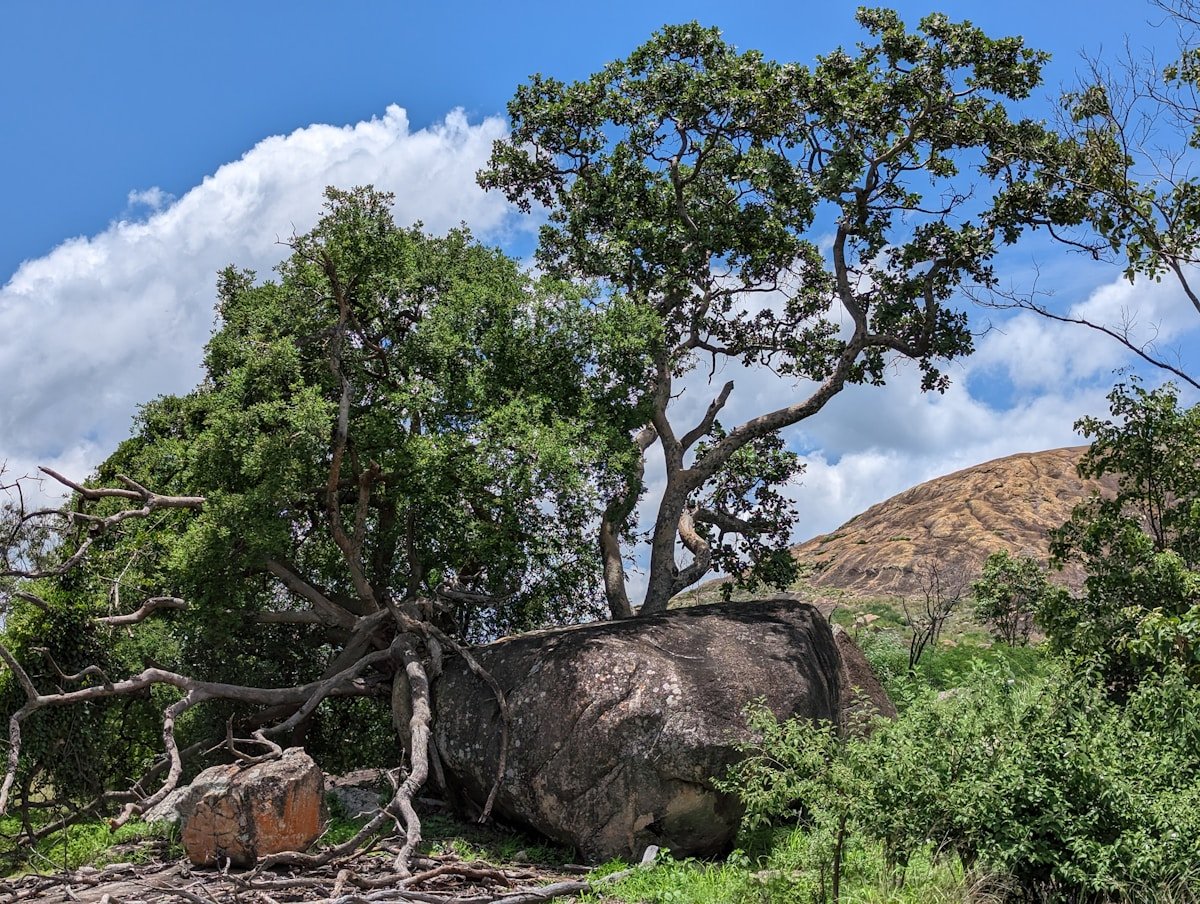
Matobo Hills National Park occupies 424 square kilometres of ancient granite landscape 35km south of Bulawayo in western Zimbabwe. The Matopos, as the hills are known locally, are a UNESCO World Heritage Site - one of the most visually distinctive landscapes on the continent, where billions of years of geological uplift and erosion have sculpted granite into boulders, domes, and balancing formations of improbable geometry.
The landscape has been sacred and inhabited for thousands of years. The San people painted on its rock faces; the Ndebele king Mzilikazi chose the Matopos for his own burial. Cecil Rhodes was buried here in 1902 at a spot he called “World’s View” - and the hills became politically charged as a result, drawing visitors who come as much for that historical complexity as for the wildlife.
World’s View (Malindidzimu Hill)
The granite dome of Malindidzimu Hill is Matobo’s most visited site - the burial place of Cecil John Rhodes at the summit, alongside Dr Leander Starr Jameson and several Rhodes Scholarship founders. A natural clearing among the boulders holds the graves, marked with simple bronze plaques set into the rock.
The climb takes approximately 20 minutes from the car park below - manageable for most visitors, though the boulders require some scrambling. The view from the summit is 360 degrees over the endless Matobo kopje landscape - remarkable for its apparent emptiness in every direction. Entry to the World’s View area is included in the general park fee.
Entry fees for Matobo National Park as of 2026: approximately $10 USD per person per day plus $5 per vehicle. Payment at the Maleme Dam gate.
White Rhino Tracking
Matobo holds one of Zimbabwe’s most reliable white rhino populations - the Intensive Protection Zone within the park supports a growing herd. Guided rhino tracking on foot with armed National Parks rangers is the park’s most compelling activity.
Tracks typically depart from the Maleme Dam area at 6am or 7am - the ranger follows footprints and signs to find the herd, and the group approaches on foot to within 20–30 metres of the rhino. The experience is genuinely exhilarating. Fees for rhino tracking are approximately $30–40 USD per person on top of park entry; booking through the Bulawayo lodges (Nesbitt Castle, Cresta Churchill) or directly with Matobo National Parks is recommended. You can also book a Matobo Hills tour on GetYourGuide - guided day trips from Bulawayo often bundle rhino tracking, rock art, and World’s View into a single package.
The rhino tracking is also run by Wilderness Safaris through their Camp Amalinda operation (see below).
San Rock Art
The Matopos holds an estimated 3,000 painted rock shelters - among the world’s highest concentrations of San (Bushman) rock art. The paintings depict animals, hunting scenes, and spiritual subjects in ochre, white, and charcoal, dating from hundreds to several thousand years ago.
Pomongwe Cave is the most accessible - a short walk from the main road, with well-preserved paintings and an on-site interpretive display. Nswatugi Cave holds some of the finest individual animal paintings in the region - kudu and giraffe in particular. Both are accessible with park entry. A national parks guide for the rock art can be arranged at the Maleme gate (approximately $10 USD additional).
Wildlife
Beyond white rhino, Matobo holds leopard (one of Zimbabwe’s strongest leopard populations per square kilometre), klipspringer, rock hyrax, sable antelope, and zebra. The granite kopjes create ideal leopard habitat - dense cover, elevated rocks, proximity to kopje-adapted prey. Morning drives in the Maleme Dam area are the best approach.
Verreaux’s (Black) Eagle nests on several Matobo kopjes - one of the most dramatic raptors in Africa, with over 100 pairs in the park. Look for them patrolling the ridge lines between 7am and 10am.
Where to Stay
Camp Amalinda (Wilderness Safaris) sits among the boulders of the Matopos - rooms are built into and around the granite, with private decks overlooking the kopje landscape. One of Zimbabwe’s most architecturally distinctive lodges. Rates from approximately $450–650 USD per person per night, fully inclusive with game activities and rhino tracking.
Matobo Hills Lodge is a more accessible mid-range option adjacent to the park - comfortable chalets with a pool and good guiding. Rates approximately $200–320 USD per person per night, full board.
Farmstays in the Matobo area (outside the national park) offer self-catering accommodation from approximately $50–80 USD per night - several farms on the park periphery rent out cottages.
National Parks chalets at Maleme Dam are basic self-catering options at approximately $30–50 USD per chalet per night. Bring all supplies from Bulawayo.
For most visitors, Bulawayo (35km, 45 minutes) serves as the base, with Matobo done as a day trip or an overnight stay. Browse and compare lodges and accommodation near Matobo Hills using Search accommodation near Matobo Hills on Booking.com.
Getting There
From Bulawayo: Take the Matopos Road south from the city centre - 35km to the Maleme Gate, approximately 45 minutes. The road is paved to the park entrance; internal tracks require a 4WD in some sections.
Day trip from Bulawayo: Highly practical - most Bulawayo lodges arrange Matobo day trips including a driver/guide, rhino tracking fees, and lunch in the park. Expect approximately $120–180 USD per person for a full day package.
Practical Notes
The Matopos landscape is easiest to appreciate from height - getting on top of a kopje, even a modest one, reveals the true scale of the balancing boulder formations spreading to every horizon. We recommend arranging travel insurance for Zimbabwe before visiting - rhino tracking on foot involves real animals in wild conditions, and the nearest hospital with surgical capacity is in Bulawayo.
The name Matobo is used interchangeably with Matopos - both are correct. The UNESCO designation uses “Matobo Hills.”
Mzilikazi’s grave is also within the Matobo region (at Entumbane, near the park boundary) - the Ndebele king’s burial site is a significant historical monument for Zimbabweans of Ndebele heritage.