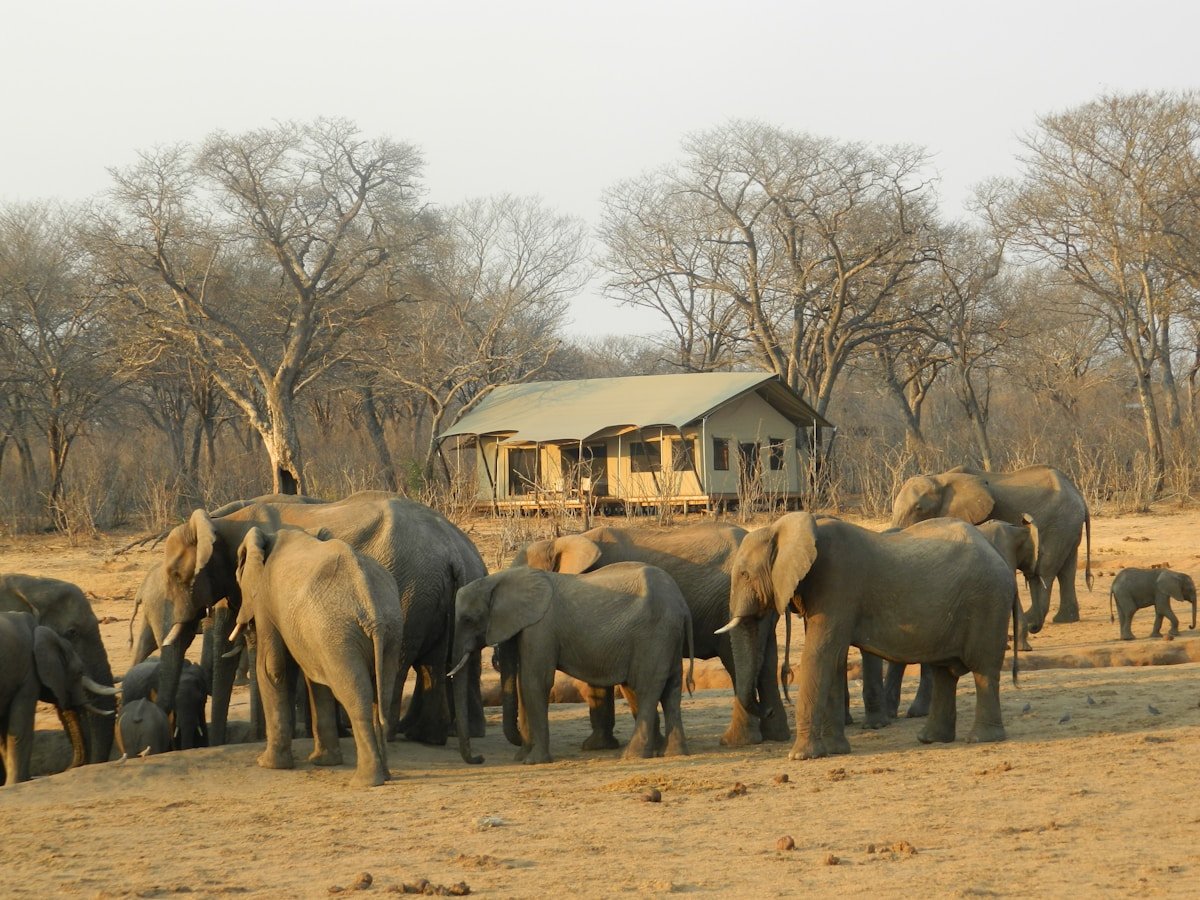
Hwange: 40,000 Elephants, Wild Dogs & 400 Bird Species
Hwange's 40,000 elephants are just the headline act. Wild dogs, lions, and 400 bird species make this Zimbabwe's most wildlife-dense national park.
Guides for Hwange
Hwange National Park covers approximately 14,600 square kilometres of Kalahari sandveld and teak woodland in western Zimbabwe - it is the country’s largest national park and one of Africa’s great wildlife destinations. The park is most famous for its elephants: a population estimated at 40,000–50,000 animals makes this one of the densest elephant concentrations on the continent.
The park has no permanent rivers. Zimbabwe National Parks maintains over 60 artificial waterholes - many fitted with solar-powered pumps - which draw wildlife throughout the dry season. At peak dry season, the Main Camp waterhole can attract herds of 300–400 elephants in a single evening. This is what makes Hwange exceptional: you do not need to drive deep into the bush to see game. The waterhole comes to the animals.
Main Camp Area
Hwange Main Camp is the National Parks headquarters - 180km south of Victoria Falls via the A8 highway. Facilities include a petrol station (open limited hours; don’t rely on it for emergency fuel), a basic restaurant, and self-catering chalets. Game drives depart from here with National Parks guides.
Entry fees as of 2026: approximately $20 USD per person per day plus $10 USD per vehicle. Fees are paid at the Main Camp gate; cash (USD) only.
The Main Camp waterhole - visible from the viewing platform adjacent to the camp - is Hwange’s most accessible wildlife spectacle. During August and September, elephant herds begin arriving from mid-afternoon and continue through the night. Lion are also regular visitors after dark.
Self-drive in your own vehicle is permitted in Hwange on designated roads. A permit is included in the entry fee. 4WD is recommended for most internal tracks, though the main tourist loops from Main Camp can be done in a standard car during dry season.
Sinamatella and Robins Camps
Sinamatella Camp in the park’s northwest offers more remote game viewing - fewer visitors and better leopard and wild dog sightings than the Main Camp area. Located 42km from the A8 highway on a dirt track; 4WD recommended. Entry procedures as per Main Camp.
Robins Camp near the Botswana border is the park’s most remote National Parks camp - primarily used by safari operators running extended bush itineraries. Access requires advance planning and is best combined with a mobile safari operator.
Safari Lodges
The Hide Safari Camp sits adjacent to a productive waterhole in the main wildlife area - one of Hwange’s original specialist safari camps with a reputation for excellent guiding. Rates from approximately $500–700 USD per person per night, all-inclusive. Reserve months ahead.
Linkwasha Camp (Wilderness Safaris) operates in the Linkwasha Concession in the southeast of the park - fly-in only, rates from approximately $850–1,100 USD per person per night all-inclusive.
Ivory Lodge near Main Camp offers self-contained luxury villas. Rates from approximately $600–800 USD per person per night.
For budget travellers, National Parks chalets at Main Camp start at approximately $45–60 USD per chalet per night (bring your own food). Advance booking through Zimbabwe National Parks is essential in peak season.
Wildlife and Activities
Game drives run morning and evening - typically 5.30am departure for morning, 3.30pm for evening. Night drives require a licensed guide and depart after the evening drive. Night drives give access to nocturnal species: civet, serval, porcupine, and (occasionally) aardvark. For guided Hwange safari experiences including multi-day packages and fly-in options, browse Hwange tours on GetYourGuide to compare operators.
Walking safaris from most lodges operate year-round, subject to guide availability. A minimum two-hour walk in Hwange’s teak woodland is a completely different experience from a vehicle drive - more birds, more plant identification, and occasionally very close-range encounters with elephant.
Painted dog watching has become one of Hwange’s signature activities. The Painted Dog Conservation project operates near Dete, adjacent to the park boundary. Hwange’s wild dog population - around 80 individuals - is one of Africa’s most reliably viewed.
Beyond elephant, lion are present throughout but most consistently found on the open pans. Spotted hyena are common. Hwange’s sable and roan antelope populations are among Zimbabwe’s strongest.
Getting There
By road: Hwange Main Camp is signposted from the A8 Victoria Falls–Bulawayo highway. The turn-off is approximately 9km east of the small town of Hwange (the mining town). From Victoria Falls, allow approximately 2 hours.
By air: Charter flights serve the Hwange National Park airstrip (near Main Camp) and several private lodge airstrips. Operators including Wilderness Air run scheduled safari circuits connecting Victoria Falls, Hwange, Mana Pools, and Kariba.
By rail: The historic railway line from Victoria Falls to Bulawayo passes through Hwange - the Elephant Express runs periodically though schedules are irregular. Check with National Railways of Zimbabwe for current timetables.
Practical Notes
Hwange town (the mining settlement) should not be confused with Hwange National Park. The park entrance is approximately 9km east on the A8 - the signage is clear but first-time visitors occasionally stop at the town in error.
Malaria prophylaxis is strongly recommended for Hwange visits. Anti-malarials, insect repellent with DEET, and long sleeves/trousers for evenings are standard. We also recommend taking out travel insurance for Zimbabwe - Hwange is a remote wilderness area hours from any hospital, and emergency medical evacuation is very costly without cover.
Mobile phone signal is absent through most of the park. Download offline maps before arrival. Emergency contact for the National Parks office is via HF radio at Main Camp.
Water in the park should be treated or boiled - bring sufficient bottled water for your stay.