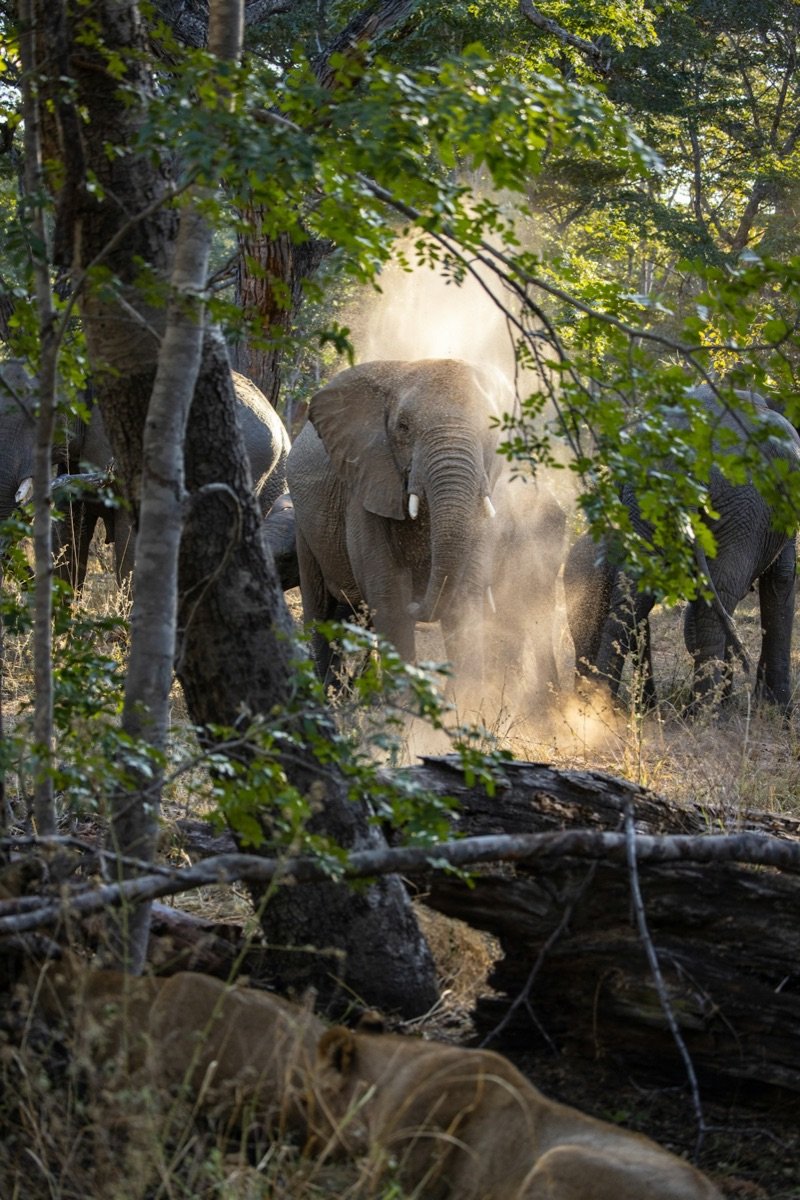
Hwange is Zimbabwe’s largest national park - 14,651 square kilometres of mopane woodland, teak forest, and open grassland, home to one of Africa’s largest elephant populations (estimated at 45,000+) and over 100 mammal species. There are no perennial rivers in Hwange; the park survives on man-made waterholes pumped with solar-powered boreholes, which means wildlife is predictably concentrated and viewable year-round. For serious game viewing, it ranks among the best destinations in southern Africa.
Game Drives at the Main Waterholes
Hwange’s network of waterholes draws the most reliable wildlife concentrations in Zimbabwe. The key sites:
Nyamandlovu Pan is the park’s most famous waterhole, accessible via a raised observation platform that lets you watch from above as elephants, buffalo, zebra, and predators come to drink. During July–October, it is not unusual to count 200–500 elephants at the pan simultaneously, moving in and out in relays across the afternoon. The platform is accessible to self-drive visitors (no guide required) but fills quickly in peak season - arrive by 15:00 to secure a position.
Guvalala Pan (also accessible by self-drive) tends to be less crowded than Nyamandlovu and produces good lion sightings during the dry season as the pride follows prey concentrated at water.
Jambile and Makwa waterholes (accessible from Sinamatella Camp) are in the northern section of the park and offer a different landscape - more rocky and hilly than the flat mopane woodland of the Main Camp area.
Guided game drives from Main Camp and Sinamatella cost approximately USD 30–45 per person per half day (as of 2026) through Zimbabwe National Parks bookings.
Walking Safaris
Hwange’s flat mopane woodland makes it one of the better parks in Africa for walking safaris. The ability to track animals on foot, read spoor, and interpret the landscape at human speed adds a completely different dimension to what you can experience from a vehicle.
Walking safaris in the national park must be conducted with a licensed professional guide. Lodge-based walking is typically included in all-inclusive rates at private camps like Davison’s Camp, Little Makalolo, and Linkwasha. Standalone walking guides can be arranged through the National Parks office at Main Camp for self-drive visitors, approximately USD 25–35 per person per half day (as of 2026).
The walking season runs year-round, but the best conditions are June to October when the vegetation is low, tracks are clear, and predators and prey are concentrated in predictable areas.
Painted Dog (African Wild Dog) Tracking
Hwange is one of the last strongholds for the African wild dog - also called painted dog - one of Africa’s most endangered large predators. The Painted Dog Conservation (PDC) centre, based outside the Hwange town centre (about 8 kilometres from Main Camp gate), runs a community education and anti-poaching programme that has helped stabilise wild dog populations in the area.
The PDC offers guided visits (approximately USD 10 per person as of 2026) where you can see resident rehabilitated dogs in large enclosures, learn about the conservation programme, and if timing and tracking conditions allow, join a short bush walk to look for active packs near the park boundary. The centre is staffed by passionate conservationists and the visit context makes the experience genuinely informative.
Night Game Drives
Unlike some other southern African parks, Hwange National Parks allows limited night game viewing from licensed camps. Night drives reveal nocturnal species rarely seen during the day: leopard, aardvark, spring hare, honey badger, civet, porcupine, and nightjars. Light pollution is essentially zero deep in the park, and the Milky Way is visible with extraordinary clarity.
Night drives depart from lodge camps at around 19:00 and return by 21:00–22:00. Not available for self-drive visitors at the national park camps - this requires being based at a private lodge (Davison’s, Somalisa, Linkwasha, etc.) where guiding is included.
Birdwatching
Hwange is home to over 420 bird species, including several endemics and near-endemics of the Kalahari woodland. Highlights include:
- Southern ground hornbill (groups patrol open ground year-round)
- Bradfield’s hornbill (best in the teak woodlands of the southern park)
- Kalahari scrub robin (endemic to the dry Kalahari)
- Bat hawk (active at dusk around waterholes)
- Pel’s fishing owl (resident in riverside areas near Sinamatella)
The peak birdwatching window is November to March when migratory species arrive from the Palearctic - European rollers, woodland kingfishers, and carmine bee-eaters are all present in good numbers.
Sinamatella Camp and the Northern Section
Most visitors base themselves at or near Main Camp in the eastern section of Hwange. Sinamatella Camp, in the northern section of the park (about 50 kilometres from Main Camp via the tar road), offers a different landscape and less-visited game viewing circuits. The camp sits on a hill with panoramic views across the bush and waterhole.
Accommodation at Sinamatella runs from chalets (approximately USD 50–80 per person per night through Zimbabwe National Parks as of 2026) to basic camping at communal ablution sites. Booking via the Zimbabwe National Parks booking system (zinparksbooking.co.zw) is required; the system has improved significantly since 2022 and most bookings can be made online.
Combination: Hwange and Victoria Falls
Hwange and Victoria Falls make a natural pairing, separated by about 100 kilometres of good tar road. Most lodges in both areas can arrange transfers or self-drive routes between them. A standard five-day trip might allocate two nights to Victoria Falls and three to Hwange, or vice versa depending on priorities. Guided Hwange safari tours are worth comparing if you want to avoid the logistics of self-drive bookings and park permits - particularly for first-time visitors. Given the remote nature of Hwange and the distances involved in a Zimbabwe safari, arranging travel insurance before departure is sensible.
For eating during your stay at Hwange, see our best restaurants in Hwange guide. For accommodation options in the national park area, see the main Hwange city guide. You can also search hotels in Hwange on Booking.com.