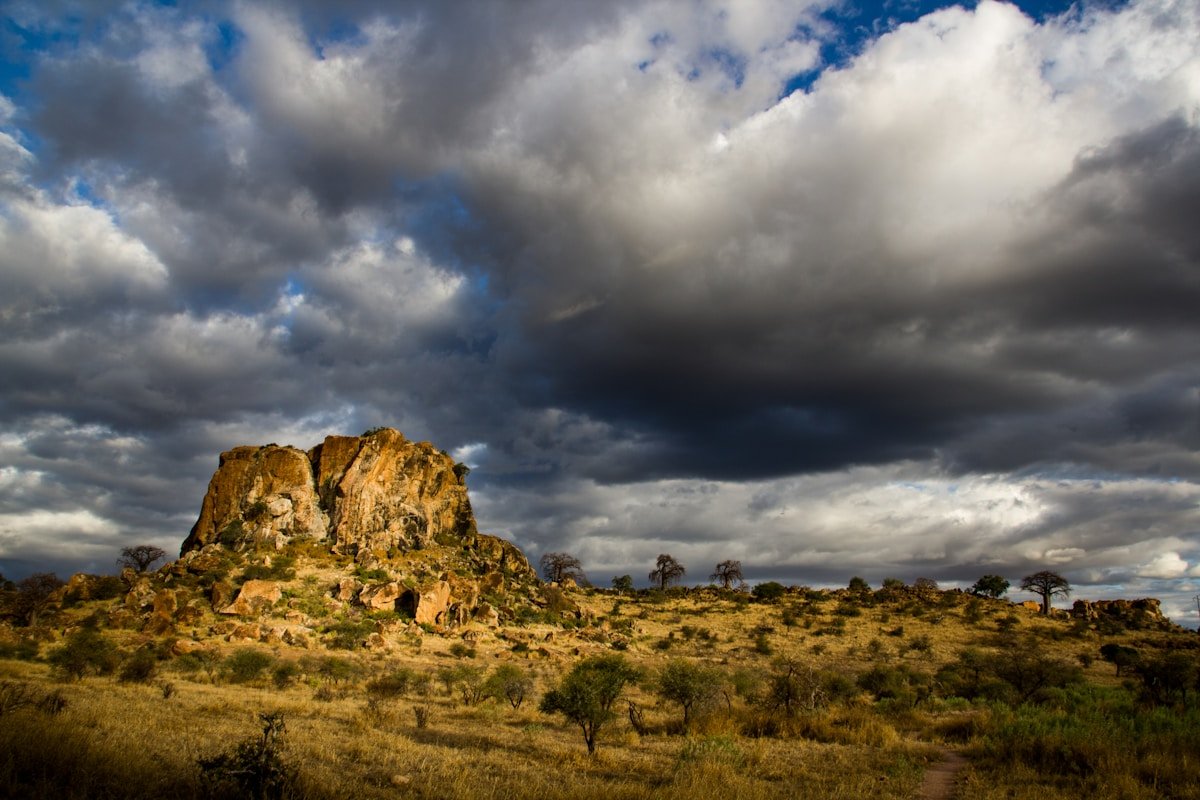
At the top of a broad granite kopje in the Matobo Hills, looking out over a landscape of tumbled boulders, thorn trees, and open sky in every direction, lies the grave of Cecil John Rhodes. He chose this spot himself. He called it View of the World.
Rhodes died in Muizenberg, South Africa, in March 1902 at the age of 48. His body was transported north by train through Bechuanaland (now Botswana) and into Rhodesia, drawing crowds at every station. He was buried on the flat summit of the kopje on 10 April 1902, in a grave he had prepared during his lifetime - blasted directly into the granite.
The site is now formally known as View of the World and sits within Matobo National Park, 35 kilometres south of Bulawayo. It is one of the most visited historical sites in Zimbabwe - and one of the most contested.
Who Was Cecil Rhodes?
Rhodes arrived in southern Africa in 1870 and built a diamond mining fortune in Kimberley that became the foundation of De Beers. He entered Cape Colony politics, served as Prime Minister, and then turned his attention northward - to the territory that would become Rhodesia (modern Zimbabwe and Zambia).
In 1890, the British South Africa Company - Rhodes’s private vehicle - sent a column of settlers and mercenaries north to occupy Mashonaland. In 1893, the BSAC waged war against the Ndebele kingdom, defeated Lobengula, and took Matabeleland. By 1895, the territory had been officially named Rhodesia, after Rhodes himself.
The Ndebele and Shona peoples rose up against colonial rule in the First Chimurenga of 1896–97. Rhodes played a personal role in negotiating the peace, meeting with Ndebele indunas (chiefs) in the Matobo Hills in a series of talks that ended the uprising. He was impressed enough by the hills that he declared he wished to be buried there.
His legacy in what is now Zimbabwe is not a neutral one. The land alienation he orchestrated dispossessed the Ndebele and Shona of the most fertile agricultural land. The labour policies of the BSAC formed the template for the discriminatory structures that would define white-minority Rhodesia for eight more decades. Independence in 1980 was named Zimbabwe specifically to erase the colonial name - Rhodesia - from the map.
What You See at View of the World
The access path begins at a small car park and follows a rocky trail up the granite kopje. The climb is roughly 15–20 minutes at a moderate pace. The summit is wide and flat, with 360-degree views across the Matobo Hills - an extraordinary panorama of rounded granite domes, sparse woodland, and sky.
The Rhodes grave is a simple rectangular slab of granite with a brass plate engraved: Here lie the remains of Cecil John Rhodes. The simplicity is deliberate; Rhodes requested no monument, only the rock.
The Shangani Patrol Memorial stands nearby - a brass plaque commemorating the 34 men of the Shangani Patrol who were killed by Ndebele forces on 4 December 1893. The patrol, led by Major Allan Wilson, had crossed the Shangani River in pursuit of Lobengula and was surrounded and annihilated. Wilson is buried beside Rhodes.
Leander Starr Jameson - Rhodes’s close ally and administrator of Rhodesia, best known for the ill-fated Jameson Raid of 1895–96 - is also buried at the site.
The view itself is the reason Rhodes chose this location. In every direction the landscape rolls away in the Matobo style: massive granite kopjes emerging from the bush, eagles circling the thermals, silence broken only by wind and birdsong. Whatever one’s view of the man, the setting is remarkable.
The Colonial Legacy Debate
Zimbabwe’s relationship with this site is complicated. Rhodes’s grave has occasionally been the target of vandalism and protest. Debate about repatriation of his remains to Britain - or their relocation within Zimbabwe - surfaces periodically in political discourse.
The Bulawayo museums and civic institutions hold a range of views. The Natural History Museum of Zimbabwe in Bulawayo (one of the best natural history museums in Africa) includes exhibits on both the pre-colonial and colonial history of the region, providing context for visitors who want to understand the broader picture before or after visiting the Matobo Hills.
View of the World sits in a national park that is simultaneously a wildlife sanctuary, a San rock art landscape, and a site of Ndebele and Shona historical memory. The Matobo Hills were the spiritual heartland of the Ndebele nation and the location of the peace negotiations that ended the First Chimurenga. They predate Rhodes by thousands of years.
Visiting Practical Information
Location: Matobo National Park, approximately 35km south of Bulawayo on the Matobo road.
Getting there: Self-drive takes about 45 minutes from central Bulawayo. Follow signs to Matobo National Park; the main gate is on the Matobo road. From the gate, follow internal signs to World’s View / View of the World. No public transport runs directly to the site - hire a taxi or private vehicle from Bulawayo, or join a guided day tour.
Entry fees: Matobo National Park entry as of 2026 is approximately USD 15 per adult international visitor per day and approximately USD 5 per vehicle. Fees include access to both the World’s View area and the wider park. Confirm current rates at the gate or with Zimbabwe National Museums and Monuments.
Opening hours: The park is open daily from approximately 6am to 6pm. The World’s View area has no separate ticketing and is accessible during park hours.
The climb: The path to the summit is unmaintained in parts and involves scrambling over bare granite near the top. Wear closed shoes with grip. The ascent takes 15–20 minutes; the descent slightly less. The summit is fully exposed - a hat and sun protection are recommended.
Time needed: Budget 1.5–2 hours total including the drive from the gate, the ascent, time at the summit, and descent. If combining with rock art sites (Nswatugi, White Rhino Shelter), allow a full day.
Guided tours: Several Bulawayo operators include World’s View on their Matobo Hills day trips. These typically combine the Rhodes grave with one or two rock art sites and, depending on the operator, a game drive in the wildlife area. Half-day trips run from approximately USD 80 per person; full-day tours approximately USD 120–150 as of 2026. Safari Par Excellence and UTC Zimbabwe are established operators.
Combining with Other Matobo Attractions
View of the World is best understood alongside the broader context of the Matobo Hills. The same landscape that Rhodes chose for his grave was the spiritual home of the San people - whose rock art sites at Nswatugi, White Rhino Shelter, and Bambata Cave are among the finest in southern Africa. The hills were also the heartland of the Ndebele kingdom and the theatre of the First Chimurenga.
A meaningful Matobo visit connects all of these layers: the San presence, the Ndebele history, the colonial imposition, and the independence that followed. For rock art, see our Matobo Hills rock art guide. For the full Bulawayo base, see our Bulawayo city guide.
If you have time, the wildlife area of Matobo National Park offers white rhino tracking, leopard drives, and some of the best Verreaux’s eagle viewing in Africa. Book a Matobo Hills game drive or rhino tracking experience here.
The Matobo Hills hold more history than any single grave. Rhodes understood that. Whether that makes his choice of resting place a romantic gesture or an act of colonial presumption is a question Zimbabwe continues to work out for itself. For accommodation near Matobo Hills, search hotels in Matobo Hills on Booking.com - most visitors base themselves in Bulawayo and drive the 35km to the park each day.