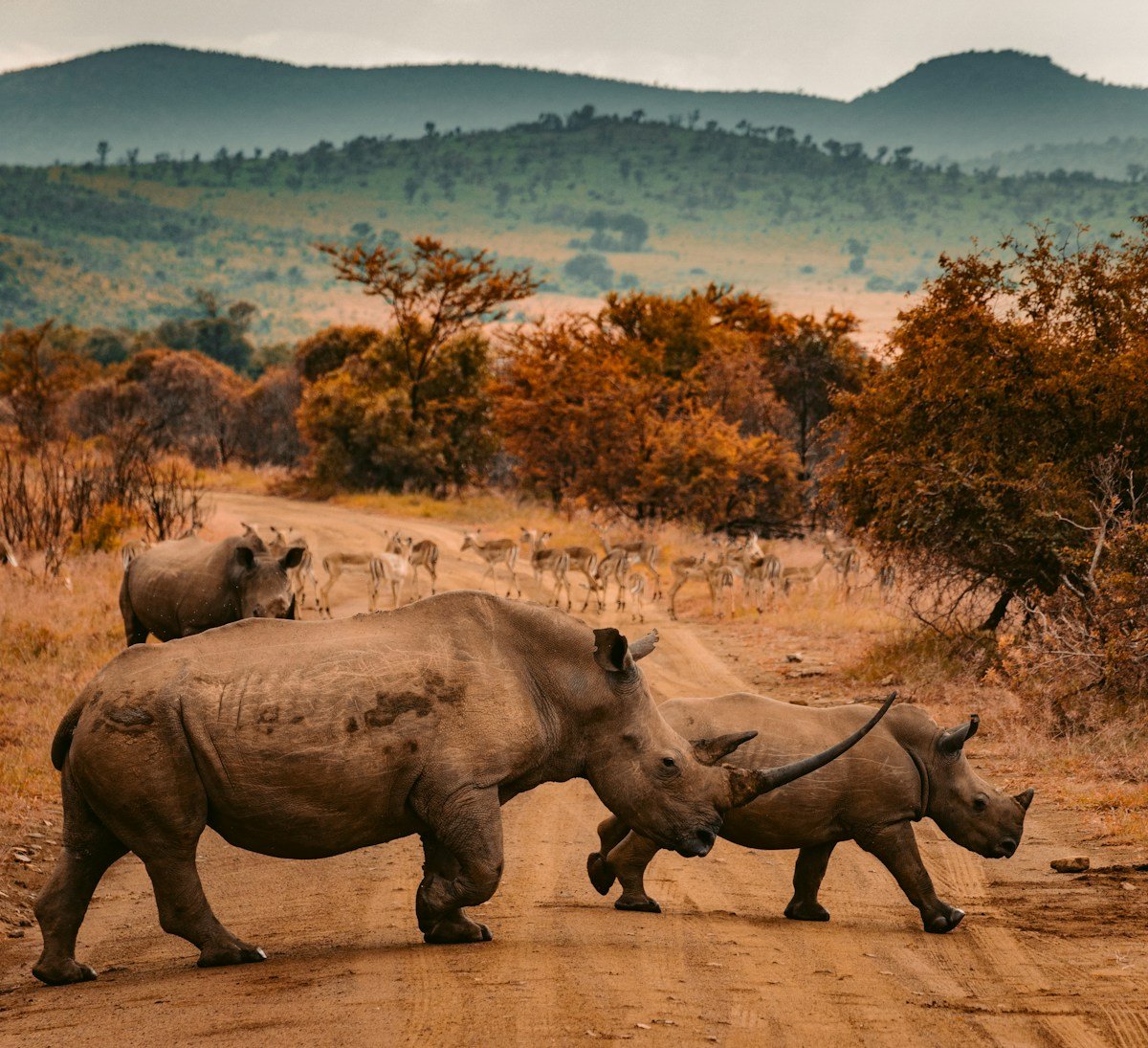
Matobo Hills offers one of the highest-success rhino tracking experiences in Africa, and it is one of the few places on the continent where you can approach both white and black rhino on foot with qualified rangers. The Matobo National Park (also written Matopo) covers 424 square kilometres of extraordinary balancing granite boulders and savanna - a UNESCO World Heritage Site for both natural and cultural heritage. The rhino population within and adjacent to the park is significant and carefully managed, giving guided walks a success rate that consistently exceeds 85% for white rhino sightings. This guide covers every practical detail.
The Rhino Population at Matobo
Zimbabwe’s Matobo region hosts one of the country’s most important white rhino (Ceratotherium simum) populations, managed through a combination of national park land and adjacent private conservancies. The Matobo Intensive Protection Zone (IPZ) was established to protect this population from poaching, and it operates as one of the most effective anti-poaching programs in southern Africa.
Black rhino (Diceros bicornis) are also present but in much smaller numbers and are rarely encountered on foot tracking activities - they are more solitary, territorial, and less habituated to human presence. White rhino sightings are the realistic expectation on a tracking walk.
White rhino are the world’s second-largest land animal after the elephant, weighing up to 2,300kg. Despite their size, they are primarily grazers and are considerably less aggressive than black rhino - nonetheless, all tracking is conducted under the supervision of an armed ZPWMA ranger.
Operators and Costs
Matobo Hills Lodge
The most frequently recommended base for rhino tracking. The lodge sits inside the park boundaries and offers guided rhino tracking as both an add-on activity for lodge guests and as a standalone day experience for visitors based in Bulawayo (80km northeast).
- Rhino tracking day experience (for non-lodge guests): approximately USD 90–120 per person, including park entry, armed ranger, and vehicle transfer to the tracking start point
- Lodge all-inclusive rates including rhino tracking: approximately USD 350–500 per person per night
Book directly through Matobo Hills Lodge; their dedicated rangers know the park extremely well and track specific rhino families by name and movement patterns.
Sable Lodge (Matobo)
A smaller, more affordable bush camp adjacent to the Matobo Hills. Offers rhino tracking as a day excursion for approximately USD 80–100 per person including park entry and guide. Accommodation rates approximately USD 200–280 per person per night.
Camp Amalinda
A luxury lodge built into and around the natural granite boulders, one of the most architecturally distinctive camps in Zimbabwe. Rhino tracking is available as a lodge activity. All-inclusive rates run approximately USD 450–650 per person per night.
Bulawayo Day Trip with ZPWMA
For budget travellers, Zimbabwe National Parks operates its own guided rhino tracking walks from Matobo NP Main Camp. Cost is approximately USD 25–40 per person for the guided walk, plus USD 15 park entry fee. Groups may be larger (up to 10–12 people) and the intensity of the guiding experience is lower than private lodge walks. Book at the gate in Matobo.
Success Rates
White rhino sighting success: approximately 85–95% on guided walks with experienced Matobo rangers. The population is well established and tracked regularly, so rangers typically know the general area of 2–3 rhino families on any given day.
Black rhino: sightings are uncommon on standard walks, perhaps 10–15% incidence. Do not plan your Matobo trip specifically for black rhino sightings - treat them as a surprise bonus.
Success rates are lower in the rainy season (December–March) when dense vegetation makes locating and approaching rhino more difficult, and when rangers may avoid certain areas due to flooding.
Duration and Difficulty
Rhino tracking walks last between 2 and 4 hours depending on rhino location. If rhino are close to the vehicle drop-off, the walk may be only 1.5 hours total. If they need to be tracked over rougher terrain, expect 3–4 hours on foot.
The terrain in Matobo is primarily moderate - flat grassland interspersed with granite kopjes (rocky hillocks). There is occasional light scrambling over rocks but nothing technical. Sturdy walking shoes or trail runners are adequate; dedicated hiking boots are not required.
The main physical requirements:
- Ability to walk 3–8km over variable terrain
- Capacity to move quietly and slowly through bush
- Comfort being in proximity to large animals (the final approach is typically within 30–80 metres of the rhino)
Safety
All rhino tracking walks are led by ZPWMA-licensed rangers carrying a high-calibre rifle. The ranger briefs the group before departure: move in single file, follow instructions immediately, never move between a rhino mother and calf, and never run.
White rhino charge as a threat display but typically stop short or veer off at 5–10 metres. Rangers are trained to handle this and will instruct the group to hold ground or move sideways. Actual contact with rhino during guided walks is extremely rare in Matobo’s well-managed environment.
What to Bring
- Neutral-coloured clothing (khaki, olive, brown - no white or bright colours)
- Closed shoes with grip
- Hat and sunscreen SPF 50+
- 1.5–2L water
- Camera - a 100–300mm zoom is practical for this distance
- Binoculars
- Insect repellent
Best Season
May to October (dry season) is optimal. Vegetation is lower, rhino are more visible against dry grass, and tracking is easier. Temperatures are comfortable (20–30°C). June and July mornings can be cold at sunrise (8–12°C) - bring a layer.
November to April: Possible but more difficult. Rains create lush grass (over 1 metre high in places) that obscures rhino and makes tracking harder. Some operators reduce rhino tracking frequency in peak rainy season.
Book on GetYourGuide
Both day-trip options below can be booked via GetYourGuide with free cancellation up to 24 hours before departure. Prices shown are 2026 verified starting rates.
| Tour | Duration | From (USD) | Book |
|---|---|---|---|
| Matobo Hills Day Trip with Rhino Tracking (from Bulawayo) | 8 hrs | $140 | Book |
| Matobo White Rhino Experience | 5 hrs | $120 | Book |
| All Matobo Tours | Various | various | Browse |
The 8-hour day trip (from $140) includes lunch and covers more of Matobo alongside the rhino tracking. The 5-hour White Rhino Experience (from $120) focuses purely on rhino with a knowledgeable local guide.
Combining Rhino Tracking with Other Matobo Activities
Matobo Hills is one of Zimbabwe’s richest destinations. Combine rhino tracking with:
- San Bushman rock art: 3,000+ rock paintings across the hills, some 13,000 years old (Nswatugi Cave and Silozwane Cave are the most accessible)
- Cecil Rhodes’ grave at World’s View: a hilltop burial site with panoramic views across the boulderscape
- Bird watching: Matobo is one of the highest concentrations of Verreaux’s Eagle habitat in the world
A 2-night stay at Matobo allows rhino tracking plus one full day exploring rock art and heritage sites.
Getting to Matobo
Matobo National Park is 35km south of Bulawayo by the Matobo Road. Bulawayo is:
- 440km south of Harare (5 hours by car or intercity bus)
- 110km south of Gweru
- A day’s drive (8–9 hours) from Victoria Falls
Bulawayo has an airport (BUQ) with connections to Harare operated by Air Zimbabwe and Fastjet. Driving to Matobo from Bulawayo takes 40–50 minutes; most lodges offer transfer services from Bulawayo airport or city centre.
Rhino tracking on foot in Matobo is one of the most immediate wildlife encounters available anywhere in Africa. The moment a 2,000kg white rhino turns its head in your direction from 40 metres while you stand stock-still in the African scrub is not something any amount of game-drive experience prepares you for. Plan at least half a day for this activity; a full day in Matobo combining tracking with rock art is among the finest days possible in Zimbabwe.