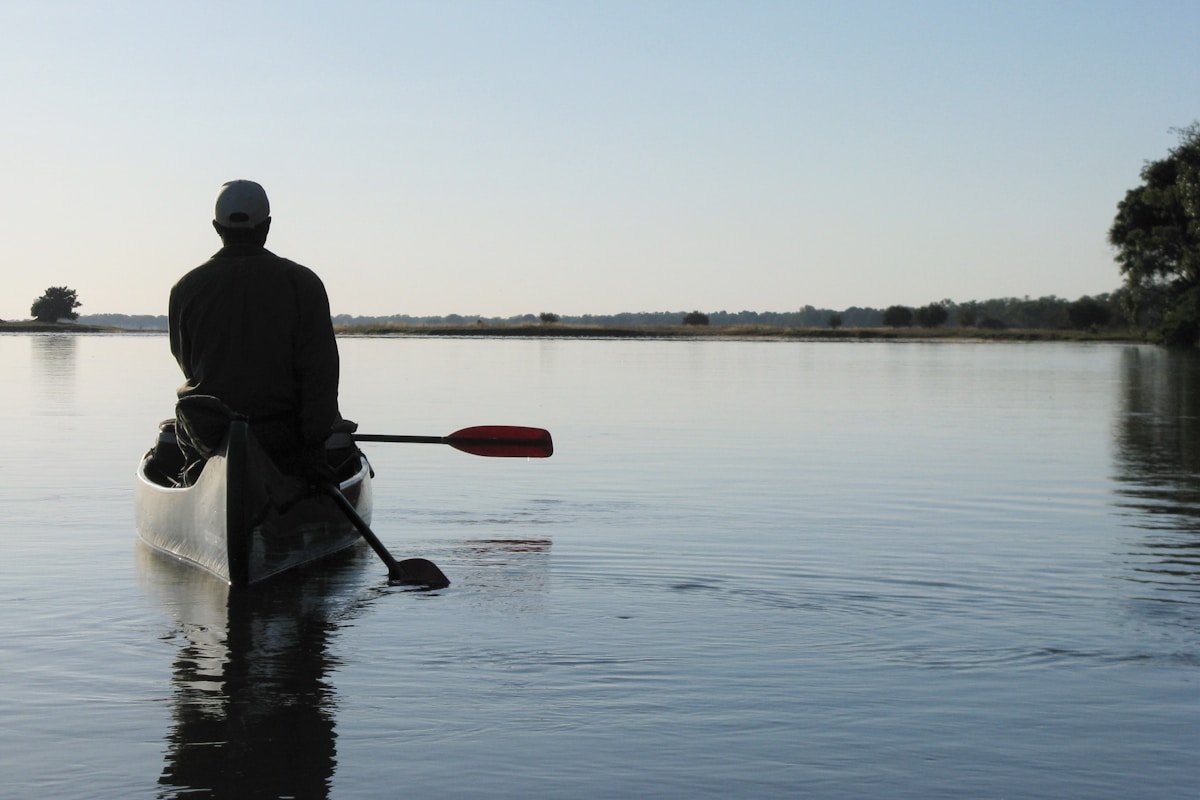
The multi-day canoe safari on the Zambezi through Mana Pools is one of Africa’s genuinely great wilderness experiences. The concept is straightforward: paddle downstream through the heart of one of the continent’s finest wildlife areas, camping on sandbanks mid-river, watching the bush from water level, and experiencing wildlife encounters that no vehicle or walking safari can replicate. It is why Mana Pools has been on the serious safari circuit for decades.
What the Experience Is
A typical multi-day Mana Pools canoe safari runs three to seven days, paddling downstream along the Zimbabwean bank of the Zambezi. Each day covers 20 to 35 kilometres of river, with morning paddles in the cool hours, a midday rest, and afternoon and evening paddles when wildlife is more active at the water’s edge.
The river at water level is a fundamentally different perspective from a game drive vehicle. You are at the same height as a drinking elephant or a surfacing hippo. Sound carries differently. You read the river’s mood — the pulse of a hippo territory, the shift of a crocodile into deeper water — through feel and observation rather than from an elevated 4WD. Experienced canoe guides interpret these signals constantly; part of what you pay for is the expertise to make close encounters feel managed rather than alarming.
Wildlife from the canoe includes hippo (pods of 20 to 50 are common in this section), crocodile (on every sandbank and bank in the dry season), elephant (crossing the river or drinking at the water’s edge, sometimes passing close enough to touch if the current takes you near), and, in lower concentrations, buffalo, waterbuck, and impala along the banks. The birdlife is exceptional: African skimmer on the sandbanks, fish eagle overhead, carmine bee-eater colonies nesting in the riverbanks in September to October, and kingfishers at close range throughout.
Sandbank camping is the other defining element. At the end of each day’s paddling, you set up camp on a mid-river sandbank — isolated from the mainland, with 360-degree views across the Zambezi and the distant Zambian escarpment on the far bank. Sunsets from the sandbanks are extraordinary. At night, hippo sounds, fish splashing, and the occasional distant lion call are the only audible things. No roads, no other camps, no light pollution.
Operators and Pricing
Goliath Safaris is the most established canoe safari operator in Mana Pools and the name most associated with the experience internationally. Goliath has been running Zambezi canoe expeditions since the 1980s. A standard four to five day guided canoe with Goliath runs approximately USD 400 to 600 per person per day, all-inclusive: two-person canoe (guide in one, clients in second), all camping equipment, all meals cooked over the campfire, park fees, and professional guide (typically a senior qualified guide with many years of Zambezi experience). Group sizes are kept small — usually four to eight clients per expedition.
Natureways Safaris (operating from John’s Camp) runs canoe expeditions from their Mana Pools camp base. Their guiding team has an excellent reputation and the camp-to-canoe combination — nights at John’s Camp with days paddling — is a well-regarded option. Pricing comparable to Goliath, approximately USD 350 to 500 per person per day all-inclusive depending on the programme length.
Shorter canoe options: some operators offer single-day or two-day Zambezi canoe experiences for those without the time or budget for a full multi-day expedition. Day paddles run approximately USD 80 to 150 per person from a camp base, covering a half to full day on the river with lunch and wildlife encounters. The shorter format gives you the experience at river level without sandbank camping; it is a meaningful taster but not the same as the multi-day immersion.
Booking: canoe safaris at established operators book well in advance for peak season (August to October). Contact operators directly or through a Zimbabwe safari specialist. Booking five to six months ahead is advisable for prime dates. You can also browse Mana Pools canoe and Zambezi river tours to compare available options and dates.
What to Pack
Packing for a canoe safari requires different priorities from a standard lodge trip:
Sun protection is critical. Days on the open Zambezi in July to October involve several hours of direct sun with no shade. High-SPF sunscreen (reapply frequently), a broad-brimmed hat, and UV-protective long-sleeved shirts are essential. Heat exhaustion on the water is a real risk if you underestimate the exposure.
Dry bags for all valuables, cameras, and clothing. The canoe will ship water in choppy sections and your gear will get wet without protection. Reputable operators provide dry bags; bring your own for electronics and anything irreplaceable.
Binoculars are more useful on a canoe safari than almost any other activity. Wildlife encounters at river level happen at close range and fast; good binoculars extend your viewing window significantly.
Light clothing — linen and lightweight synthetic fabrics that dry quickly. Evenings on the sandbanks require a light layer as temperatures drop after sunset. Avoid dark colours (attract insects) and bright patterns (distract wildlife).
Camera: a telephoto lens of 200mm to 400mm gives you range for sandbank wildlife. Keep cameras in dry bags when not in active use.
Safety and Practicalities
Crocodile protocol: never trail hands or feet over the side of the canoe, do not wade in deep water without guide clearance, and follow all swimming instructions from your guide precisely. Crocodile are present throughout the river at numbers that demand respect rather than fear.
Hippo protocol: your guide will read hippo territory and pod behaviour and route the canoe accordingly. If a hippo charges (a territorial bluff in most cases), your guide will direct your response. Do not paddle toward a pod independently.
Medical: Mana Pools is a high-risk malaria area. Start anti-malarials before entering the park, use DEET repellent at dusk and dawn, and wear long clothing in the evenings. Travel insurance for Zimbabwe covering emergency medical evacuation is essential — there are no medical facilities in the park.
Fit for canoe: no paddling experience is required, but a basic level of physical fitness (sustained paddling over several hours) is necessary. Inform your operator of any significant mobility limitations before booking.
The Mana Pools canoe safari is the experience most people describe when they explain why Zimbabwe’s wilderness is worth travelling for. It is not cheap, not particularly comfortable, and not convenient. Those are the conditions that make it unforgettable.