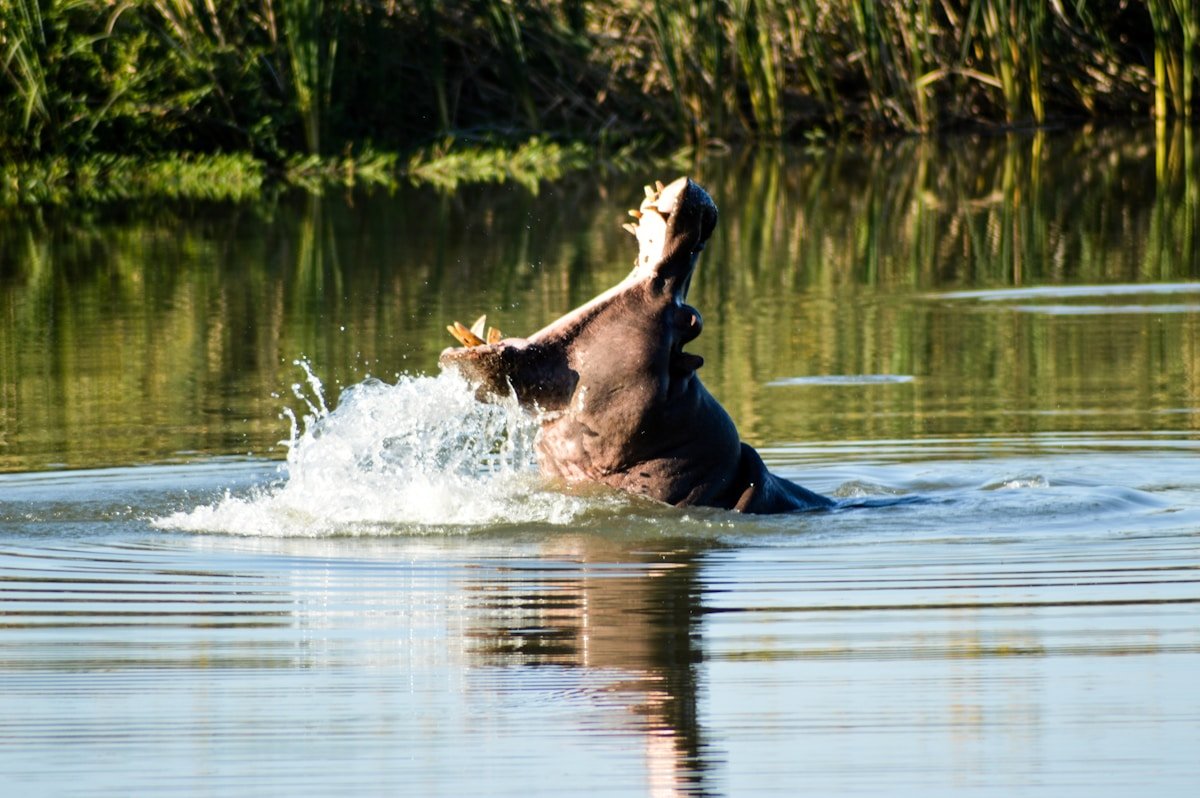
Mana Pools offers a quality of wilderness experience that few places in Africa can match. The combination of free walking, multi-day canoeing, and exceptional game densities on the Zambezi floodplain is not replicated anywhere else in Zimbabwe, and the park’s UNESCO World Heritage status reflects its ecological significance rather than its popularity. Mana draws a particular kind of traveller: those who value genuine wilderness over managed comfort.
Walking Without a Guide
The freedom to walk unescorted in a park containing lion, leopard, elephant, buffalo, and hippo is Mana Pools’ defining characteristic. Most national parks in Africa have eliminated free walking for liability reasons; Mana has retained it because it is fundamental to the park’s identity.
In practice, walking freely requires honest self-assessment. Close encounters with elephant are daily and routine here — bulls habituated to visitors will often approach to within a few metres. Understanding animal body language, knowing when to hold ground and when to move, and staying calm under pressure are skills that take time to develop. If this is your first time in African bush, walk with a camp guide for your first two or three days before considering independent walking.
Guided walking safaris are offered by all private camps and most lodge operations in Mana. Morning walks typically depart at first light, cover five to ten kilometres over two to three hours, and focus on tracking, spoor identification, and wildlife interpretation at human speed. This is the most educational and engaging way to experience the park for most visitors. Guide quality varies significantly between camps; the best guides in Mana — many with 15-plus years of experience — are among the finest wildlife interpreters in Africa.
The four main pools (from which the park takes its name) are permanent water sources formed when the Zambezi shifted course and abandoned ancient channels. Nyamepi, Chine, Chitake, and Long Pools draw elephant, hippo, and predators throughout the dry season. Walking between the pools from Nyamepi camp is a standard independent walking route.
Canoe Safaris on the Zambezi
The multi-day Zambezi canoe safari is Mana Pools’ signature experience and the activity most clearly associated with the park in the wider safari world. Paddling downstream over three to five days, camping on sandbanks mid-river, fishing for tiger fish in the evening, and encountering wildlife at river level — hippos surfacing alongside the canoe, crocodiles basking on the banks, elephants wading across shallower channels — is a fundamentally different experience from any vehicle or walking-based activity.
Goliath Safaris is the most established canoe operator in Mana, with decades of experience running guided expeditions. A standard five-day canoe with Goliath costs approximately USD 400 to 600 per person per day, all-inclusive, covering a guide (typically a qualified professional guide or senior camp guide), two-person canoes, camping equipment, all meals, and park fees. The guide handles safety, route planning, and wildlife interpretation; your job is to paddle, watch, and experience.
Shorter canoe day trips and two-day overnight canoes are available from some camps and through park operators for those without the time or budget for a full multi-day expedition. Day paddles run approximately USD 80 to 150 per person from a camp base. You will not get the full immersion of a multi-day trip, but the river experience and wildlife encounters are available in a compressed form. You can also browse Mana Pools and Zambezi canoe tours to compare operators and pricing.
Safety: the Zambezi is home to substantial crocodile and hippo populations. Commercial canoe operators are experienced at reading animal behaviour and managing encounters; following your guide’s instructions precisely is not optional.
Game Drives
Game drives run morning and evening from all private camps in Mana. The floodplains are accessible by vehicle, and the main pools circuit from Nyamepi camp is open to self-drive visitors with a 4WD and Zimparks permit.
The main pools loop (accessible by self-drive from Nyamepi) covers the four pools and the connecting tracks on the floodplain. Evening drives as the sun sets behind the Rift escarpment, with elephants coming to drink at the pools and hippos surfacing in the channels, are as good as wildlife viewing gets in Zimbabwe.
Night drives from private camps reveal nocturnal species rarely encountered during daylight: leopard, African civet, honey badger, spring hare, and nightjars. Available from licensed camps only; not possible for self-drive visitors at national park camps.
Lion tracking in Mana requires patience rather than guaranteed sightings. The park’s prides have large territories. The best chances come in the late dry season when prey concentrations are highest near the pools and the river.
Painted Dog (Wild Dog) Watching
Mana Pools is one of Zimbabwe’s most important wild dog strongholds. The park’s packs roam large territories, and sightings are unpredictable but genuinely exciting when they occur. Camp guides who know current pack locations are your best asset; some operators track individual packs and can direct guests to recent activity zones.
Wild dog behaviour — the co-operative hunt, the den return in pup season, the social greeting rituals — is compelling to watch once you have found a pack. The best months for pup-related activity are approximately May to July, when adults are tied to den sites and encounters are more predictable.
Birdwatching
Mana Pools holds over 400 bird species and is one of Zimbabwe’s premier birding sites. The riparian forest along the Zambezi floodplain has species rarely seen elsewhere in the country. Highlights include:
- African skimmer (on the Zambezi sandbanks, September to January)
- Pel’s fishing owl (resident in the riparian forest, detectable by call at night)
- Carmine bee-eater (colonial nesting on riverbanks in September to October)
- Bat hawk (seen at dusk over the pools)
- African finfoot (along the river’s quieter channels)
The wet season (when the park is closed) is ornithologically rich, but the dry season remains excellent for waterbirds and floodplain species concentrated near the Zambezi and the pools.
Fishing
Tiger fish are Mana Pools’ gamefish of choice, running in the Zambezi from October to December at the start of the fishing season. Fly fishing and spin fishing both produce results; fishing-focused programmes can be arranged through some camp operators. A Zimbabwean fishing licence is required and available through Zimparks.