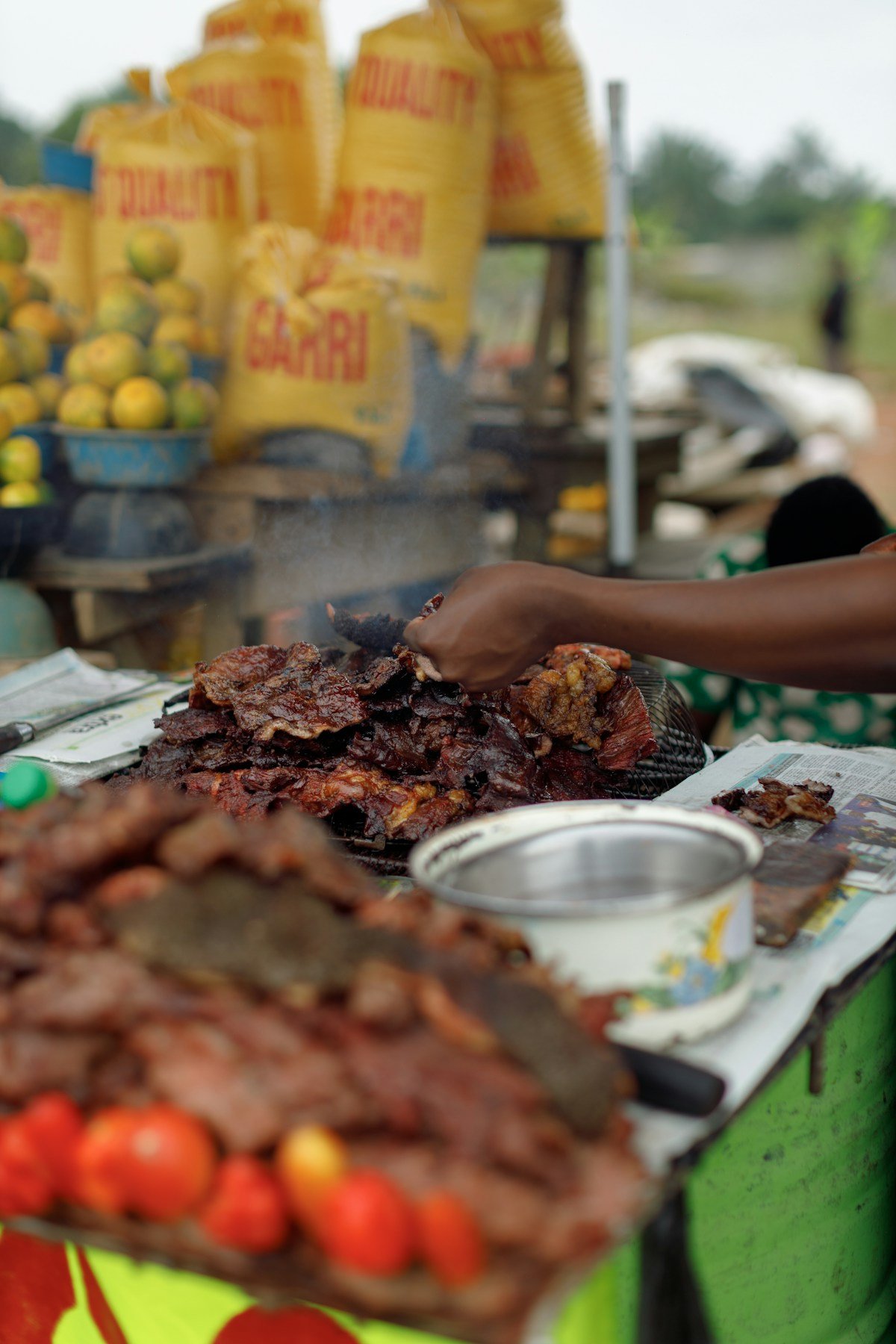
Zimbabwe does not have a street food culture in the sense of dedicated food streets or night markets in the way you find in parts of Southeast Asia. What it does have is a pervasive, inexpensive, and largely excellent informal food economy operating from market stalls, roadside braai stands, bus termini, and pavement-side vendors. You can eat very well in Zimbabwe without spending significant money, if you know what to look for and where to eat it.
Roasted Maize (Chibage)
Roasted maize cobs are the defining street food of Zimbabwe. From late afternoon onwards in any Zimbabwean town, vendors set up small charcoal braziers on street corners, cooking fresh maize cobs slowly over the coals until the kernels are charred in places and sweet throughout. They are typically sold with a squeeze of lemon juice and a pinch of salt, and sometimes with a smear of butter.
Price: approximately USD 0.50–1 per cob as of 2026. Season: primarily November to March, when fresh maize is in season, though frozen cobs are available year-round. Best locations: around Harare’s First Street Mall in the evenings, near major bus termini (4th Street Bus Station in Harare, Renkini Bus Terminal in Bulawayo), and at roadside stops between towns on major highways.
Roasted Groundnuts (Nzungu)
Paper twists of roasted groundnuts are found everywhere in Zimbabwe - on pavement corners, inside markets, at bus stops, and from vendors walking through kombi queues. The groundnuts are typically dry-roasted in large iron pots over coals, sometimes with salt, sometimes plain. They are warm, nutty, and habit-forming.
Price: USD 0.50 for a small twist, USD 1 for a large one. The quality varies - fresh-roasted is far better than stock kept overnight. Look for vendors actively tending a pot rather than selling from a cold bag. Harare’s Mbare Musika market is one of the best places to find fresh-roasted groundnuts sold by weight from sacks.
Vetkoek (Fat Cakes)
Vetkoek are deep-fried dough balls - essentially the equivalent of a donut without the sugar, eaten with savoury fillings or plain. In Zimbabwe they are called fat cakes or (sometimes) mahewu bread. They are sold from small frying setups near bus ranks and markets, fried to order in large pots of oil. You typically split them open and fill with mince (mincemeat prepared with tomato and onion), boiled egg, or just eat them plain as a starchy snack.
Price: USD 0.50–1 per piece, depending on whether filling is included. Widely available near the Copacabana bus terminus in central Harare, near the Egodini terminus in Bulawayo, and at market entrances across the country.
Roadside Braai Meat (Nyama Yemoto)
In towns across Zimbabwe, especially during Friday and Saturday evenings and on public holidays, mobile braai (barbecue) setups appear at roadsides and at the edges of beer gardens. A braai grid over a drum half-filled with coals, typically cooking chicken pieces, beef cuts, or wors (boerewors spiced sausage). Smoke, noise, and the smell of grilled meat are reliable navigation aids.
Chicken pieces (drum legs or thighs) typically cost USD 2–3 per piece. A full portion of wors runs USD 3–5. Payment is cash only. The meat is often good quality - Zimbabwean beef and free-range chicken have genuine flavour advantages over industrially farmed alternatives. Served wrapped in newspaper or a piece of bread, with peri-peri sauce on the side.
The Avondale Market in Harare (Saturday mornings) features a dedicated braai area within the market grounds, making it one of the more comfortable contexts for sampling this kind of cooking if you are not yet comfortable navigating a roadside setup independently. For a more structured approach to Harare’s food scene, guided Harare food tours take in market stalls and informal eating spots with local context provided.
Sadza Lunch Spots
The blur between street food and restaurant is particularly thin in Zimbabwe when it comes to sadza spots - small, informal eateries operating from shack kitchens or open-sided stalls that serve a daily menu of sadza with rotating relishes. These are the closest equivalent to a street food lunch in the Zimbabwean urban context.
The setup: you queue, tell the server what relish you want (typically beef stew, chicken, or muriwo with options for matemba dried fish), the sadza is scooped fresh from a large pot, and the relish added alongside. You sit at a shared bench or plastic table. Meals take 20 minutes end-to-end.
Price: USD 2–4 per meal including a cold soft drink. The busier the queue, the fresher the food - this is always the reliable quality signal. Areas near major markets (Mbare Musika in Harare, the central market area in Mutare) have the highest density of these spots.
Boiled Sweet Potatoes and Cassava
At morning markets and some roadside stops, particularly in the Manicaland province (Eastern Highlands) and Mashonaland areas, boiled sweet potatoes and cassava (manioc) are sold from large pots. Sweet potatoes are simply boiled with salt and sold as a filling breakfast or snack. Cassava prepared the same way is more filling and slightly starchier.
Price: USD 0.50–1 for a portion. These are primarily found in morning market contexts rather than afternoon or evening - arrive before 10:00 for the freshest stock.
Matemba Fritters
Matemba (dried kapenta fish from Lake Kariba) are sometimes prepared as deep-fried fritters at market stalls - the dried fish coated in a simple batter and fried to crispness. The flavour is intensely savoury, somewhere between anchovy and dried shrimp. These are sold near lake towns (Kariba, Binga, Mlibizi) and at the Mbare Musika market in Harare.
Fruit Vendors
Zimbabwe’s roadside fruit vendors fill a straightforward role in the food landscape: selling seasonal fresh fruit from handcarts or laid-out blankets. Watermelons in summer (November–March), avocados from April to August, guavas, mangoes, bananas, and citrus depending on season. Most fruit is grown locally in smallholder farms in Mashonaland and the Eastern Highlands.
A whole watermelon costs approximately USD 2–4 in peak season. A bag of avocados costs approximately USD 1–2 for four to six fruit. The quality of in-season Zimbabwean mangoes and avocados is genuinely excellent by any standard.
Staying Safe with Street Food
A few practical rules:
- Choose freshly cooked over pre-cooked and sitting
- Meat should be hot through, not just seared on the outside
- High-turnover stalls (busy queues) mean food moves quickly and sits less
- Peel fruit yourself rather than eating pre-cut
- Carry hand sanitiser - soap availability at street food spots is inconsistent
- Your gut adapts over time: if eating street food for the first time in Zimbabwe, start with the more thoroughly cooked options (sadza, braai meat, fat cakes) before moving to raw preparations
Plan Your Visit
Guided street food tours: Browse Harare food and culture tours - guided walks through Mbare Musika and Harare’s local eating spots with context on the ingredients and vendors.
Where to stay in Harare: Find Harare hotels - from business hotels in the CBD to guesthouses in quieter suburbs close to the market areas.