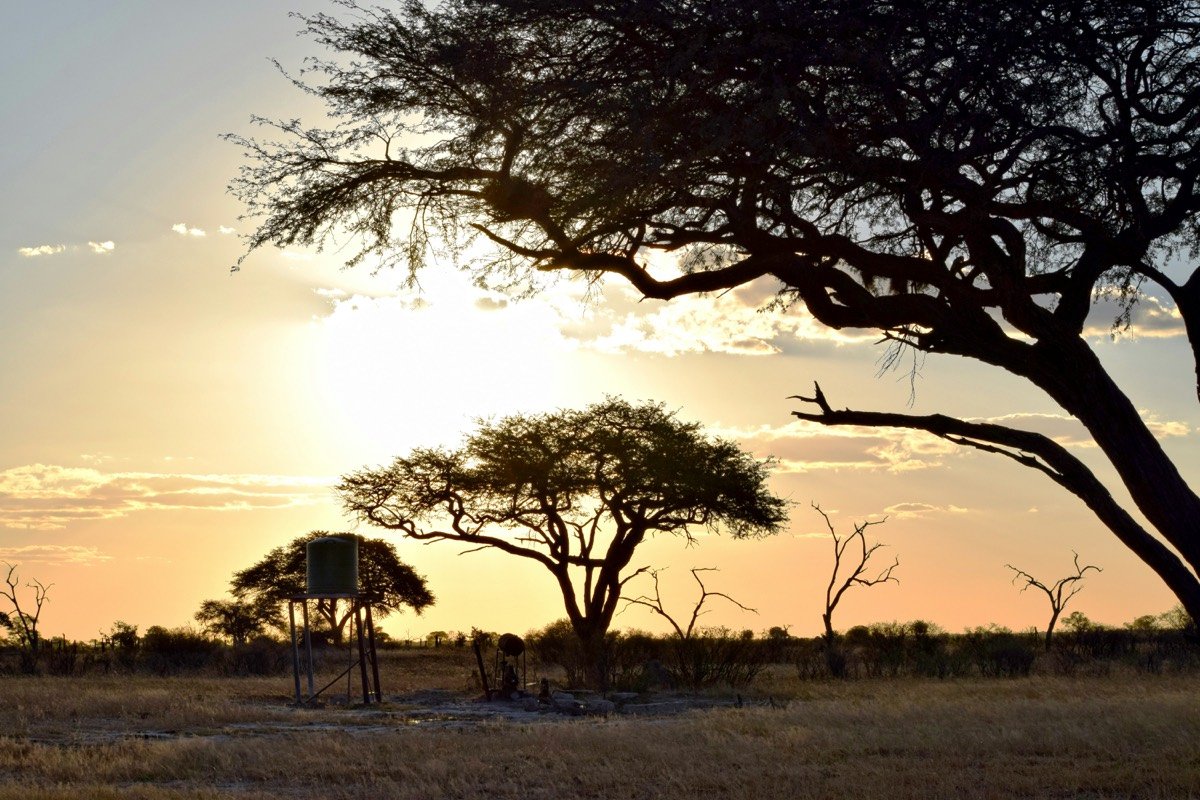
Hwange National Park is Zimbabwe’s largest protected area - 14,651 square kilometres of mopane woodland, Kalahari sandveld, and teak forest in the northwest of the country, bordering Botswana’s Chobe district. It supports one of Africa’s largest elephant populations (currently estimated at 40,000–45,000 individuals), along with lion, leopard, wild dog, cheetah, and one of the highest densities of buffalo on the continent. Rhino are present but extremely rare in the main game-viewing areas due to concentrated anti-poaching management.
This guide covers everything you need to plan a Hwange safari: self-drive versus guided, the waterholes that consistently deliver sightings, which area of the park to base yourself in, and a complete breakdown of camp options across all price tiers.
Park Overview and Entry
Location: Northwestern Zimbabwe, approximately 100km south of Victoria Falls via the main A8 road; about 4.5 hours by road from Bulawayo
Size: 14,651 km² (for comparison: roughly the size of Connecticut, or slightly smaller than Kruger National Park)
ZPWMA entry fees as of 2026: Approximately USD 20–25 per international visitor per day, plus a separate vehicle fee of approximately USD 10–15 per vehicle per day. Fees are payable in USD cash at the gate.
Gates: Main Camp gate (primary entry point near the eastern boundary), Sinamatella (northern sector), Robins Camp (far north). Each zone requires separate gate access - you cannot drive freely between zones without exiting and re-entering.
Main Camp: The administrative headquarters and most accessible entry point. Located near the eastern edge of the park, approximately 25km from Hwange town on the railway line.
Self-Drive vs Guided Safari
This is the first decision every visitor needs to make, and the answer depends primarily on your experience level, budget, and what you want from the experience.
Self-Drive Safari
Hwange permits self-drive in a standard 2WD vehicle within the main road network around Main Camp during the dry season. A 4WD is strongly recommended and sometimes essential in the wet season, and provides access to more remote routes.
Advantages:
- Significantly cheaper - vehicle fee plus your own fuel rather than USD 200–400/day for a guided game drive vehicle
- Freedom to stop as long as you want at waterholes
- You set your own schedule - dawn drives, dusk drives, multiple hours at a single waterhole if you choose
- A more solitary experience than riding in a shared vehicle
Disadvantages:
- You may miss animals that a trained guide would have spotted
- Guide knowledge of the park, animal behaviour, and tracking significantly increases the quality of sightings
- Breakdown risk: carrying a spare tyre, basic tools, and water is essential - mobile coverage in most of Hwange is nonexistent
- You cannot drive off designated roads
- Night drives are not permitted for self-drive visitors
Self-drive recommendation: Perfectly viable around Main Camp with a reliable vehicle and basic bush preparation. Not recommended for Sinamatella or Robins Camp areas without 4WD.
Guided Game Drive
Guides operating from camps inside the park have extensive knowledge of current animal movements, know which waterholes are active, and can legally take you off-road and on night drives - opening up wildlife encounters that self-drive simply cannot reach.
Options for guided game drives:
- Lodge-based drives: Included in all-inclusive packages at private lodges. Quality is consistently high; guides know their concession areas intimately.
- ZPWMA-guided drives at Main Camp: Available to self-drive visitors who want the guide experience without an all-inclusive lodge. Priced at approximately USD 45–70 per person for a morning or afternoon drive. Book at the Main Camp reception.
- Day-trip guided safari from Victoria Falls: Multiple operators run full-day guided game drives from Victoria Falls to Hwange and back, typically priced at USD 180–250 per person including park fees and lunch. This is the most common format for visitors based in Victoria Falls with one day available.
Our recommendation: if you are staying inside Hwange for multiple nights, self-drive in the morning and book a ZPWMA guided afternoon drive at least once. The combination gives the best of both approaches at a manageable price.
The Best Waterholes
Hwange sits on a Kalahari sand sheet with very few natural surface water sources. ZPWMA and private operators pump water to artificial waterholes year-round, which is why Hwange concentrates wildlife so reliably - animals within a 50km radius all converge on the same water points.
Dom Pan (also written Dopi Pan): The most consistently productive waterhole in the Main Camp zone. Elephant access here is extraordinary - it is common to have 200+ individuals at a single session. Located about 12km from Main Camp; the road is passable in a standard vehicle during dry season.
Kennedy 1 and Kennedy 2: Twin waterholes about 20km from Main Camp on the Ngamo road. Kennedy 1 tends to attract large buffalo herds alongside elephant. Kennedy 2 is slightly more sheltered and occasionally draws lion. Both are within easy self-drive range.
Nyamandhlovu Pan: Has a raised observation deck (accessible on foot from the parking area) that places you above the waterhole action - gives a completely different perspective from sitting in a vehicle at the same level as the animals. Elephant activity here can be exceptional at dusk. About 15km from Main Camp.
Little Toms and Big Toms: A pair of waterholes in the central Main Camp area frequently visited by wild dog packs in addition to elephant and buffalo. Wild dog sightings require timing and luck anywhere in Africa; these two waterholes offer the best chance in the Main Camp zone.
Caterpillar Pan: Located toward the Robins Camp sector, about 70km from Main Camp (requires 4WD). Less visited and correspondingly more rewarding in terms of undisturbed wildlife. Lion sightings here are above average relative to the more-visited southern waterholes.
Sinamatella area: The northern sector has a completely different character from Main Camp - more rugged terrain, fewer visitors, more leopard sightings, and exceptional views from Sinamatella Camp itself, which sits on an escarpment overlooking the valley. A 4WD and booking Sinamatella Camp accommodation is the prerequisite for this area.
Big Five Prospects in Hwange
Elephant: Virtually guaranteed year-round, and the quality of elephant sightings here is among the best anywhere in Africa. The population is enormous and accustomed to vehicles. Expect large herds at waterholes daily.
Buffalo: Large herds present, particularly at the Kennedy waterholes. Good year-round but peak in the dry season when they concentrate near water.
Lion: Present throughout the park, with the highest density around the Linkwasha and Ngamo areas in the southern sector. Sightings are not guaranteed but are regular for guests staying in the park for 2–3 nights. The best strategy is guided night drives - lion are most active between 6pm and midnight.
Leopard: The most elusive of the Big Five here. Sinamatella area offers the best chance of a sighting; the rocky terrain suits their ambush hunting style. Do not plan a Hwange trip specifically for leopard - treat any sighting as a bonus.
Rhino: Black and white rhino are present in the Intensive Protection Zone managed jointly with private conservancies on the park’s western boundary, but they are not accessible to general tourists. The population is carefully managed under high security. This is not a Hwange safari objective for most visitors.
Wild dog: Hwange supports one of Africa’s largest wild dog populations and is genuinely one of the best places on the continent to find them. Sightings are not guaranteed - wild dogs range huge distances - but staying 2–3 nights with early morning and late afternoon drives gives a realistic chance. Ask your guide or camp about current pack locations at the time of your visit.
Other notable species: Giraffe (common in mopane woodland), sable antelope, roan antelope, eland, kudu, zebra, wildebeest, hyena, warthog, ostrich, and a remarkable bird list of over 400 species.
Camp Options and Price Tiers
Accommodation in and around Hwange divides sharply into three tiers: ZPWMA national park accommodation, mid-range private lodges, and luxury all-inclusive lodges.
Budget - ZPWMA National Park Accommodation
Managed by ZPWMA and bookable through the Zimbabwe Parks booking system or on arrival (space permitting outside peak season).
Main Camp Chalets: Self-catering units with basic kitchen facilities, en-suite bathroom, and air conditioning. Approximately USD 35–55 per unit per night as of 2026 for a standard unit. Sleeps 2–4 depending on configuration. Bring all your own food and drink - the camp store has limited supplies. The camp has a communal braai (barbeque) area and a small swimming pool.
Sinamatella Camp: Similar self-catering chalets on the escarpment with exceptional views. The setting is more dramatic than Main Camp. Same price bracket - approximately USD 35–55 per unit per night. Restaurant and limited supplies available at reception.
Camping: Basic campsites at Main Camp, Sinamatella, and Robins Camp with shared ablution blocks. Approximately USD 15 per person per night. Bring all camping equipment and food. Perimeter fencing is present but Hwange is not enclosed - wildlife moves freely near camp. Do not walk outside in the dark without a torch and awareness; elephant regularly visit camp water points after dark.
Booking: ZPWMA online system can be unreliable. Emailing the ZPWMA Harare office directly or having a Zimbabwe travel agent handle the booking is the most reliable method.
Mid-Range - Private Lodges (USD 150–400/night)
Elephant’s Eye: Suspended tented camp on a platform overlooking a forest clearing about 6km from Main Camp. Walk-in access; own vehicle required or arrangements through the camp. Approximately USD 200–300 per person per night on a full-board basis including two guided game drives daily. A genuinely good quality experience at a sustainable price point for private camps.
Ivory Lodge (The Lodges at Hwange): Five detached chalets with private plunge pools, positioned near an active waterhole viewable from the rooms. Approximately USD 250–380 per person per night all-inclusive. Strong big game viewing directly from the lodge deck.
Sikumi Tree Lodge: Tree-house-style accommodation in mopane woodland near Main Camp. Mid-range pricing approximately USD 180–250 per person per night full-board with game drives. Popular with families due to the tree-level perspective and good game drive standards.
Luxury - All-Inclusive Private Camps (USD 500–1,000+/night)
The Hide Safari Camp: One of Hwange’s oldest and most respected luxury camps, positioned over an active waterhole in a private concession east of the main park. Eight tented chalets; solar-powered. Approximately USD 650–900 per person per night fully all-inclusive (all meals, all drinks, two guided activities per day, conservation fees). The waterhole directly in front of camp delivers extraordinary elephant and buffalo sightings from the elevated viewing platform. Walking safaris are a particular strength here.
Somalisa Camp (African Bush Camps): Seven tents in a private concession in the Ngamo area, with exclusive access to some of the park’s most productive waterhole systems. Approximately USD 700–950 per person per night all-inclusive. Wild dog sightings from this camp are among the most reliable in the whole Hwange ecosystem. African Bush Camps have an excellent sustainability and community development programme.
Linkwasha Camp (Wilderness Safaris): High-end camp in the Linkwasha concession in the southern sector - an area with exceptional lion activity. Approximately USD 800–1,100 per person per night all-inclusive. Wilderness Safaris operates to high environmental standards and the guide quality here is consistently rated among the best in Zimbabwe.
Bomani Tented Lodge: More affordable entry point to the Hwange private concession market. Six tented units; guided day and night drives included. Approximately USD 400–550 per person per night all-inclusive. Good value relative to the top-tier camps while maintaining high guide quality.
Best Time to Visit
May to October (dry season): The standard recommendation and with good reason. Water sources outside the pumped waterholes dry out completely, concentrating all wildlife at the artificial water points. Vegetation thins as the season progresses, improving visibility. By August and September the Hwange waterholes are the only show in town for wildlife across hundreds of kilometres.
Peak within peak: Late August through October sees the maximum concentration of wildlife - elephant numbers at some waterholes become extraordinary. It is also very hot (35°C+ in October), which makes midday stationary hours at waterholes long and tiring. Early morning and late afternoon drives are the priority.
June and July: Cooler, excellent visibility, full wildlife concentration, comfortable temperatures for extended drives. The optimal combination.
November to April (wet season): The bush greens up dramatically; migratory bird species arrive. Wildlife disperses across the park as natural water sources return, making sightings less concentrated and less predictable. Not recommended as the primary Hwange visit but acceptable if the timing is fixed.
Book a Guided Hwange Safari on GetYourGuide
For visitors departing from Victoria Falls who want a fully guided day trip or overnight safari, the following options are bookable via GetYourGuide with free cancellation up to 24 hours before departure. Prices shown are 2026 verified starting rates.
| Tour | Duration | From (USD) | Book |
|---|---|---|---|
| Hwange Full Day Safari from Victoria Falls | 8–10 hrs | $180 | Book |
| Hwange National Park Private Wildlife Safari | 12 hrs | $240 | Book |
| 2-Day Hwange National Park Safari from Victoria Falls | 2 days | $350 | Book |
Park entry fees (approximately USD 20 per person per day) may or may not be included - confirm with the operator at time of booking.
Getting to Hwange
By air: Hwange Airport (WKS) receives scheduled flights from Harare and Victoria Falls on Fastjet Zimbabwe. Charter options exist from Victoria Falls. Flying in is the most efficient approach if combined with a luxury camp stay.
By road from Victoria Falls: Approximately 100km, about 90 minutes in good conditions on the A8 highway. The road passes through the national park perimeter near Hwange town; game can be seen from the road. Standard vehicle is fine on this route.
By road from Bulawayo: Approximately 330km north on the A8, about 4–4.5 hours. Hwange town is on this main artery.
By rail: The overnight Bulawayo to Victoria Falls train stops at Dete, 10km from Main Camp. A romantic and impractical option that some visitors specifically choose for the experience.
Practical Notes
Fuel: Fill up at Hwange town before entering the park. There is no fuel inside the park boundaries. For extended self-drive, calculate your fuel needs conservatively - distances between waterholes accumulate quickly.
Water: Carry at least 4 litres per person for a full-day self-drive. Water is not available inside the park except at camps.
Mobile coverage: Essentially nonexistent inside the park. Inform someone of your route and expected return before heading out for a self-drive.
Malaria: Hwange is a malaria area. Take prophylactics, use DEET-based repellent, and sleep under a net. The risk is highest during and immediately after the wet season (November to March).