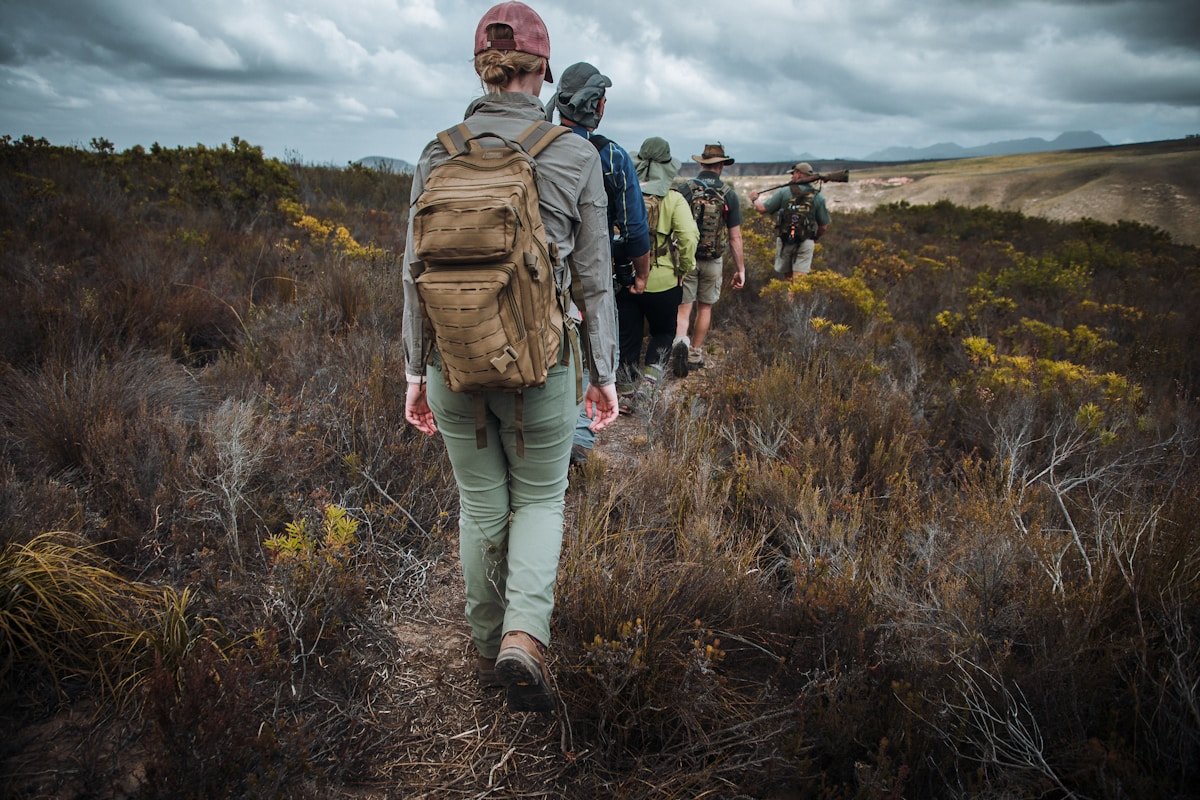
Mana Pools National Park is widely regarded as Africa’s finest destination for walking safaris, and the reasons are specific: it is one of very few parks on the continent where experienced visitors may walk unguided, the floodplain terrain is flat enough for multi-hour walks, and the wildlife is habituated enough to allow remarkably close approaches on foot. Elephants standing bipedally to reach acacia pods, wild dog packs crossing the Zambezi floodplain, lion at the riverbank - all of these are routine Mana Pools encounters. This guide covers how to book a guided walking safari, what you will pay, how difficult the walks are, and what the experience actually involves.
Why Mana Pools for Walking Safaris
Mana Pools became a UNESCO World Heritage Site in 1984. The park sits on the south bank of the Zambezi River in northern Zimbabwe, and its defining landscape is the Zambezi floodplain: open woodland and dry floodplain terrain interspersed with four large pools - the “mana” (meaning “four” in Shona) that give the park its name.
This floodplain landscape is critical to the walking experience. Unlike in dense bushveld, animals can be spotted at 200–400 metres, giving guides time to assess movement and plan approach angles. There is rarely a need to push through impenetrable thicket. Walks cover 5–12km at an easy pace over flat ground, making this accessible to most reasonably fit adults.
The other unique feature is Zimbabwe’s unguided walking provision. Unlike South Africa’s private reserves, which require an armed guide for all bush walks, Mana Pools allows self-sufficient experienced walkers to walk unescorted in parts of the park. In practice, first-time visitors should always take a professional guide - the unguided provision exists for seasoned Africa hands who understand animal behaviour.
For a full wildlife species guide - the elephant, lion, wild dog, leopard, hippo, and buffalo populations you will encounter, their habitats, and seasonal behaviour - see our Mana Pools wildlife guide.
Guided Walking Safari Operators and Costs
Camp-Based Guided Walks (recommended approach)
The best way to experience walking in Mana Pools is to stay at a walking-focused camp and do two guided walks per day as part of your all-inclusive package.
Chikwenya Camp (Wilderness Safaris) The largest and most established luxury camp on Mana’s western boundary. Guided walks are included in the all-inclusive rate of approximately USD 800–1,100 per person per night. Wilderness guides at Chikwenya hold FGASA Level 2 or higher qualifications and carry a .458 calibre or .375 rifle for backup.
Vundu Camp (African Bush Camps) A smaller, more intimate camp emphasising walking as its primary activity. Rates approximately USD 650–900 per person per night, all-inclusive including two guided walks daily. Maximum 8 guests means walk groups are small.
Nyamatusi Camp A newer boutique camp on Mana’s floodplain, rates approximately USD 550–750 per person per night. Known for guiding quality - several guides trained under legendary Mana Pools guide John Stevens.
Mana Pools Tented Camp (National Parks budget option) Zimbabwe National Parks operates basic campsites near Main Camp. Guided walks are available at approximately USD 30–50 per person per walk booked through the Parks office. This is the accessible budget option for independent travellers who drive themselves in.
Day-Trip Guided Walks
Organised day walks from Harare (approximately 5 hours drive) are available through some operators but logistically demanding. Most travellers stay at least 3 nights to justify the journey. Short fly-in packages (Harare to the Mana Pools airstrip is approximately 45 minutes) can make 2-night stays viable.
Difficulty and Fitness
Walking safaris at Mana Pools are moderate in difficulty. All terrain is flat floodplain - no hills, no scrambling. Walks are typically 5–10km per session at a slow pace (3–4 km/hour) with frequent stops for animal observation and tracking. Two sessions per day (morning 5:30am–9am, afternoon 3:30pm–6pm) are standard.
The main physical requirements:
- Ability to walk 5–8km in warm weather (temperatures 25–35°C in the dry season)
- Comfortable walking footwear - dedicated safari boots or trail runners with ankle support
- Capacity to stand still quietly for extended periods
The psychological demands are distinct from conventional hiking. Walkers must follow the guide’s hand signals without question - this is not a casual stroll. Sudden stops, crouches, and direction changes happen based on wind shifts and animal proximity. This disciplined group walking is part of the experience, not an inconvenience.
Safety on Walking Safaris
Professional guides at all accredited Mana Pools camps are ZPWMA licensed and carry a heavy-calibre rifle. Discharge of the rifle is a last resort - in reality, most tense animal encounters are resolved by the guide reading the situation correctly and steering the group away calmly. Unprovoked charges from lions or elephants at Mana Pools are extremely rare.
Key safety protocols:
- Walk in single file, guide at front, assistant at rear
- Move into wind where possible to avoid detection by predators
- Never run from any animal
- Group maximum typically 8 walkers (quality camps limit to 6)
No walking safari is risk-free, but Mana Pools has an excellent track record under qualified guides.
What to Bring
- Neutral-coloured clothing (khaki, olive, grey - no white, black, or bright colours)
- Wide-brimmed hat, sunscreen SPF 50+
- Binoculars (8x42 recommended)
- Camera with a moderate zoom (100–400mm for wildlife)
- 2L water per walk session
- Insect repellent with DEET 30%+ (tsetse flies are present; closed shoes essential)
- Ankle-covering socks
Best Season
May through October is the optimal walking season. The dry season brings cooler temperatures (mornings as low as 10°C in June–July), lower grass height (better visibility), and animals concentrated near the river and pools.
September and October are peak season for wildlife viewing intensity - the heat drives animals to water predictably. However, October temperatures in the bush reach 38–42°C by midday, which limits the afternoon walk window.
November to April (rainy season): Mana Pools receives approximately 700mm of rain in this period. The floodplain floods partially, road access degrades, some camps close, and vegetation becomes extremely dense. Walking visibility is poor and the heat/humidity is extreme. Most walking-focused camps close from December to March.
Booking Options
Dedicated Mana Pools walking safari camps are not currently listed on GetYourGuide - they are specialist operations booked directly through camp websites or Zimbabwe safari agents 3–12 months in advance. For visitors who want to combine Mana Pools with a GYG-bookable guided safari, Hwange National Park (bookable below) makes a natural pairing on the same Zimbabwe circuit.
| Tour | Duration | From (USD) | Book |
|---|---|---|---|
| Hwange Full Day Safari from Victoria Falls | 8–10 hrs | $180 | Book |
| 2-Day Hwange National Park Safari from Victoria Falls | 2 days | $350 | Book |
| Browse All Zimbabwe Safari Tours | Various | various | Browse |
Getting to Mana Pools
Book walking safari camps 3–12 months in advance for the peak July–September window; camps at Mana have small capacities (6–12 guests) and sell out quickly. Direct camp websites and specialist Zimbabwe travel agents are the most reliable booking channels.
Getting to Mana Pools: the sealed road from Harare to Marongora gate is approximately 350km (4–5 hours). From the gate to Main Camp, the road is unsealed and requires high clearance. The park airstrip (FVMD) handles light aircraft - charter flights from Harare with UTC or Tropic Air cost approximately USD 350–500 per person one-way.
A walking safari in Mana Pools is the closest southern Africa offers to the pure, unmediated wildlife encounter that defined early exploration of the continent. No vehicle, no engine noise - just footsteps, wind, the guide’s whispered instruction, and an elephant 40 metres away. Allocate at least three nights; two walks per day is how the experience earns its reputation.