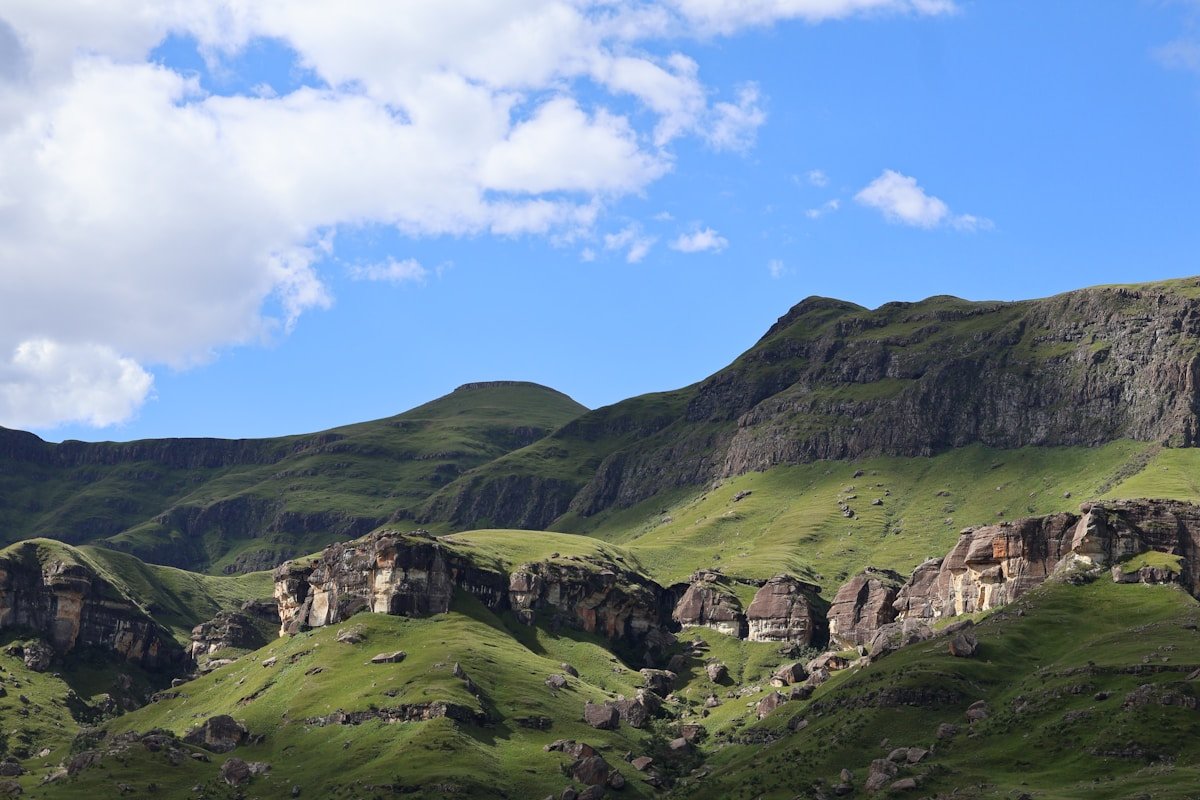
The Chimanimani Mountains rise along Zimbabwe’s eastern border in a series of quartzite peaks that look nothing like the rest of the country. No granite boulders, no flat bush, no elephant. Instead: angular ridgelines, green valleys dropping to clear streams, caves and overhangs in bleached white rock, and a silence interrupted only by wind and mountain birds. The range is small - perhaps 50 kilometres from north to south - but the hiking is among the finest in southern Africa.
The Mountains and the Park
Chimanimani National Park covers approximately 171 square kilometres of the Chimanimani Range and the Mozambican border ridge. The mountains are composed largely of ancient quartzite (the Chimanimani Sandstone Formation), which weathers into a distinctive pale, jagged landscape quite different from the granite and basalt found elsewhere in Zimbabwe.
The highest point in the Zimbabwean section is Mt Binga (2,436m), which sits on the border with Mozambique. Several peaks exceed 2,000m. The eastern slopes drop sharply into Mozambique’s Chimanimani National Reserve, creating a transboundary conservation area that is very rarely visited.
The national park’s altitude, orientation and rainfall pattern create a climate quite unlike the rest of Zimbabwe. Even in the dry season, mist and cool temperatures are common. Temperatures at the base camp can drop to 5–8°C at night in July. In the wet season (November–April), the mountains receive substantial rainfall that fills the streams and feeds impressive waterfalls but makes some routes slippery and route-finding harder.
Getting to the Base Camp
The journey to Chimanimani is part of the adventure. From Harare, the fastest route goes via Masvingo, Mutare and Chipinge - approximately 600km and 8–9 hours in a reliable vehicle. Alternatively, the Mutare–Chimanimani leg (around 150km, 3–4 hours) can be driven as a day trip from the eastern highlands hub.
The base camp (Chimanimani National Park Base Camp) is 19km from Chimanimani village on a dirt road that deteriorates significantly after rain. A high-clearance vehicle is strongly recommended. During the dry season, a standard sedan can manage the road with care, but ask locally before committing.
At the base camp, there is a Parks and Wildlife office where you pay entry fees, register, and collect any available information. The office has a basic shelter, cooking facilities, and ablutions. Camping here costs approximately USD 10–15 per person per night as of 2026.
The Main Trekking Routes
Bundi Valley Route (Most Popular, 2–3 Days)
The Bundi Valley is the heart of the park and the destination for most trekkers. The route begins at the base camp and climbs the mountain escarpment on a well-worn path, reaching the valley floor after approximately 3–4 hours of steady ascent. The climbing is continuous but not technical - the path zigzags through heath and protea vegetation, crossing several small streams.
Once in the Bundi Valley, the landscape opens into one of Zimbabwe’s most spectacular highland environments. Flat quartzite shelves, crystal streams, caves and overhangs that offer natural shelter, and peaks rising on all sides. The Bundi River pools provide fresh water (purification recommended) and the caves along the valley walls have been used as shelters by San hunter-gatherers for thousands of years.
Camping is permitted throughout the valley. There are no facilities beyond the base camp, so carry everything you need. Multi-day trekkers typically spend two nights in the valley before returning the same way or, for experienced navigators, taking an alternative descent route to the south.
Distance: Approximately 10–12km one way to the upper valley, with substantial ascent (800–1,000m elevation gain).
Difficulty: Moderate to strenuous.
Recommended: 3 days (in, one rest day in the valley, out).
Bailey’s Fool Route (Summit Access)
For those wanting to reach Mt Binga or the main ridge, Bailey’s Fool is the traditional route out of the Bundi Valley onto the high ground. This path involves scrambling on loose quartzite near the top and requires good footwork. In clear conditions it is navigable for experienced hikers without technical equipment; in mist it is not recommended without a guide familiar with the specific terrain.
The summit of Mt Binga offers views into Mozambique on a clear day and a sense of complete remoteness that few destinations in Zimbabwe can match.
Day Hiking from the Base Camp
For those without camping equipment or a multi-day window, a day hike from the base camp to the escarpment gives a genuine taste of the Chimanimani landscape without requiring an overnight in the park. Allow 6–8 hours for the return hike and start early (before 07:00) to allow time and to avoid afternoon cloud build-up.
Wildlife in the Park
Chimanimani’s wildlife profile differs from other Zimbabwean parks. Large mammals are present but not in safari concentrations - eland and sable are occasionally seen on the valley grasslands, klipspringer and grey rhebuck inhabit the rocky slopes, and leopard are resident though rarely encountered. The park is most notable for its birds: the blue-spotted dove, the red-fronted tinkerbird, and several forest species found nowhere else in Zimbabwe are recorded here.
Butterflies are extraordinarily diverse, particularly in the wet season. The quartzite substrate and altitude create microhabitats that support endemics and near-endemics found nowhere else in the country.
Guides and Local Support
Guides are available for hire in Chimanimani village and through the base camp parks office. Rates approximate USD 20–30 per day (confirm and agree the rate before departure). Guides from the community have knowledge of the mountain that topographic maps cannot convey - particularly important for route-finding in mist or for identifying the specific cave shelters and water sources in the valley. If you’d prefer to arrange a fully guided Zimbabwe hiking experience before you arrive, Chimanimani and Eastern Highlands tours on GetYourGuide includes Eastern Highlands hiking packages.
Porter services are available through community organisations in Chimanimani village for those who prefer to hike lighter. Agree a rate per day and per kilogram of load. Even a partial porter hire makes a meaningful difference to multi-day trekking comfort.
Practical Notes
What to bring: Layered clothing (including a warm mid-layer and waterproof shell), a reliable tent, a sleeping bag rated to 5°C, sturdy boots, trekking poles (useful on quartzite descents), a first aid kit, water purification tablets or filter, 2–3 days of food for multi-day trips, a topographic map, and a compass or GPS. Take out travel insurance for Zimbabwe before setting off - Chimanimani is remote and medical evacuation from the mountains is expensive without cover.
Water: Available throughout the valley from mountain streams. Always purify before drinking.
Season: April–August is the recommended window - dry, cooler, clear skies. September and October can be very hot. November–March brings rain that makes paths slippery, rivers run high and mist is frequent, though the landscape is at its most lush.
Nearest facilities: Chimanimani village has a basic grocery store, several guesthouses, and a garage. The Frog and Fern Cottages in town are a well-established pre- and post-trek base. For a broader search of accommodation in the village, search hotels in Chimanimani on Booking.com to compare guesthouses and lodges before you book.