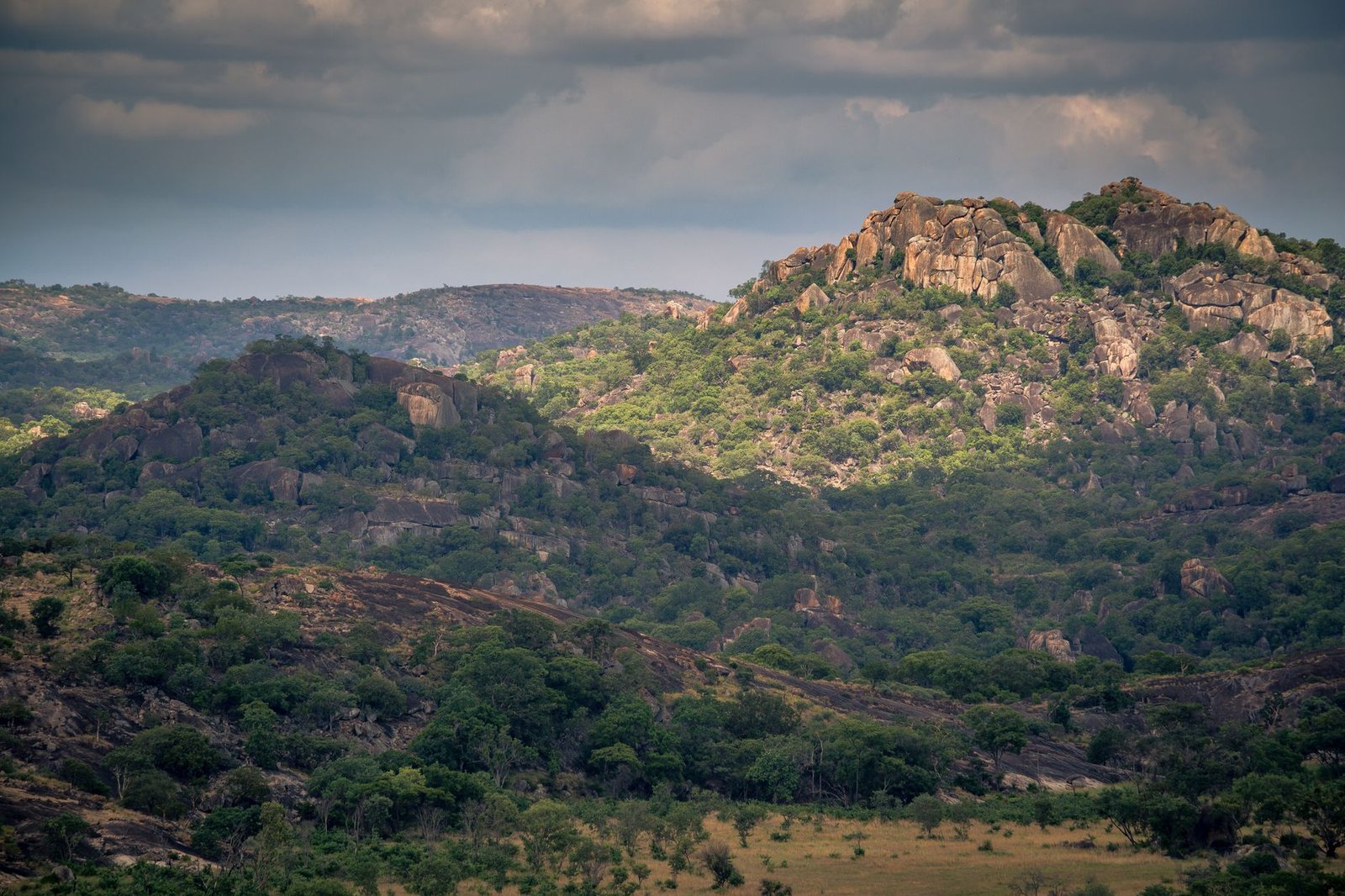
Bulawayo’s position in Matabeleland gives it a remarkably varied set of day trip options. To the south is Matobo Hills - one of Zimbabwe’s most dramatic landscapes, combining white rhino, ancient rock art, and extraordinary granite scenery. To the west is Hwange, the country’s flagship wildlife park. And on the outskirts of the city itself, Khami Ruins preserves a 15th-century stone city. Here is how to make the most of each.
Matobo Hills National Park (35 km south, 40 minutes)
Matobo Hills is the single most compelling reason to spend time in Bulawayo. The park covers 44,500 hectares of granite kopjes - massive rounded boulders, balanced rocks, and wooded valleys - and is one of the highest concentrations of San Bushman rock art in the world. The wildlife includes one of Africa’s densest populations of white rhino, plus leopard, sable antelope, giraffe, zebra, and abundant raptors including Verreaux’s eagle.
Rhino Tracking on Foot
White rhino tracking at Matobo is among the best wildlife experiences in Zimbabwe. Small groups (maximum 6) go out on foot with a licensed guide and Zimbabwe National Parks ranger to locate and approach white rhino at close range - typically within 20–30 metres. This is not viewed from a vehicle. The walk takes 2–4 hours depending on rhino location and terrain.
What to know:
- Book well in advance, particularly in the dry season (May–October) when demand is highest
- Wear neutral clothing (no bright colours); closed shoes that can handle uneven ground
- Carry water and sun protection
- Minimum age typically 12; all participants must be reasonably fit
Cost: Approximately USD 45–60 per person for the tracking permit as of 2026, on top of national park entry fees (approximately USD 15 per person). Total for a tracking morning: roughly USD 60–80 per person before transport.
Operators running Matobo trips from Bulawayo: Bulawayo-based lodges and guesthouses (Thaba Hills Lodge, Haddon & Sly) can book rhino tracking through Zimbabwe National Parks. Alternatively, contact Zimbabwe National Parks directly for the tracking permit.
Cecil Rhodes’ Grave at World’s View
World’s View is a summit of stacked granite boulders overlooking the Matobo Hills. Cecil Rhodes specifically requested burial here and his grave lies beneath a flat rock inscribed “Here lie the remains of Cecil John Rhodes.” The Mzilikazi burial site (founder of the Ndebele nation) is also nearby.
The viewpoint is extraordinary - a 360-degree panorama over the kopje landscape stretching to the horizon. Sunrise and late afternoon are the best light conditions.
Access: A short but steep path of perhaps 200 metres climbs to the summit from the car park. Accessible to most visitors. Allow 30–45 minutes for the visit.
San Bushman Rock Art
Matobo Hills contains thousands of San rock art sites, many of them accessible on guided walks. The paintings - predominantly in red, white, and yellow ochre - depict animals (eland, rhino, giraffe), human figures, and hunting scenes. They date from several thousand years ago to more recent times.
Key painting sites include Nswatugi Cave and Pomongwe Cave, both accessible from within the national park. A site guide (arranged through national parks or your operator) dramatically increases the experience - the imagery has layered meanings that are invisible without explanation.
Balancing Rocks Hike
The balancing rocks that define the Matobo landscape seem structurally impossible - immense boulders perched at improbable angles on each other. Walking among them, with guides explaining the geology, is a standalone experience. The Silozwane area has particularly good examples, along with excellent rock art panels.
Khami Ruins (22 km west, 30 minutes)
Khami Ruins is a UNESCO World Heritage Site and one of Zimbabwe’s most significant archaeological sites, though it receives far fewer visitors than it deserves. The stone ruins represent the capital of the Torwa state, which flourished from approximately the 15th to 18th centuries AD after the decline of Great Zimbabwe.
What to see: The ruins cover a large area of terraced stone platforms, enclosures, and passageways. The Hill Complex - the largest and best-preserved section - is an impressive feat of dry-stone construction, with decorative patterning (chevron, chequered, herringbone) built into the outer walls. A small museum at the entrance provides context.
Entry: Approximately USD 10–15 per person as of 2026. On-site guides are available and recommended - the architecture makes far more sense with explanation.
Getting there: Private taxi (USD 20–35 return with waiting time), self-drive, or combined tour arranged through Bulawayo accommodation. The road is sealed and in good condition. Allow 1.5–2 hours at the site; combine with lunch back in Bulawayo for a comfortable half-day.
Practical note: Khami is easily combined with Matobo Hills in a single day if you start early. Visit Khami in the morning (it is closer and takes less time) and head south to Matobo for afternoon rhino tracking.
Hwange National Park (170 km north-west, approximately 2.5 hours)
Zimbabwe’s largest national park covers 14,651 square kilometres and hosts the largest elephant population in the country - approximately 40,000–50,000 during peak dry season numbers. Game viewing at the waterholes near Hwange Main Camp is among the best in Africa.
As a day trip: Possible but stretched. The drive is 2.5–3 hours each way on the Bulawayo–Victoria Falls road (A8). You would arrive by 10–10.30am, have 3–4 hours for game drives or waterhole viewing, and need to leave by 3pm to be back in Bulawayo before dark. That is workable but limits time in the park significantly.
Better option: An overnight stay at Hwange Main Camp (Zimbabwe National Parks accommodation, approximately USD 20–30 per person per night as of 2026) or one of the private camps (USD 150–600 per person per night depending on the property). This lets you game drive at dawn - when elephant, lion, and painted wolf activity is highest.
Operators running Hwange day trips from Bulawayo: Bulawayo-based travel agents can arrange a self-drive package or a guided day trip. Hwange full-day safari tours are also available on GetYourGuide - a convenient option if you want a guide and transport included. Self-drive on the tarred A8 highway is straightforward. Inside the park, the main roads are gravel but generally passable in a saloon car.
Park entry: Non-resident fee approximately USD 20 per person plus USD 5 per vehicle as of 2026.
Practical Notes for Day Trips from Bulawayo
Best season: May–October (dry season) is the optimal time for wildlife at Matobo and Hwange - vegetation is lower, animals concentrate at waterholes, and roads are dry. Khami Ruins can be visited any time of year.
Getting there independently: Car hire from Bulawayo Airport (Avis, Europcar) costs approximately USD 60–80 per day for a small car as of 2026. A saloon car reaches Matobo and Khami; a 4WD is preferable for Hwange’s interior roads.
Guided tours: All three destinations can be arranged through your Bulawayo accommodation or through local operators. Guided trips typically include park entry and transport; confirm what is included when booking. You can also browse Bulawayo tours on GetYourGuide to see available options and check recent reviews.
Cash: Park fees are payable in USD cash. Card machines are not reliable at national park gates.
Timing: Leave Bulawayo by 7.30–8am for full-day trips. For Matobo rhino tracking, the morning session is preferable - rhino are more active and the light is better.
For accommodation options while exploring the area, search hotels in Bulawayo on Booking.com.