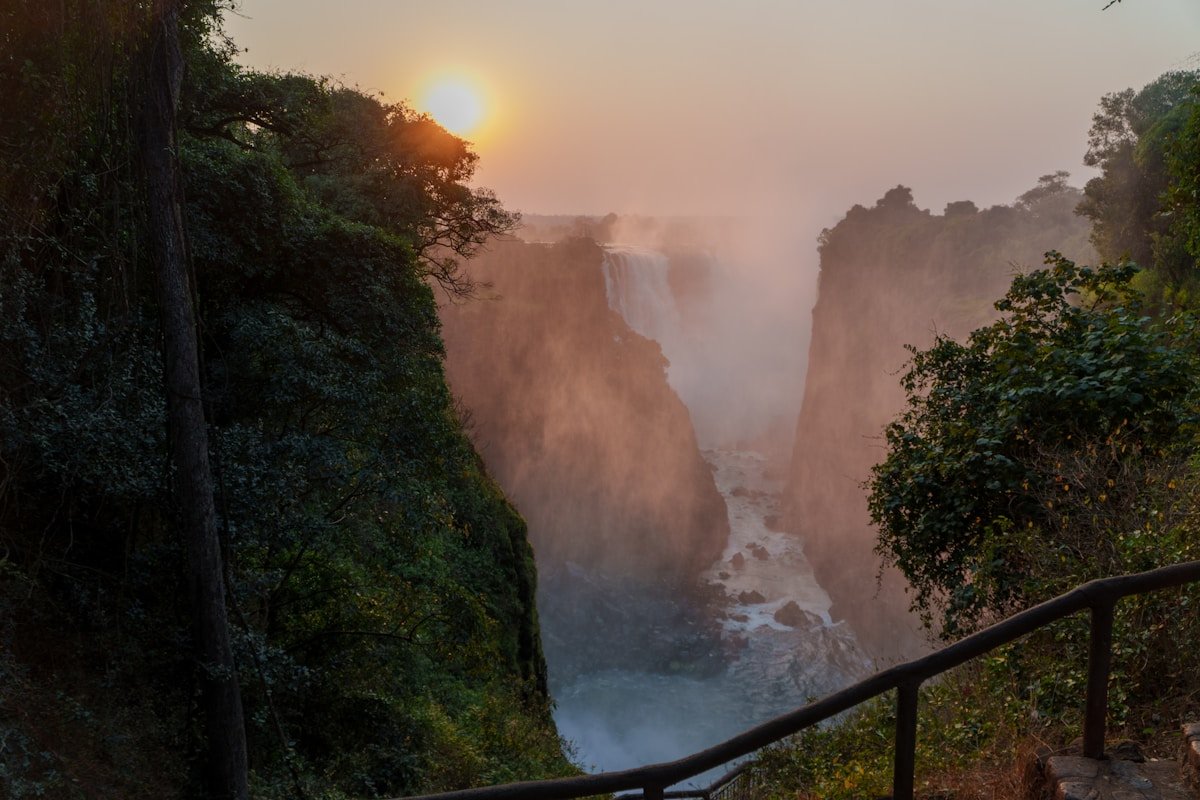
Ten days opens up Zimbabwe properly. This itinerary covers the country’s four headline experiences - Victoria Falls, a Hwange safari, the Great Zimbabwe ruins, and the Matobo Hills - without the breathless pace that a shorter trip demands. If you’d prefer a guided circuit rather than self-driving, browse Zimbabwe tours on GetYourGuide for operator-led packages covering the same highlights. You’ll have time for a full day at the falls, two proper game drive days in Hwange, time to actually explore the ruins at Great Zimbabwe (not just photograph the entrance) and a full Matobo day including the rhino walk and rock art.
The circuit runs south and east from Victoria Falls, finishing in Bulawayo for the flight home or onward connection. Total driving, spread across ten days, is manageable without an early start every morning.
Quick Overview
| Day | Location | Primary Activity |
|---|---|---|
| 1 | Arrive Victoria Falls | Falls walk + evening cruise |
| 2 | Victoria Falls | White-water rafting or adventure activities |
| 3 | Victoria Falls → Hwange | Afternoon game drive |
| 4 | Hwange | Full-day safari |
| 5 | Hwange → Bulawayo | Drive, city orientation |
| 6 | Bulawayo → Matobo Hills | Rhino tracking |
| 7 | Matobo Hills | Rock art, World’s View |
| 8 | Bulawayo → Masvingo | Great Zimbabwe arrival |
| 9 | Great Zimbabwe | Full ruins exploration, Lake Mutirikwi |
| 10 | Masvingo → Harare | Depart |
Budget Guide
Budget: USD 80–120/person/day (local guesthouses, ZPWMA camps, self-catering where possible)
Mid-range: USD 200–350/person/day (en-suite lodges, guided activities, most meals included)
Luxury: USD 600–900+/person/day (premium camps in Hwange, all-inclusive stays)
Day 1: Arrive Victoria Falls
Victoria Falls town is small enough to orient yourself within an hour of landing. Taxis from the airport to town cost approximately USD 10. The national park entrance is a ten-minute walk from most central hotels.
Buy a raincoat or cheap poncho if you arrive in the high-water season (February–May) - the spray soaks the main viewing paths completely. In the dry season (June–November), you’ll want sunscreen instead.
Spend the afternoon on the main falls path (entry USD 30 as of 2026, open daily 06:00–18:00). The 14 viewpoints cover roughly 1.5km of the gorge rim and take 60–90 minutes at a comfortable pace.
Evening: sunset cruise on the Upper Zambezi. Wild Horizons, Shearwater, and Bushtracks all run 2-hour sunset cruises (approximately USD 40–50/person) that include unlimited drinks and snacks. Hippos are almost guaranteed.
Stay: Ilala Lodge (mid-range, from USD 200/night) has the best location, directly adjacent to the national park entrance. Budget travellers should consider Victoria Falls Rest Camp (from USD 30/person in chalets or camping from USD 15).
Day 2: Victoria Falls Adventure Day
The town’s activity operators are concentrated along Park Way and Livingstone Way. Most hotels have an activities desk that can book across all operators.
White-water rafting (June–December only): SafPar runs half-day (USD 120) and full-day (from USD 175) gorge trips on the Zambezi. Full-day trips reach rapids further downstream and are the better choice if you have the stamina. The gorge is one of the world’s finest commercial rafting destinations - see the dedicated rafting guide.
Bungee jump + gorge swing combo: Shearwater Adventures packages both activities from the Victoria Falls Bridge for approximately USD 225. The 111m bungee over the gorge is the more extreme option; the gorge swing delivers a dramatic free-fall into a pendulum swing.
Alternative for non-adrenaline seekers: Canoe safari on the Upper Zambezi (above the falls, not in the gorge). Half-day guided canoe trips run from approximately USD 75/person and offer close encounters with hippo and crocodile in calmer water.
Lunch and dinner: Boma Restaurant at A’Zambezi River Lodge does a well-priced buffet lunch. The Lookout Café above the gorge swing (approximately USD 14–18 for mains) has the most dramatic lunch view in Zimbabwe.
Day 3: Victoria Falls to Hwange National Park
Drive: 165km on the A8 tar road, approximately 2.5–3 hours.
Depart after breakfast. The road is well-maintained and passes through Hwange town (stop for fuel here - the last reliable filling station before Main Camp). Check in at your Hwange accommodation by early afternoon.
Hwange covers 14,650 square kilometres and holds an estimated 40,000–45,000 elephants - the largest elephant population in the world. Lion, wild dog, cheetah, leopard, buffalo, giraffe, zebra, wildebeest, roan, sable, eland, and over 400 bird species are all recorded in the park.
Take the afternoon game drive loop from Main Camp (Nyamandhlovu Pan and Masuma Dam are both productive). The golden-hour window (16:00–18:30) is most active for large predators.
Accommodation:
- ZPWMA Main Camp chalets: USD 25–50/person/night (book directly with ZPWMA or check availability at the gate)
- Ivory Lodge (near Main Camp): from USD 250/night
- Luxury all-inclusive camps in Hwange from approximately USD 550–700/person/night
Day 4: Full Day in Hwange
A full day at one location is what separates a productive safari from a drive-by. Hwange rewards patience at waterholes more than covering distances.
Morning drive: Depart by 06:30. Nyamandhlovu platform (12km from Main Camp, a raised wooden deck above a large waterhole) is the classic spot. Arrive before other vehicles for the best experience. Buffalo herds of several hundred, elephant families, and lion have all been observed here from first light.
Midday: Return to camp, eat, rest. Large mammals also rest during the heat.
Afternoon drive: Depart 15:30. Seek out the Ngweshla waterhole loop - this area has consistent wild dog activity. Zimbabwe’s wild dog (painted dog) population is centred on Hwange; the Painted Dog Conservation centre near Hwange town offers rehabilitation and tracking programmes if you want to arrange a visit on your way through.
Dinner: Braai at camp or the lodge restaurant. If staying at a premium all-inclusive camp, the evening meal and sundowner drinks are included.
Day 5: Hwange to Bulawayo
Drive: 260km on the A9, approximately 3–3.5 hours via Dete junction.
A relatively straightforward transfer day. Arrive in Bulawayo - Zimbabwe’s second city, 460km south of Harare - by early afternoon. Bulawayo is cleaner and less frenetic than Harare, and has enough to fill an afternoon.
Afternoon in Bulawayo: The Natural History Museum on Leopold Takawira Avenue (entry approximately USD 5) is genuinely good - strong fossil and wildlife collections, and a geology display covering Zimbabwe’s ancient Precambrian rock formations. The Bulawayo Railway Museum near the station (from USD 3) has vintage steam engines in working condition.
Dinner: The Cattleman Steakhouse on Robert Mugabe Way is the city’s best-known restaurant - grilled meats, reasonable prices (mains approximately USD 12–20). For something lighter, Café Nite in the CBD.
Stay: Bulawayo Rainbow Hotel (from USD 60/night, central location) or the historic Bulawayo Club (from USD 70/night, colonial-era building with character).
Day 6: Bulawayo to Matobo Hills - Rhino Tracking
Matobo National Park is 35km south of Bulawayo on a tar road - a 30-minute drive.
The morning is yours in Bulawayo (markets, the Mzilikazi Art and Craft Centre near Mzilikazi township if you’re interested in local crafts). Drive out to Matobo after lunch.
Rhino tracking: Zimbabwe Rhino Conservation operates guided tracking walks in the Matobo community conservancy area adjacent to the national park. Walks typically depart 13:30–14:00 and cover 5–10km on foot over granite terrain and through mopane scrub. Both white and black rhino are present. Cost approximately USD 65–80/person (contact Zimbabwe Rhino Conservation for current pricing and bookings - or arrange through Bulawayo-based operators). Allow 2–3 hours for the walk.
After the tracking walk, drive to World’s View for sunset - the hill where Cecil Rhodes is buried, with panoramic views across the granite domes. Entry to the national park is USD 15/person as of 2026.
Stay: Accommodation in Bulawayo Rainbow Hotel (drive in/out for Matobo activities), or Big Cave Camp inside the Matobo conservancy (from approximately USD 120/night) for a more immersive stay.
Day 7: Matobo Hills - Rock Art and Walking
Spend the full day in the Matobo Hills, arriving at the park gate when it opens (06:00 in season).
White Rhino Shelter: The most accessible San rock art site in the park, with detailed paintings of rhino, elephant, giraffe, and human figures in red ochre. Signposted from the park gate. Allow 90 minutes here.
Nswatugi Cave: Approximately 20km from the gate on a passable gravel road, a large overhang shelters an impressive panel including kudu and zebra in fine detail. One of the most elaborate art sites in Matobo.
Pomongwe Cave: Near the park headquarters, with both ancient San paintings and later Iron Age paintings overlaid - a rare visual stratigraphy of rock art history.
Self-drive rhino area: The national park has a fenced zone in the south where white rhino can be observed from a vehicle, in addition to the community conservancy walks. Entry is included in the park fee.
Afternoon: Drive the kopje circuit through the main national park area. This is Matobo’s best wildlife-viewing section - leopard are resident (rarely seen in daylight), Verreaux’s eagle hunt the rocky slopes, and giraffe browse the acacia stands.
Dinner: Return to Bulawayo. Fusion Flavours on Ninth Avenue has a varied menu (mains USD 8–14).
Day 8: Bulawayo to Great Zimbabwe
Drive: 290km east on the A5 via Zvishavane to Masvingo, approximately 3.5–4 hours.
Great Zimbabwe - the largest ancient stone structure in sub-Saharan Africa - sits 25km from the town of Masvingo. Leave Bulawayo after an early breakfast to arrive by midday.
The ruins are the remnant of a city that housed an estimated 10,000–18,000 people between the 11th and 15th centuries CE, when it served as the capital of the Kingdom of Zimbabwe. The name Zimbabwe (Great House of Stone) derives directly from this site. The stone walls - built without mortar using fitted granite blocks - reach 11 metres in height at the Great Enclosure.
Entry fees: Approximately USD 15/person as of 2026. Open daily 08:00–17:00. A site guide costs approximately USD 10–15 and adds substantial historical context.
First afternoon: The Great Enclosure - the most impressive structure, with the conical tower and the main outer wall (250 metres in circumference). Allow 90 minutes.
Stay: Great Zimbabwe Hotel, adjacent to the site (from approximately USD 80/night, dated but well-placed).
Day 9: Full Day at Great Zimbabwe and Lake Mutirikwi
The ruins deserve more than a two-hour drive-by. A full day gives you time to explore all three zones and understand the site’s sequence of occupation.
Morning: Hill Complex (the earliest and most fortified section - a steep climb up the granite hill, with close views of the valley and the Great Enclosure from above). Best in the morning when light falls on the east face of the hill. Open from 08:00.
Midday: Valley Ruins (between the Hill Complex and the Great Enclosure) - the residential area of the ancient city. Spread across open ground with dozens of smaller enclosures, many still unexcavated. The on-site museum covers the history of interpretation (and misinterpretation) of the ruins, including the colonial-era attempts to attribute them to external civilisations rather than to the Shona builders.
Afternoon: Lake Mutirikwi (formerly Lake Kyle), a short drive from the ruins. The shoreline area has a wildlife sanctuary - impala, zebra, white rhino, and giraffe can be seen on the lakeshore. A boat trip on the lake (approximately USD 20/person, arrange through the hotel or the Great Zimbabwe Hotel activities desk) provides a different perspective on the ruins from the water.
Dinner: The Great Zimbabwe Hotel restaurant (set menu approximately USD 20) or pack a picnic for the lake.
Day 10: Masvingo to Harare - Depart
Drive: 295km north on the A9, approximately 3–3.5 hours.
Harare’s Robert Gabriel Mugabe International Airport handles most international connections. The drive gives you time for an early arrival and a coffee in the city before a lunchtime or afternoon departure.
If time allows before your flight: the National Gallery of Zimbabwe on Julius Nyerere Way in central Harare (entry approximately USD 5) has a strong collection of Shona sculpture - one of Zimbabwe’s most significant art forms and one worth seeing in a dedicated gallery rather than at roadside curio stalls.
Transport Summary
| Leg | Distance | Approx. Time | Transfer Cost (if not self-driving) |
|---|---|---|---|
| Vic Falls → Hwange | 165km | 2.5–3h | USD 150/vehicle |
| Hwange → Bulawayo | 260km | 3–3.5h | USD 200/vehicle |
| Bulawayo → Masvingo | 290km | 3.5–4h | USD 200/vehicle |
| Masvingo → Harare | 295km | 3–3.5h | USD 180/vehicle |
Practical Notes
- Carry USD cash throughout. RTGS (local electronic currency) is also in use but USD is preferred everywhere
- Park entry fees in USD: Victoria Falls USD 30, Hwange USD 30, Matobo USD 15, Great Zimbabwe USD 15
- All parks accept USD cash at the gate
- Mobile network coverage: Econet is the most reliable across rural areas; Telecel has good coverage in Harare and Bulawayo
- Yellow fever certificate required if arriving from endemic countries
- Travel insurance is strongly recommended for this circuit - arrange cover via EKTA before departure
- Self-drivers can compare car hire rates via GetRentACar ahead of the trip
Book Your Trip
- Flights - Find the best fares to Zimbabwe · flights guide
- Travel Insurance - Get covered before you go · insurance guide
- eSIM - Stay connected from landing · eSIM guide
- Airport Transfers - Pre-book your transfer from Harare or Victoria Falls
- Car Rental - Compare prices across providers · car hire guide
- Tours & Activities - Browse Zimbabwe tours on GetYourGuide