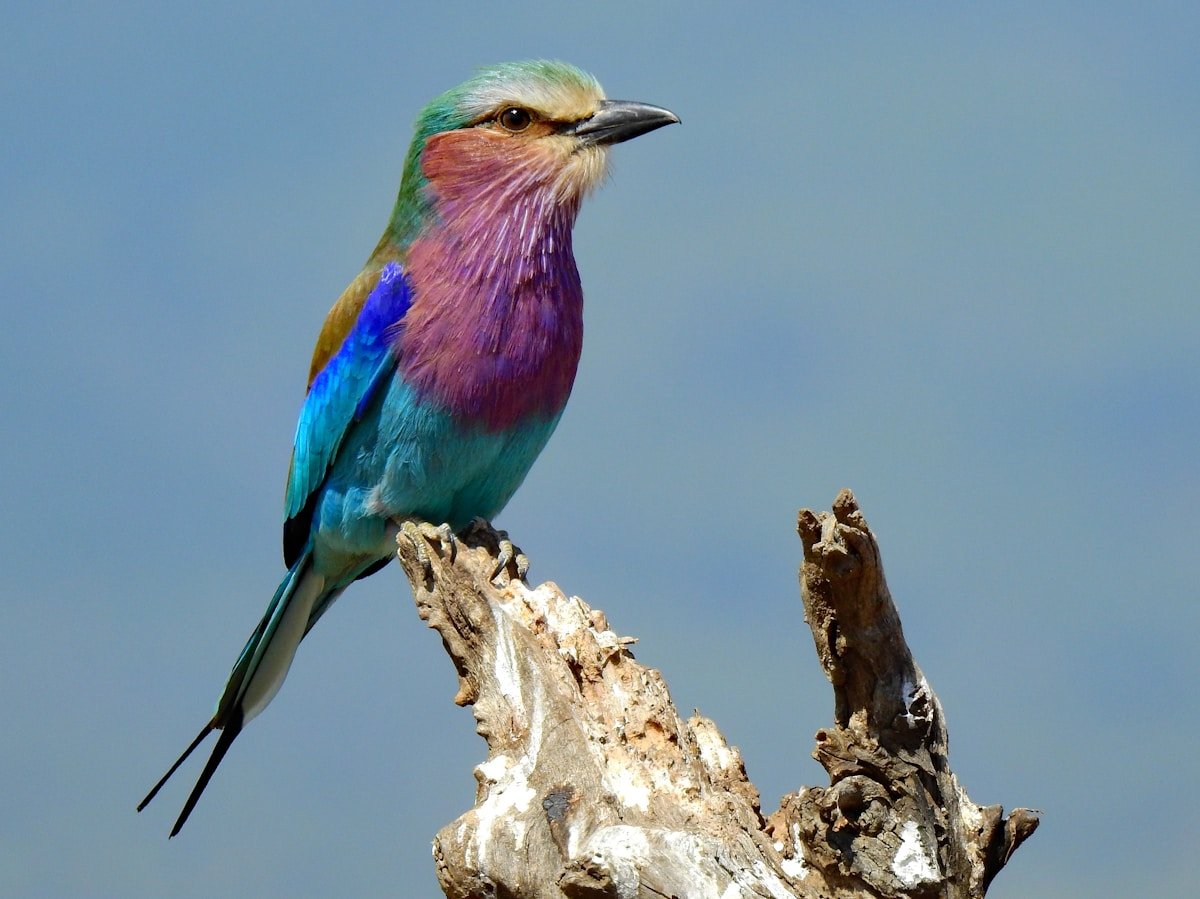
Zimbabwe is not always the first country that comes to mind for serious birders - Kenya, Tanzania, and South Africa dominate the conversation. That oversight is the birder’s advantage. Zimbabwe holds over 670 recorded species across habitats that range from the reed beds of Lake Kariba to the montane forests of the Eastern Highlands, and the birding circuits here are uncrowded, varied, and often extraordinary.
For context: Hwange National Park alone records over 400 species. Mana Pools adds another suite of Zambezi valley specialities. The Eastern Highlands around Nyanga and Chimanimani hold an entirely different bird community with Afromontane species found nowhere else in the southern African region outside comparable highland forests.
Key Birding Habitats
Zambezi Valley and Mana Pools
The riparian zone along the Zambezi is one of Africa’s richest birding environments. Open sky above the river, thick riverine forest along the banks, and reed-fringed backwaters combine to produce exceptional variety.
Key species: African skimmer (skimming low over the river surface), Pel’s fishing owl (roosting in large figs along the bank), collared palm thrush, African fish eagle, rock pratincole, white-crowned lapwing, and the spectacular carmine bee-eater colonies - thousands of birds nesting in sandy riverbanks from August to November.
The carmine bee-eater colonies at Mana Pools are a spectacle that ranks among Zimbabwe’s wildlife highlights in any category. Colonies of up to several thousand birds nest in excavated bank tunnels, creating a constant aerial display of brilliant red and blue-green.
Best time: October to November for carmine bee-eaters; November to April for migratory species.
Hwange National Park
Hwange’s mix of mopane woodland, open pans, and temporary water habitats drives exceptional bird diversity beyond its elephant reputation.
Key species: Martial eagle, bateleur, Kori bustard (Africa’s heaviest flying bird), secretary bird, southern ground hornbill (a large black bird with red face, walking slowly through open grassland), saddle-billed stork, ostrich, and the full suite of woodland species including shaft-tailed whydah, Arnot’s chat, and Bradfield’s hornbill.
Hwange’s water holes draw herons, storks, plovers, and waders in dry season. The pan edges in July and August produce concentrations of grassland birds associated with grazing game herds - oxpeckers, red-billed buffalo weaver, and yellow-billed oxpecker are easy here.
Best time: Year-round, but April to May is excellent for lingering migrants combined with concentrated game.
Eastern Highlands (Nyanga, Chimanimani, Vumba)
The Eastern Highlands - the ranges along Zimbabwe’s border with Mozambique - are the country’s top destination for forest and montane birds. Altitudes above 2,000 metres support a completely different avifauna from the lowland parks.
Nyanga area: Miombo woodland and montane grassland. Key species include the Stanley’s bustard, Miombo rock thrush, Boulder chat, moustached warbler, and Churring cisticola.
Vumba Mountains (near Mutare): Dense evergreen forest holds forest birds including Swynnerton’s robin, Roberts’ warbler (Chirinda), bar-tailed trogon, green barbet, and olive-headed weaver.
Chirinda Forest (near Chipinge): One of the best preserved lowland tropical forests in Zimbabwe. Chirinda apalis is essentially endemic to this forest. Black-fronted bush shrike, Livingstone’s turaco, and brown-headed apalis are also present.
Best time: October to March. Swynnerton’s robin is easiest to locate in October and November when calling strongly. Many Eastern Highlands species breed November to January.
See our Nyanga guide and Chimanimani guide for full area information.
Lake Kariba and Matusadona
The lake and its surrounding Zambezi escarpment hold both water-associated species and woodland birds unique to the region.
Key species: African skimmer, collared pratincole, white-backed night heron, Böhm’s bee-eater, lesser seedcracker (among papyrus beds), African fish eagle, and the African pygmy goose on quiet bays.
Matusadona National Park’s shoreline is particularly good for waders and herons, and the escarpment interior holds miombo woodland species. See our Lake Kariba wildlife guide for full details.
Matobo Hills
The granite kopjes and mixed woodland of Matobo support a birding community centred on rock specialists.
Key species: Verreaux’s eagle (pairs nest on the kopjes throughout the park - one of Africa’s most dramatic raptors), Peregrine falcon, rock kestrel, white-necked raven, mocking cliff chat, boulder chat, and lanner falcon.
Verreaux’s eagle at Matobo is considered one of the most reliable viewing sites in southern Africa for this impressive black-and-white eagle with a white V on the back.
Specialist Birding Tours
Several Harare-based operators offer dedicated birding tours covering Zimbabwe’s major habitats in one or two-week itineraries.
Birding Birding Zimbabwe - specialist operator with expert local guides and itineraries covering Hwange, Eastern Highlands, and Zambezi Valley circuits.
African Rambler Birding - runs multi-country southern African tours incorporating Zimbabwe’s Eastern Highlands as a key destination.
Privately arranged: Many Hwange and Mana Pools camps have resident birders or can organise dedicated birding guides on request. The Mavuradonha Wilderness in the Zambezi escarpment is excellent for endemic-targeting. You can also compare guided wildlife and birding options through Zimbabwe tours on GetYourGuide before committing to an operator.
Top 10 Species to Target
- Carmine bee-eater - spectacular red colonies at Mana Pools, August–November
- Pel’s fishing owl - Mana Pools and Zambezi riverine forest
- Verreaux’s eagle - Matobo Hills, year-round
- Swynnerton’s robin - Chirinda and Vumba forests, October–March
- Southern ground hornbill - Hwange woodland
- African skimmer - Zambezi River, September–March
- Boulder chat - Matobo Hills and granite outcrops
- Martial eagle - large raptors near open water holes in Hwange
- Roberts’ warbler (Chirinda warbler) - Chirinda Forest
- African fish eagle - every waterway in Zimbabwe
Practical Tips
- Binoculars: 8×42 is the standard for African birding - enough magnification for distance, wide enough field for forest work.
- Field guide: Sasol Birds of Southern Africa (Newman’s also used locally) is the standard reference. Apps including Merlin (Cornell Lab) now cover Zimbabwe reasonably well.
- Recording calls: Xeno-Canto has extensive Zimbabwe recordings. Playback should be used responsibly and minimally.
- Best time of day: First two hours after dawn and last hour before dusk produce 60–70% of the day’s sightings.
- July to October is bush clearance season - easier to spot species in open woodland but fewer migrants and duller plumage.
Zimbabwe’s birding network is smaller than South Africa’s but growing. Connecting with local birders through the Zimbabwe Bird Club (Harare-based) opens access to private land and specialist sites not in any published guide. Ensure your travel insurance for Zimbabwe covers the range of environments you’ll be visiting - from remote escarpment woodland to boat-based river birding. For accommodation near any of the birding regions covered above, search hotels across Zimbabwe on Booking.com to find options close to the Eastern Highlands, Hwange, or the Zambezi Valley.