Mana Pools is unlike any other park in Africa. It sits on the southern bank of the Zambezi River, a World Heritage Site where elephants balance on their hind legs to reach acacia pods, lions hunt buffalo on open flood plains, and visitors with a permit can walk unaccompanied among big game. That last point is what makes it singular. In most parks, you are locked in a vehicle. Here, you are on the ground.
The park covers around 2,196 square kilometres of riverine woodland, acacia groves, and wide flood plains created by four ancient channels of the Zambezi - Mana means “four” in the Shona language. The Zambezi River itself forms the northern boundary, with Zambia visible and audible across the water. During peak season, the pools left behind by the receding river become focal points for extraordinary concentrations of wildlife.
This guide focuses on the wildlife you will encounter: the species, their habitats, and the best season to see each. For guided walking safari operators, costs, difficulty ratings, and booking, browse Zimbabwe walking safaris on GetYourGuide.
What Makes Mana Pools Unique
Anywhere can offer a guided walk. Mana Pools is the only park in Zimbabwe - and one of very few in all of Africa - where national parks authorities permit visitors to walk alone on public land among potentially dangerous animals. This is not a formality; it reflects decades of wildlife management philosophy that treats visitors as responsible adults capable of reading their environment.
The result is an entirely different quality of experience. Moving slowly through mopane woodland, tracking impala spoor, listening to the click of oxpeckers on a buffalo’s back before you see the herd - these sensations are impossible to replicate from a vehicle. Guides who have spent years at Mana describe it as the most immersive wilderness experience in Africa. We’d agree.
Wildlife of Mana Pools
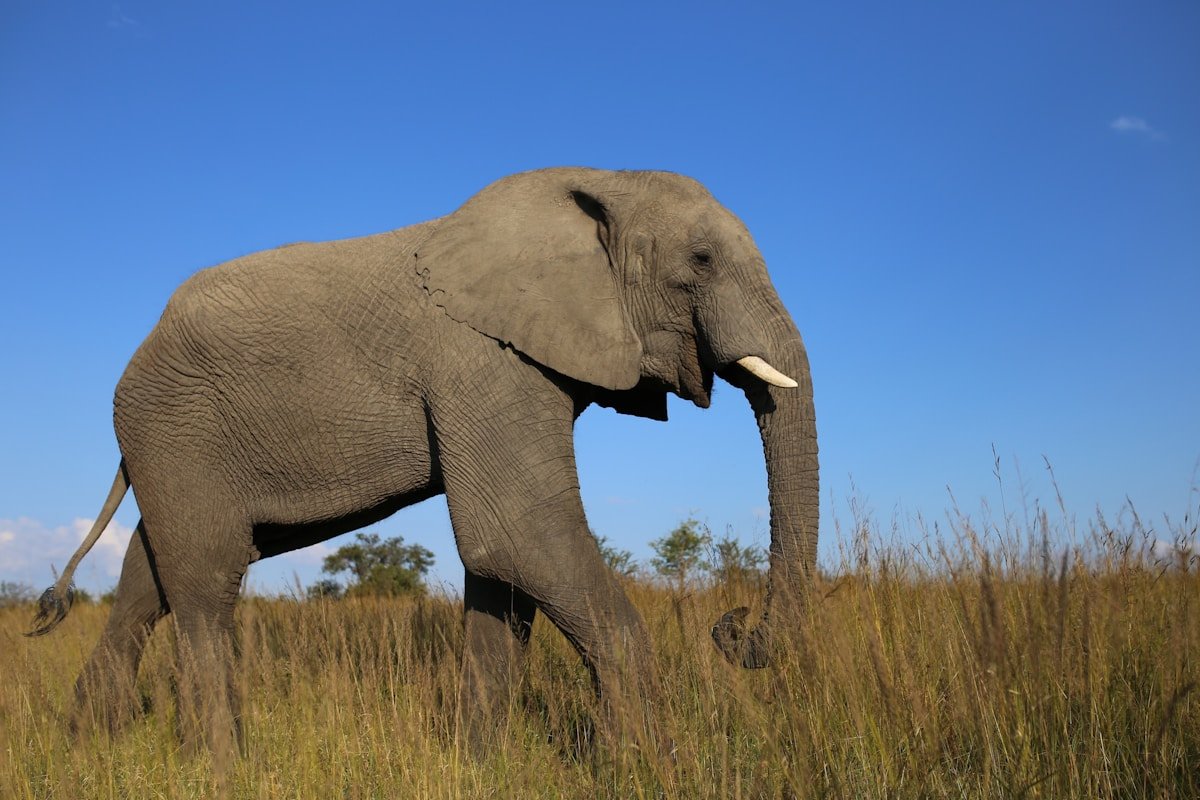
Elephant - Mana is justly famous for its bull elephants, many of whom stand on their hind legs to strip pods from winter thorn acacia trees. These are habituated bulls that have learned this technique across decades. Watching a four-tonne animal rise vertically on its rear legs remains one of wildlife watching’s most arresting sights.
Lion - Prides roam the flood plains and regularly hunt in the open, giving excellent visibility for guided drives and walks. Lions here are accustomed to human presence at close range.
Wild Dog (Painted Wolf) - Mana Pools is a stronghold for African wild dogs, with multiple packs denning in and around the park. Peak season sightings are regular, and tracking a pack on foot is an extraordinary experience.
Hippo - The pools and river hold large hippo pods. At night, hippo graze the flood plain; during the day, they bask in and around the water. Walking near pool edges requires alertness.
Crocodile - The Zambezi holds large Nile crocodiles. Guided canoe safaris navigate around them; swimming in the river is not permitted.
Leopard - Present throughout the riverine woodland. Sightings are less predictable than lion but Mana’s dense tree cover offers excellent habitat.
Buffalo - Large herds move across the flood plains during dry season, drawing lion and hyena. A buffalo herd of several hundred on an open plain is one of the park’s most dramatic spectacles.
Walking Safaris and On-Foot Access
Mana Pools is one of Africa’s rare parks where visitors may walk unguided in the main recreation area with a national parks walking permit (approximately USD 15 per person per day as of 2026). In practice, this is only appropriate for people with genuine wilderness experience and confident animal behaviour recognition. First-time visitors walk with an armed professional guide - either through their lodge programme or booked as a day walk through National Parks.
Canoe safaris on the Zambezi offer a water-level perspective on the park’s wildlife - hippos surface metres away, elephants swim the river, and birding from a canoe is exceptional. Natureways is a long-established operator offering multi-day canoe trips from Kariba down to Mana Pools.
For detailed guidance on guided walking safari operators, camp rates, difficulty levels, what to pack, and booking logistics, browse Mana Pools walking safaris on GetYourGuide.
Where to Stay
National Parks Camps
Nyamepi Campsite is the main public camp, with tent sites and basic ablutions. Camping costs approximately USD 15 per person per night as of 2026. The location on the Zambezi flood plain means lions, elephant, and hippo walk through camp at night. This is not metaphorical.
Exclusive campsites (Chitake Springs, Mucheni, etc.) offer isolated bush camping for self-sufficient groups. Chitake Springs is renowned as the best predator location in Zimbabwe - lions concentrate there during late dry season. These sites book out months in advance.
Private Camps and Lodges
Vundu Camp is a classic Mana experience - eight tents, simple comfort, exceptional guiding focus. From approximately USD 400–600 per person per night fully inclusive.
Ruckomechi Camp (Wilderness Safaris) sits at the western edge of the park in prime walking territory. Twelve tents, guided walks, game drives, and canoeing. From approximately USD 700–1,000 per person per night as of 2026.
John’s Camp is a small, intimate mobile-style camp with one of the most respected guide teams in Zimbabwe.
Kanga Camp (about 40km south in the Mana Pools ecosystem) is built around a permanent water hole that draws extraordinary concentrations of wildlife during dry season. Not on the river, but an exceptional game viewing location. For additional accommodation options in and around the Mana Pools area, search hotels near Mana Pools on Booking.com to compare available properties.
Practical Notes
- Season: 1 May to 31 October only. Book well ahead - top camps fill by January for peak season. Wildlife concentrates near the river and pools as the dry season intensifies; September and October offer the densest game sightings.
- Malaria: High-risk area. Consult a travel health clinic, take prophylaxis, use repellent, and sleep under a net.
- Clothing colour note: Avoid blue - tsetse flies are attracted to blue. Neutral colours (khaki, olive, tan) blend better in the bush and reduce tsetse annoyance. Full kit guidance is in our what to pack for Zimbabwe guide.
- Safety: Mana Pools is a wilderness, not a controlled wildlife experience. Animals behave unpredictably; alertness and calm movement are always required, whether or not you have a guide.
- Insurance: Take out travel insurance for Zimbabwe that explicitly covers safari activities among dangerous wildlife and includes medical evacuation - Mana Pools is remote and the nearest major hospital is several hours away.
The park’s gateway is the town of Kariba, where you can combine a Mana visit with a Lake Kariba houseboat experience - see our Lake Kariba wildlife guide for details. For context on Zimbabwe’s broader wildlife offering, see our Big Five guide.
Mana Pools is the place to come if you want to feel genuinely small in a genuinely wild landscape. The walking alone justifies the journey.