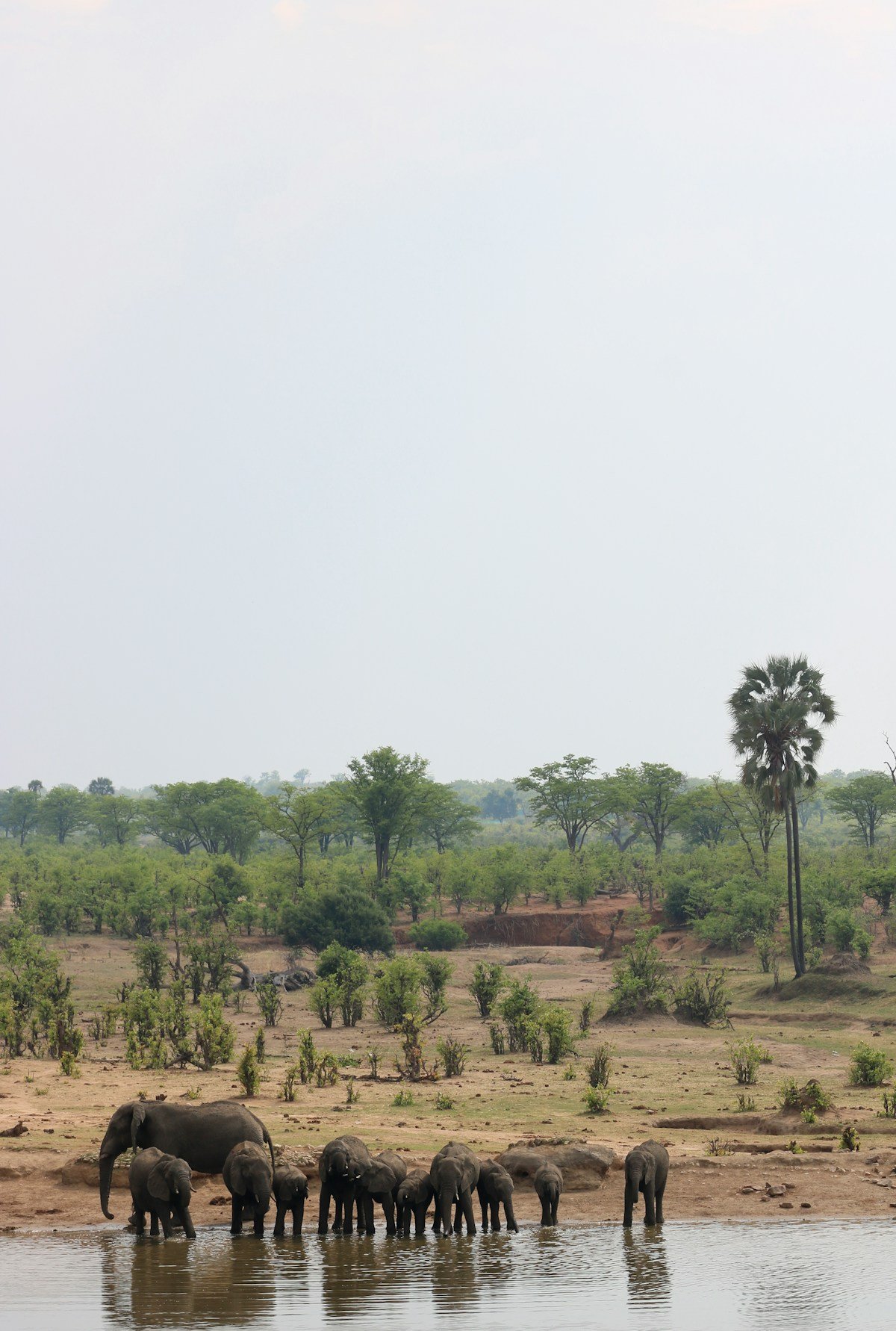
Zimbabwe’s wildlife heritage is anchored by its Big Five - the historic term for lion, leopard, elephant, African buffalo, and rhinoceros. These five species are spread across the country’s national parks and conservancies, though each requires a slightly different strategy to see reliably. Here is a park-by-park breakdown of where to find each, what to expect, and how to plan.
Elephant: Hwange and Mana Pools
Zimbabwe holds one of the largest elephant populations in Africa - estimates suggest 100,000 or more animals across the country, with Hwange National Park alone holding between 45,000 and 50,000.
Best location: Hwange National Park - the highest concentration of elephants on the continent. During dry season, gatherings of several hundred at single pumped water holes are not uncommon. September and October deliver peak numbers as animals converge on diminishing water supplies.
Second choice: Mana Pools - famous for its habituated bull elephants, including individuals known for standing on their hind legs to reach acacias. Walking safaris here offer unmatched close contact.
Also notable: Elephant are common in Matusadona National Park (Lake Kariba area), Gonarezhou, and along the Zambezi in Zambezi National Park near Victoria Falls.
Best camps for elephant: Linkwasha and Somalisa in Hwange; Ruckomechi and Vundu at Mana Pools.
Lion: Hwange, Mana Pools, and Gonarezhou
Lion are well established across Zimbabwe’s major parks. The population declined significantly from the 1980s to 2000s due to habitat pressure and hunting but has stabilised in protected areas.
Best location: Hwange National Park - particularly the private concession areas around Linkwasha and Little Makalolo in the eastern and southern sections. Open pan habitats make sightings easier than in dense woodland. Large prides of 12–20 individuals are recorded.
Second choice: Mana Pools - flood plain hunting conditions produce some of Africa’s most dramatic predator sequences. Lions here have learned to prey on buffalo in the open, a spectacle that guides regularly witness in peak season.
Also notable: Gonarezhou National Park in the southeast has growing lion numbers and far fewer visitors. Matusadona and the Sapi and Chewore Safari Areas also hold lion.
Night drives: Hwange and Mana Pools permit night drives with spotlights from private camps - this is when lion sightings are most likely on open hunts.
Leopard: Matobo Hills and Hwange
Leopard are present throughout Zimbabwe but their secretive nature and preference for dense riverine corridors makes reliable sightings a matter of patience everywhere.
Best location: Matobo National Park - unique in Africa for its density of leopard relative to area. The granite kopjes and rocky terrain provide ideal leopard habitat - caves, overhangs, and elevated hunting positions. Some guides describe Matobo as offering the most reliable wild leopard viewing in Africa. Night drives with permitted operators increase sightings.
Second choice: Hwange - nocturnal activity is high; night drives from private camps regularly produce leopard in the mopane woodland. The Linkwasha and Little Makalolo concessions are particularly productive.
Also notable: Mana Pools riverine forest holds leopard. Lone females with cubs have been reliably habituated around some Mana camps.
Strategy: Tell your guide that leopard is your priority. A dedicated tracking session with an experienced tracker - following pugmarks and scratch marks at dawn - is often more productive than a standard game drive circuit.
Buffalo: Hwange and Mana Pools
African buffalo are common across Zimbabwe’s parks, appearing in herds ranging from a dozen individuals to concentrations of several thousand.
Best location: Hwange National Park - large herds are a consistent feature of the open pans throughout the park, particularly during dry season. The association of buffalo with lion creates some of the most intense predator-prey encounters in Zimbabwe.
Second choice: Mana Pools - buffalo graze the wide flood plains along the Zambezi, often visible from camp. Large herds draw both lion and hyena, concentrating predator activity in the same zone.
Old dagga boys: Solo or small-group old male buffalo - known as dagga boys - are common around Mana Pools’ water holes. These animals are intelligent, experienced, and unpredictable. Walking safaris give guides opportunities to discuss their behaviour in detail.
Also notable: Gonarezhou, Matusadona, and the Sapi Safari Area all hold substantial buffalo populations.
Rhino: Matobo Hills and Specific Conservancies
Rhino is Zimbabwe’s most challenging Big Five member due to decades of poaching. The national population has partially recovered from collapse but numbers remain a fraction of historical levels.
White Rhino:
Matobo National Park (also called Matobo Hills or Matopos) is Zimbabwe’s best rhino destination. The Intensive Protection Zone within the park holds the largest concentration of white rhino in the country. Dedicated rhino tracking excursions - on foot, with armed rangers - are the standard way to find them. Walking to within 20 metres of white rhino in the granite landscape is one of the great wildlife experiences in Africa.
Guided rhino tracking costs approximately USD 40–60 per person as of 2026 and must be booked through the Zimbabwe Parks office at Matobo or through lodges in the Matobo Hills area.
Imire Rhino and Wildlife Conservancy near Harare offers an alternative, with both white and black rhino in a protected private setting. Day visits from Harare are possible.
Malilangwe Trust in the far southeast runs one of Zimbabwe’s most successful rhino breeding programmes. It is not open to general tourists but specialist conservation tours can be arranged.
Black Rhino:
A small population survives in the Intensive Protection Zones of Hwange (Sinamatella area) and Matusadona (north shore of Lake Kariba). Sightings are rare and not guaranteed. Conservation operators running Matusadona camps occasionally record black rhino.
Conservation note: Never approach rhino without a trained and authorised guide. Zimbabwe’s rhino populations are precious and legally protected - fines for harassment are substantial.
Planning a Big Five Zimbabwe Itinerary
A focused Big Five itinerary typically combines:
3–4 nights Hwange (elephant, lion, buffalo, leopard, rhino possible at IPZ)
2–3 nights Mana Pools (lion, buffalo, elephant, leopard, walking safaris)
1–2 nights Matobo (rhino tracking, leopard, rock art as a bonus)
This combination covers all five species with high probability in 7–10 days. Fly between parks where possible - road transfers between Hwange and Mana Pools take the better part of a day.
For full details on individual parks, see our guides on Hwange National Park, Mana Pools walking safaris, and Matobo Hills - where the rhino tracking is based. You can also browse and pre-book Zimbabwe safari tours on GetYourGuide to compare guided Big Five itineraries across the major parks. For accommodation near the parks, search hotels across Zimbabwe on Booking.com to compare options from lodge-adjacent guesthouses to town-based bases.
For logistics from the main gateway city, our Victoria Falls guide and Bulawayo hub cover accommodation and transport options.
Key Tips
- Book specialist guides for predator-focused drives; they track animals between sessions and know current sightings.
- Spend at least three nights per park. Two nights feels rushed; five is better.
- Request night drives where available - leopard, hyena, aardvark, and other nocturnal species are only accessible after dark.
- Share sightings with your guide in the morning - describe what you saw the previous day; they will adjust the drive accordingly.
Zimbabwe’s Big Five are not guaranteed on any single visit - but the effort of finding them in a genuinely wild setting is exactly what makes them memorable. Before you travel, arrange travel insurance for Zimbabwe - safari areas are remote, and medical evacuation from Hwange or Mana Pools without cover can be extremely costly.