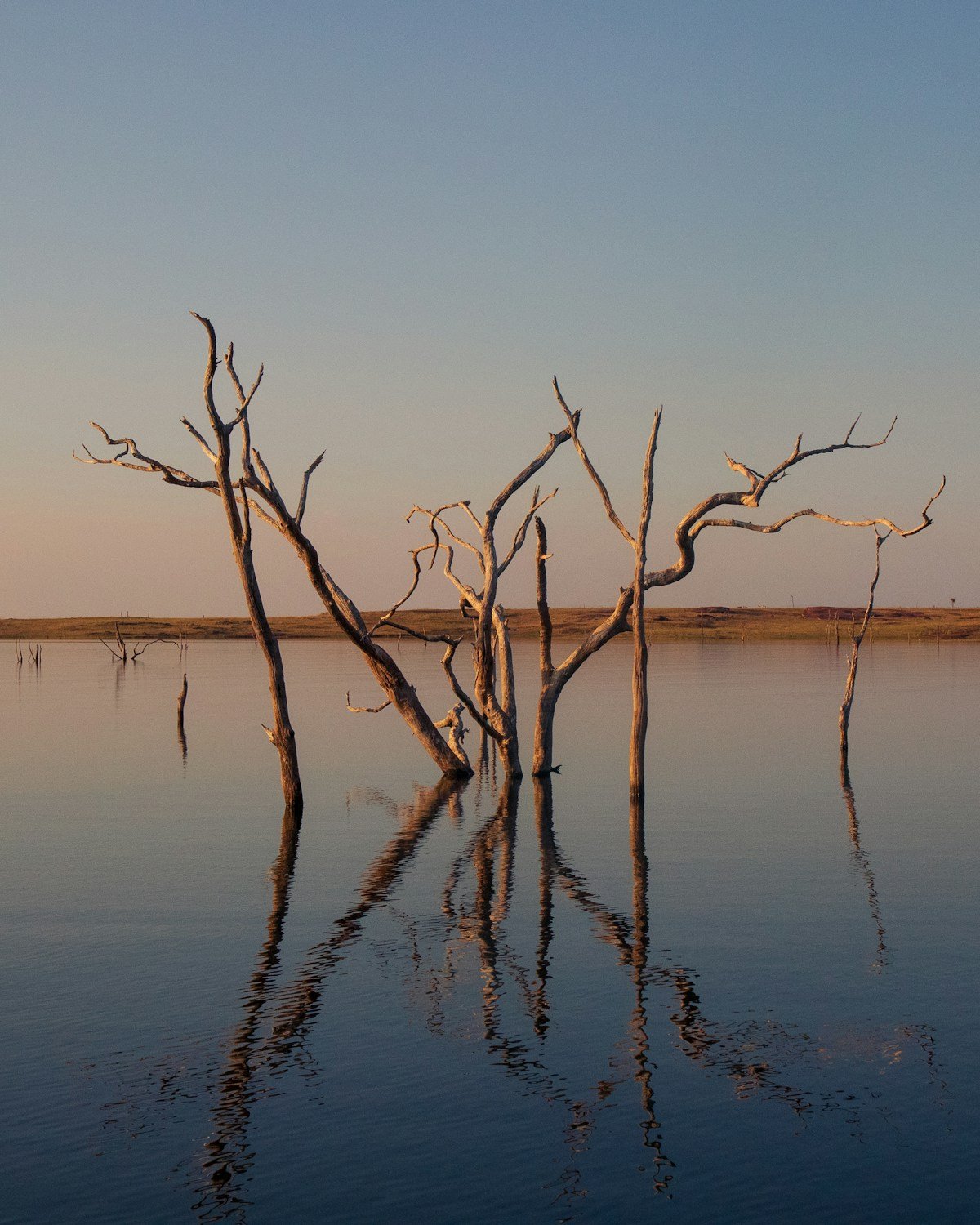
Lake Kariba was created in 1958 when the Zambezi River was dammed at the Kariba Gorge - at the time, the largest man-made lake by volume in the world. The flooding displaced tens of thousands of BaTonga people and drowned a vast stretch of Zambezi Valley woodland. Decades later, the dead trees that rise from the water have become one of Africa’s iconic images: bleached trunks standing in the still lake, fish eagle calling from their tops, hippo wallowing beneath.
The lake itself is 280 kilometres long and up to 40 kilometres wide. Matusadona National Park occupies its southern shore. The water holds an extraordinary fishery - tiger fish, bream, and vundu catfish in abundance. And the houseboat safari, unique to Kariba, has become one of Zimbabwe’s most distinctive travel experiences.
Matusadona National Park
Matusadona covers about 1,400 square kilometres of Zambezi escarpment rising steeply from the lake’s southern shore. The park is accessible by boat from Kariba town, by light aircraft to Matusadona’s small airstrip, and by road in dry season via long gravel tracks.
Game viewing here is different from Hwange and Mana Pools. Animals concentrate along the lakeshore in dry season, and the most productive method is by boat - cruising the edge at dawn watching elephant wade in the shallows, buffalo graze on the grassy bank, and crocodile bask on exposed rocks.
Key species:
Elephant - the northern shoreline of Matusadona holds a significant elephant population. In September and October, large groups wade into the lake to swim between the drowned woodland islands. Watching a herd of twenty elephants swimming with just their trunks above water is one of Zimbabwe’s most extraordinary sights.
Lion - Matusadona has a pride system adapted to the lakeshore. Some individuals are adept at catching fish - a behaviour recorded in almost no other lion population in Africa. Walking safaris with armed rangers encounter lion regularly.
Black Rhino - a small population of critically endangered black rhino survives in the Matusadona Intensive Protection Zone. Sightings are rare but dedicated rhino tracking excursions have been conducted by specialist camp operators.
Buffalo - large herds move along the lakeshore in dry season, drawing lion and hyena.
Hippo - Kariba’s hippo population is large and visible year-round. They graze the lake margins at night and rest in the water during day.
Nile Crocodile - the lake holds some of the largest crocodiles in southern Africa. Basking on rocks and beaches, particularly in warm weather, they are a constant presence.
Walking Safaris in Matusadona
Several Matusadona camps offer walking safaris with trained guides. The combination of dense bush, lakeshore terrain, and regular lion encounters makes Matusadona walking challenging and exhilarating. Only operators with professional armed guides licensed by Zimbabwe Parks should be used.
Bumi Hills Safari Lodge has historically offered walking safaris along the escarpment. Changa Safari Camp and Rhino Safari Camp have also run guided walking programmes.
Houseboat Safaris
A Kariba houseboat is a floating base - fully catered, usually with a chef and crew, and small motorised tenders for game viewing and fishing close to shore. You anchor in sheltered bays, watch wildlife on the shoreline from the deck, and fall asleep to hippo grunting in the water beside you.
Houseboats range from basic (functional cabins, shared bathrooms, self-catering) to fully luxurious (air conditioning, en-suite cabins, professional crew, private sundeck with plunge pool).
What to expect on a typical day:
- Dawn: Leave the houseboat in the tender at first light; cruise the shoreline for elephant, buffalo, and crocodile. Return for breakfast.
- Morning: Fish for tiger fish or bream while the houseboat moves to the next bay.
- Afternoon: Rest through midday heat. Game drive or walk at a nearby game-viewing area.
- Dusk: Sunset from the deck with the drowned forest silhouette. Night is often spectacular for stars over the lake.
Cost: Basic shared houseboats from approximately USD 150–200 per person per night. Luxury houseboats cost approximately USD 400–700 per person per night fully inclusive as of 2026. Book through Kariba Houseboat Rentals or specialist Zimbabwe tour operators, or browse Zimbabwe safari tours on GetYourGuide to compare guided Kariba experiences.
Tiger Fish Fishing
The tiger fish (Hydrocynus vittatus) is Kariba’s signature sporting fish - a powerful, aggressive predator with prominent teeth and a fighting style that has earned it the description “freshwater barracuda.” Landing a large Kariba tiger is regarded as among the most exciting freshwater fishing experiences in the world.
Season: September to November produces the best tiger fishing as water levels drop and fish concentrate near inflows and structure. Early morning and late afternoon are most productive.
Methods: Trolling (trailing lures behind a slow-moving boat), casting poppers near submerged trees, and baitfishing near the dam wall.
Size: Kariba tigers regularly reach 5–8kg and occasionally larger. A 10kg tiger is a prize catch.
Operators: Several Kariba-based fishing operators offer day and multi-day guided fishing charters. Expect to pay approximately USD 200–350 per boat per day for a guided charter with equipment as of 2026.
Other species: The lake also holds large nembwe (green-headed bream), chessa, and the massive vundu catfish which can exceed 50kg.
Lodges and Camps
Bumi Hills Safari Lodge is perhaps Kariba’s most famous address - a hillside property above the lake with panoramic views, boat-based game drives, and escarpment walking. From approximately USD 400–600 per person per night fully inclusive as of 2026.
Musango Safari Camp is a rustic, intimate camp on an island in Matusadona with a strong conservation ethos and excellent guiding. Accessed only by boat. From approximately USD 350–500 per person per night fully inclusive.
Rhino Safari Camp is remote, small, and focused on the black rhino protection programme. Accommodation is simple but the guiding is exceptional. Advance booking essential.
Changa Safari Camp operates under concession in the Matusadona ecosystem with boat safaris, walking, and game drives.
For accommodation in Kariba town itself, options range from budget guesthouses (from approximately USD 40 per night) to mid-range hotels with lake views (approximately USD 120–180 per night). For a broader selection, search hotels in Kariba on Booking.com to compare town-side options alongside the lodge tier.
Getting Around the Lake
Ferry: The NOIC ferry (or its private operators) runs between Kariba town and Mlibizi on the western end of the lake, stopping at several villages along the way. The overnight ferry is slow, unreliable, and an adventure - a genuine way to experience the lake and its communities.
Light aircraft: Scheduled and chartered flights from Kariba airport reach Matusadona’s airstrip and Bumi Hills in under 20 minutes.
Private boat: Most lodges run their own boats. Houseboats are self-contained.
Kariba town is small - the main activities are around the dam wall (viewable on a guided tour), the harbour, and the surrounding viewpoints. For practical town details see our Kariba city guide. For combining lake with walking safari, see our Mana Pools guide - Mana is accessible from Kariba by road in approximately 2.5–3 hours.
Lake Kariba rewards those who slow down. A week on a houseboat, fishing in the morning, watching elephant swim in the afternoon, and tracking lion on foot with Matusadona rangers - that combination is not available anywhere else in Africa. Before you travel, take out travel insurance for Zimbabwe that covers both water-based activities and remote medical evacuation.