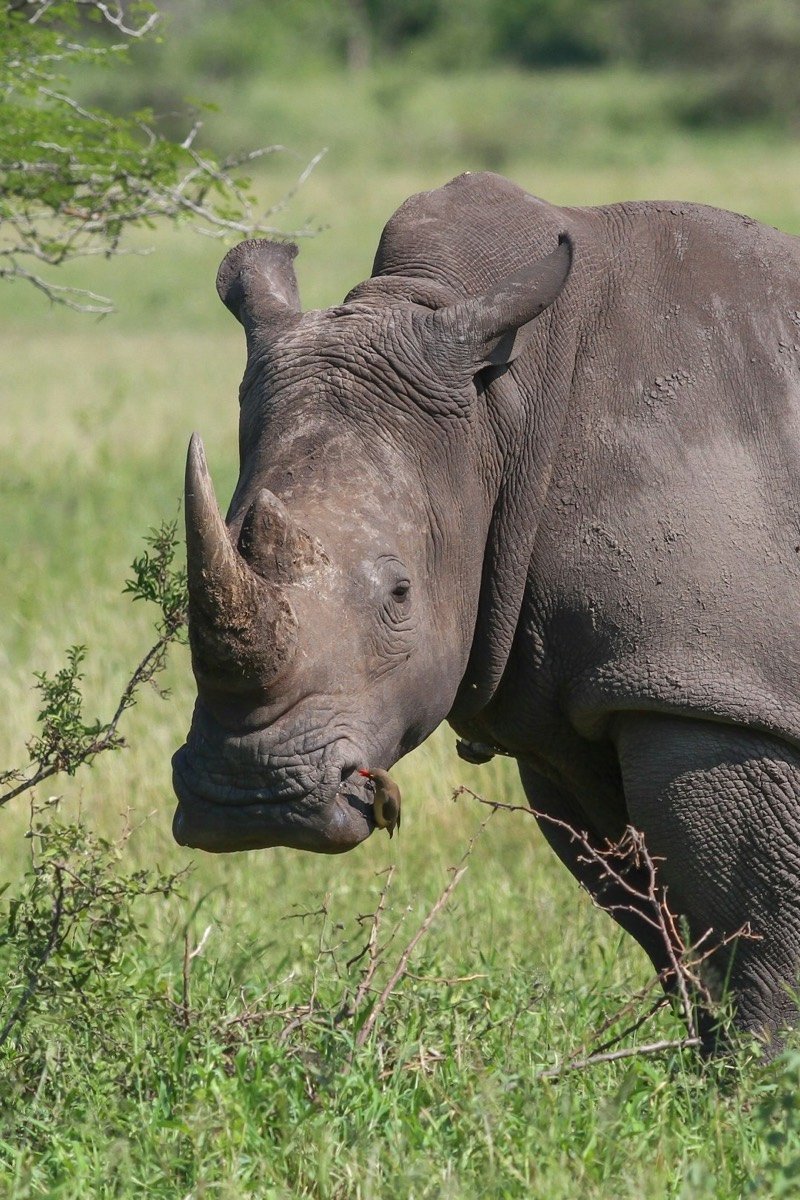
Matobo National Park packs more into its 424 square kilometres than most parks ten times its size. It is simultaneously a UNESCO World Heritage Site for its San rock art, one of Africa’s best locations for tracking both black and white rhinoceros on foot, a geological wonder of ancient granite domes and balancing rocks, and the burial site of Cecil John Rhodes - controversial British imperialist and the man who named Zimbabwe’s predecessor “Rhodesia.” None of those facts prepare you for the landscape itself: a chaos of dome-shaped granite kopjes, boulders stacked improbably on each other as if placed by giants, and dense woodland filling the valleys between.
Rhino Tracking on Foot
The Intensive Protection Zone (IPZ) within Matobo is one of Africa’s most successful rhino conservation projects. Both white (square-lipped) and black (hook-lipped) rhinoceros are present in substantial numbers. Unlike most rhino-tracking experiences in southern Africa that use vehicles, Matobo’s tracking is done entirely on foot with Zimbabwe National Parks rangers.
Departures from the IPZ entrance gate are at 6am and 3pm daily. Groups are limited to eight people. An armed ranger leads; a tracker walks ahead reading fresh spoor. When rhinos are located - typically within 1–2 hours - the ranger brings the group to within 20–40 metres, closer than almost any other rhino experience in Africa.
Cost as of 2026: USD 20 park entry fee + USD 35 rhino-tracking surcharge per person. Book at the park office at Maleme Dam or through Bulawayo-based operators. Early booking (24–48 hours ahead) is strongly recommended in high season. Both the morning and afternoon sessions typically run for 2–3 hours. A Matobo Hills day trip with rhino tracking from Bulawayo, or the dedicated Matobo white rhino experience, both include transport and ranger guidance for visitors without their own vehicle.
San Rock Art
The Matobo Hills contain more than 3,000 recorded San rock art sites, making this one of the densest concentrations in southern Africa. The paintings - made with red ochre, white kaolin, and black manganese - depict eland, giraffe, elephants, rain animals, shamanic figures, and hunting scenes, with some panels dating back 3,000 years or more.
The most accessible and spectacular sites are:
Nswatugi Cave - a large overhang with a well-preserved frieze of giraffe, zebra, kudu, and hunters in ochre and white. A 20-minute walk from the car park. Park rangers can be hired at Maleme Dam to guide visitors and provide interpretation (approximately USD 10–15 per hour).
White Rhino Shelter - despite its name, now more famous for painted giraffe and eland; located within the IPZ zone.
Silozwane Cave - in the southern wilderness area, requiring a longer drive on a rougher track but rewarded with a stunning painted overhang and far fewer visitors.
The Balancing Rocks and Geology
The Matobo Hills were formed around 2,000 million years ago when a large granite body intruded into older rocks and slowly cooled underground. As overlying rock eroded over millions of years, the granite was exposed, and differential weathering along natural fracture lines produced the characteristic rounded domes (called whalebacks or bornhardts), towers, and balancing rock formations.
The most photographed balancing act is Maleme area’s “Mother and Child” formation - two large boulders poised atop a dome, appearing to defy gravity. It’s a 5-minute walk from the main game-drive road. The Matobo Hills balancing rocks were the inspiration for the stone bird that features on Zimbabwe’s flag and national emblem.
Cecil Rhodes’ Grave at World’s View
Rhodes chose his burial site himself, calling this flat-topped granite dome “the most beautiful view in the world.” World’s View (Malindidzimu Hill - “the hill of benevolent spirits”) is a 20-minute walk up a smooth granite slope. At the summit, Rhodes’ grave is marked by a simple bronze plaque and surrounded by natural granite boulders. The Zimbabwe Indaba rock to the south bears a plaque commemorating the 1896 peace negotiations that ended the First Chimurenga uprising. The graves of Leander Starr Jameson and Frederick Courtney Selous (the elephant hunter who partly inspired Rider Haggard’s character Allan Quatermain) are nearby.
Views from the summit extend across a sea of granite kopjes in every direction. Sunrise and sunset visits are exceptional.
Where to Stay
Camp Amalinda (from approximately USD 420 per person per night full board) is built directly into the granite boulders, with rooms inside cave-like spaces formed by natural rock formations. It is one of southern Africa’s most architecturally distinctive lodges. Located within the park perimeter, 12km from the main entrance.
Matobo Hills Lodge (from approximately USD 320 per person per night full board) provides a more conventional luxury tented-camp experience near the park boundary with guided activities included.
Big Cave Camp (from approximately USD 280 per person per night bed and breakfast) sits among its own granite boulders south of the park, with a rustic-but-comfortable feel and sweeping valley views.
Budget travellers can use Maleme Rest Camp (Zimbabwe National Parks; chalets from approximately USD 35–55 per night; camping from USD 15 per person), set beside Maleme Dam with basic chalets and a pleasant waterside setting.
For a full rundown of lodges, guest farms, and budget options near the park, see our Matobo Hills accommodation guide. For current availability and pricing, search Matobo Hills accommodation on Booking.com.
Getting There
Matobo is 35km south of Bulawayo - 45 minutes on the Matopos Road, then a short access road to Maleme Dam. From Bulawayo’s Centenary Park, taxis to the park gate run approximately USD 30–40 one-way. Bulawayo is accessible by overnight train from Harare (approximately 12 hours; economy class from USD 6, first class from USD 20 as of 2026) and by air (Air Zimbabwe Harare–Bulawayo, approximately 1 hour; from USD 70 one-way).
Park entry fees as of 2026: USD 20 per person per day; USD 10 per vehicle. Open 6am–6pm daily.