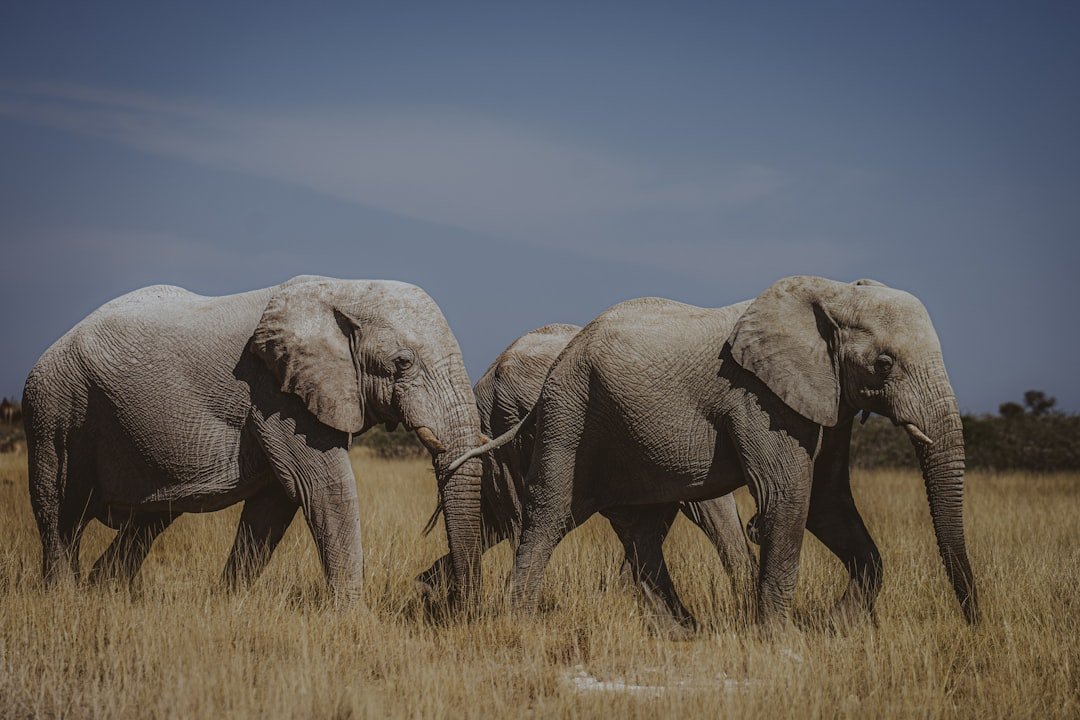
Hwange National Park covers 14,651 square kilometres of mopane woodland, teak forest, and Kalahari sand in northwestern Zimbabwe - an area roughly the size of Switzerland. It holds the largest elephant population in Africa: between 35,000 and 45,000 animals, including bulls with impressive ivory rarely seen elsewhere on the continent. Beyond elephants, Hwange supports lion, leopard, African wild dog, cheetah, spotted hyena, sable antelope, roan antelope, and all three species of zebra found in southern Africa. The park’s network of artificial waterholes, pumped by solar-powered borehole pumps, concentrates game year-round in quantities that few other African parks can match.
The Elephant Migration
Hwange’s elephants do not follow a traditional migration in the East African sense. Instead they move between seasonal wetlands and the park’s permanent waterholes in response to rainfall. During the dry season (May to October), as surface water disappears across northwestern Zimbabwe, elephants converge on Hwange in ever-larger herds. By August and September, waterhole aggregations of 200–400 elephants are common at Kennedy 1 and Kennedy 2 waterholes in the remote Linkwasha area, and at Nyamandlovu Pan near Main Camp. Late afternoon arrivals at waterholes often see multiple family groups arriving simultaneously, creating one of Africa’s great wildlife spectacles.
This is not a migration in the literal sense but rather a seasonal concentration: after good rains from November onward, the same elephants disperse back across Zimbabwe and into Botswana’s Chobe National Park.
Game Drive Routes and Waterholes
The park is divided into three main zones:
Main Camp area - the most accessible, 265km from Victoria Falls on a tarred road. Nyamandlovu Pan platform provides a fixed waterhole with a wooden viewing deck - excellent for sunrise game drives and often rewarded with elephant, buffalo, and lion. The Ngweshla Loop and Dom Pan circuit are reliable routes for wild dog and cheetah sightings. Visitors based in Victoria Falls can join a guided 2-day Hwange safari that handles all logistics and transport.
Sinamatella area - 50km north of Main Camp, set on a high escarpment with sweeping views. Less visited than the southern areas, with good sable antelope and roan antelope populations. Mandavu Dam is the primary waterhole here.
Linkwasha Concession (private) - accessible only through Wilderness Safaris camps, this southern private concession is widely regarded as the best game-viewing area in the park. The Linkwasha and Kennedy waterholes are extraordinary during September and October.
Best Camps and Where to Stay
Linkwasha Camp (Wilderness Safaris; from approximately USD 1,050 per person per night all-inclusive) sits in the private Linkwasha Concession with exclusive game-drive access. Guided morning and evening drives, bush walks, and night drives are included. The camp’s elevated platform waterhole view is exceptional.
Davison’s Camp (Wilderness Safaris; from approximately USD 680 per person per night all-inclusive) is a more intimate six-tent camp in the same concession. It shares game-drive areas with Linkwasha but has a distinctly personal feel.
Bomani Tented Lodge (from approximately USD 280 per person per night bed and breakfast) is an independent mid-range option on the eastern park boundary, offering guided drives at a fraction of the private-concession price. Good for families and self-drive visitors who want a structured safari option.
Hwange Main Camp (Zimbabwe National Parks; chalets from approximately USD 30–55 per night, camping from USD 15 per person) provides the most affordable access to the park. The chalets are basic but well-maintained, and the camp’s central waterhole is productive for elephant sightings within walking distance of your accommodation.
Entry Fees and Park Rules
Zimbabwe National Parks charges USD 20 per person per day park entry plus USD 10 per vehicle as of 2026. Entry is paid at Main Camp or Sinamatella gates. Self-drive visitors must be back at camp or inside a designated picnic area by sunset - night driving is not permitted on public roads inside the park.
Dry Season vs Wet Season
Dry season (May–October) is the classic safari period. Vegetation is low, waterholes are active, and game concentrates for easy viewing. July and August see the coolest temperatures (8–24°C overnight and daytime respectively) and maximum elephant aggregations. This is peak season: book camps 4–6 months ahead.
Wet season (November–April) brings lush green bush, dramatic afternoon thunderstorms, and the birth of calves (particularly from December to February). Wild dog pup sightings increase. Birdlife reaches its peak with hundreds of migrant species. The landscape is beautiful, prices drop 20–40%, and the park is far quieter - but thick vegetation makes some mammals harder to spot.
African Wild Dog - Hwange’s Rarest Predator
Hwange holds one of Zimbabwe’s healthiest populations of African wild dog (painted dog), an endangered species with fewer than 6,000 individuals remaining continent-wide. Wild dog sightings are never guaranteed but the pack territories in the Ngweshla and Dom areas of the main concession are well-tracked by guides. The best sightings are at dawn, when dogs return from overnight hunting. Linkwasha Concession in particular has delivered some of the continent’s most memorable wild dog experiences - multiple large packs with pups, hunting across the open pans.
Unlike lions, wild dogs move constantly and cover 20–50km per day. Good guides maintain radio contact with other vehicles and trackers across the park to increase the chance of locating them. Do not expect to find wild dog by independent self-drive; they require active tracking. A private guided wildlife safari with an experienced ranger gives the best chance of locating wild dog.
What to Bring on Safari
Hwange’s landscape is predominantly brown, grey, and ochre in the dry season - avoid bright colours. The standard advice applies: khaki, olive, tan, and grey clothing. Temperatures in July and August can drop to 6–8°C before dawn on open game-drive vehicles; a fleece or down jacket is essential. By midday the same day may reach 27°C. Binoculars (8×42 or 10×42) are essential for distant sightings across the park’s wide-open pans. A good zoom lens (400mm equivalent or more) is strongly recommended for photography.
For a detailed breakdown of every lodge and camp category - from National Parks self-catering to high-end private concessions - see our Hwange accommodation guide. For current rates and availability, search Hwange hotels on Booking.com.
Getting to Hwange
Victoria Falls is 265km from Hwange Main Camp (3–4 hours on the A8 highway and then park access road). Bulawayo is 350km southeast (4–5 hours). Hwange Airport (HWN) receives scheduled flights from Victoria Falls (15 minutes) and Harare (1 hour 20 minutes) via Air Zimbabwe; transfers to Main Camp run USD 40–60 per vehicle. Most luxury camps arrange dedicated light-aircraft transfers from Victoria Falls or Bulawayo - check with your camp at booking.
Hwange is one of several national parks covered in our complete Zimbabwe safari guide, which compares costs, seasons, and operators across all major parks.