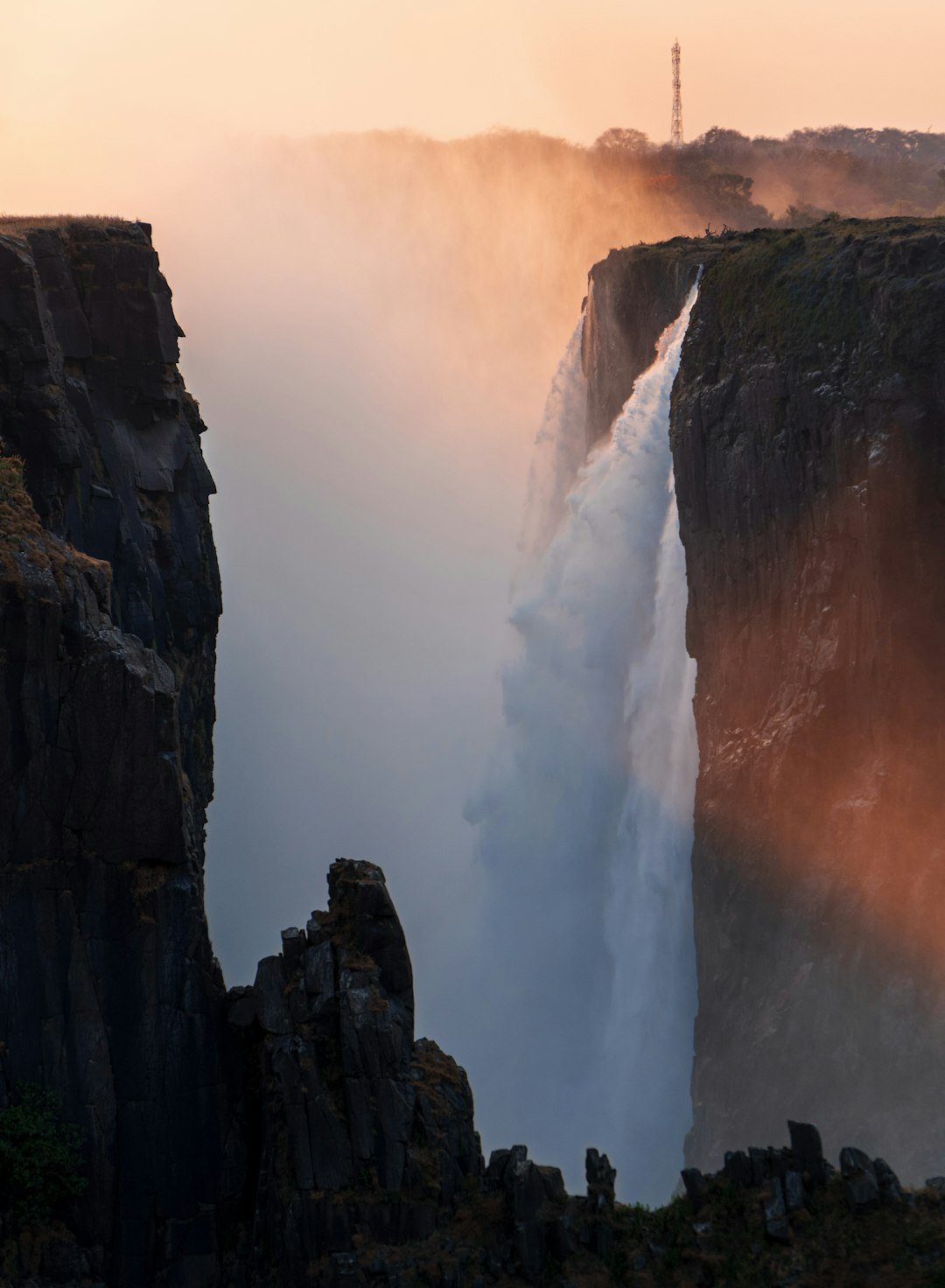
Victoria Falls - Mosi-oa-Tunya, “The Smoke That Thunders” - is the largest waterfall on earth by combined width and height. The Zambezi River drops 108 metres across a 1,708-metre-wide cliff, generating a roar audible 40 kilometres away and a spray column visible from 50 kilometres. The Zimbabwe side of the gorge holds the majority of viewpoints and offers one of Africa’s most spectacular walking experiences: a 1.8-kilometre rain forest path along the opposite cliff, where you walk in perpetual mist within metres of the falling water.
Viewing Points Along the Zimbabwe Side
The Victoria Falls Rain Forest park (entry USD 30 per person as of 2026; open 6am–6pm daily) contains 16 numbered viewpoints along a paved path. The experience changes radically with the season: from February to May the falls run at peak volume and spray drenches the path so thoroughly that a raincoat is essential even on a sunny day. From September to January water levels drop, revealing the cliff face and allowing a clearer view of individual curtains of water - this is also when the famous “curtain of fire” sunset effect occurs from the Zimbabwe bank.
Key viewpoints on the Zimbabwe side include:
- Main Falls viewpoint - the first major view of the full width of the falls
- Danger Point - the closest position to the edge, looking directly down into the Boiling Pot
- Knife Edge Bridge - a narrow bridge over a side gorge giving a 180-degree panorama of the Eastern Cataract; the most photographed spot
- Boiling Pot Trail - a steep 30-minute descent to the base of the first gorge, where the Zambezi surges in a circular current before funnelling through the Batoka Gorge
For a narrated introduction to every viewpoint, a guided tour covering both the Zimbabwe and Zambia sides adds local historical context that self-guided visits do not provide.
Devil’s Pool
Devil’s Pool sits at the lip of the falls on Livingstone Island, on the Zambia side of the river. From approximately August to early January, when the Zambezi drops to safe swimming levels, a natural rock barrier forms a pool where swimmers can look directly over a 108-metre drop. Access is through Tongabezi Lodge or operators based in Livingstone - expect to pay USD 120–165 per person for a guided island trip with pool access. Book well in advance; spaces fill months ahead in peak season.
Helicopter Flights
The Flight of Angels helicopter experience above the falls is a 12–15-minute circuit giving a bird’s-eye view of the full width of the waterfall, the seven gorges, and the Zambezi stretching upstream. Shearwater Victoria Falls and Batoka Sky both operate from a shared helipad approximately 3km from the falls entrance. Prices as of 2026 run at USD 160–185 per person for a 13-minute flight and USD 250–280 for a 25-minute extended circuit that includes the Batoka Gorge. Morning flights (before 9am) produce the best light and least haze; afternoon flights between 4–6pm catch warm sunset colours in the spray.
Both operators maintain modern EC130 and Robinson R66 helicopters. Book directly with Shearwater at their Victoria Falls town office or via your hotel concierge; same-day bookings are sometimes possible in low season but flights sell out weeks ahead in July and August.
Where to Stay
For a detailed guide covering every price tier and area of town, see our Victoria Falls accommodation guide. For live availability and current pricing, search Victoria Falls hotels on Booking.com.
Victoria Falls town has accommodation at every price level. The landmark Victoria Falls Hotel (from USD 480 per person per night, bed and breakfast) sits a five-minute walk from the rain forest entrance and dates to 1904 - its Stanley Terrace veranda looks directly toward the spray column and the Falls Bridge. Ilala Lodge (from USD 320 per room per night) is the closest hotel to the falls entrance, a four-minute walk, with a pool and reliable elephant sightings in the grounds at dusk. For a mid-range option, Shearwater Explorers Village (from USD 180 per night, shared lodge) on the western edge of town offers comfortable thatched chalets and a lively activities desk.
Budget travellers do well at Shoestrings Backpackers (dormitory beds from USD 18, private rooms from USD 55), which has a well-stocked bar, a pool, and a social atmosphere.
Getting to Victoria Falls
Victoria Falls town is 440km west of Harare by road (approximately 6 hours on the A5 highway). Zimbabwe Coaches operate an overnight bus service (approximately USD 25–35 one-way) departing Harare’s Mbare terminus at 8pm and arriving in Victoria Falls around 5am. The Victoria Falls Airport (VFA) receives daily flights from Harare (55 minutes; Air Zimbabwe and Fastjet from approximately USD 90–180 one-way) and direct international services from Johannesburg (1 hour 50 minutes; Airlink and South African Express from approximately USD 200–350). The airport is 18km from town; taxi fares into town run USD 20–30.
Best Time to Visit
June to August is peak season: dry, cool days (15–27°C), no malaria risk during the day, maximum tourist infrastructure, and a dramatic full-volume falls. Water levels peak from March to May but heavy spray can make photography challenging. September to November brings higher temperatures (up to 38°C) and thinner falls, but offers Devil’s Pool access and the best sunset light. December to April is green season - cheaper hotels, quieter paths, and exceptional birdwatching, but higher malaria risk and some viewpoints obscured by spray.
Practical Notes
A KAZA UniVisa (USD 50 as of 2026) covers both Zimbabwe and Zambia and is available on arrival at Victoria Falls Airport and at the Zimbabwe–Zambia border post - useful if you plan a Chobe National Park day trip, one of the most popular add-ons from Victoria Falls town. Carry US dollars in small bills - most vendors cannot break a USD 50 note. The rain forest path is accessible by wheelchair at the main viewpoints but the Boiling Pot trail is not. Malaria prophylaxis is recommended for visits from October to April.