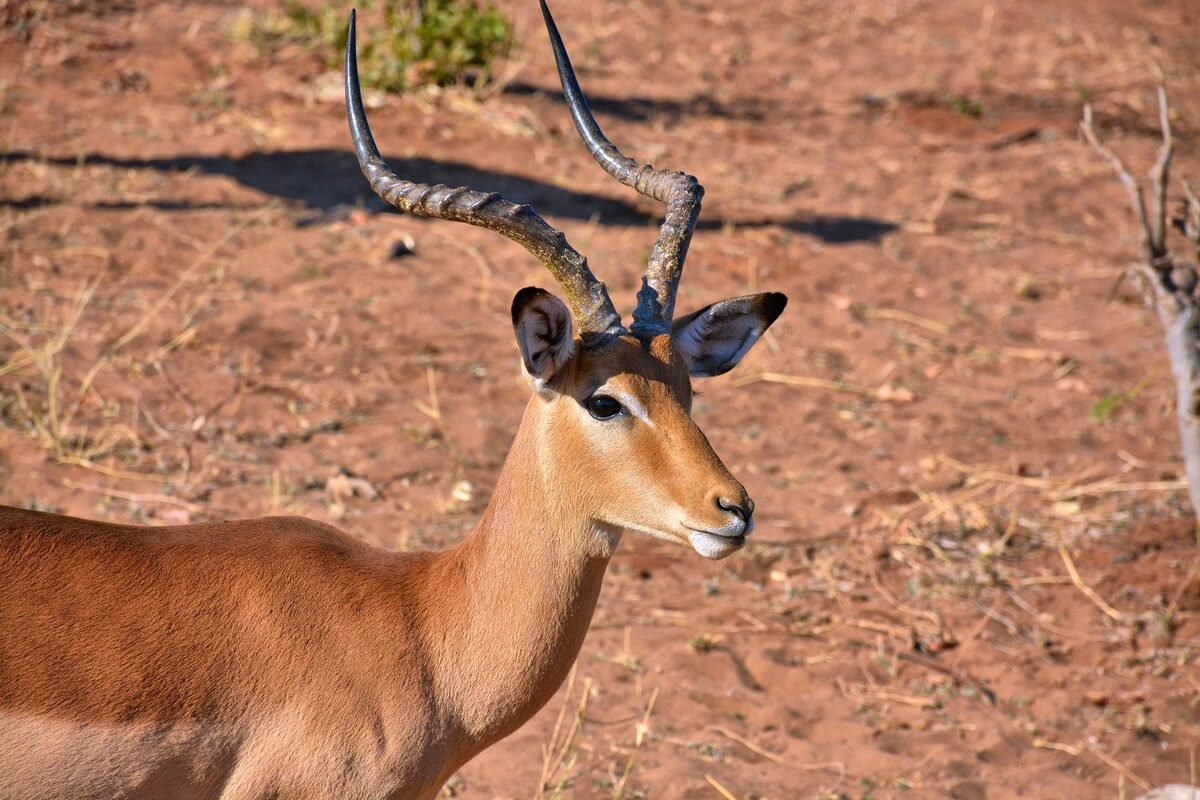
Zimbabwe and Kenya are two of Africa’s most compelling safari destinations, and both appear on shortlists for exactly the same type of traveller. The question is not which country has wildlife, as both have world-class sightings, but which experience you are actually buying. Zimbabwe offers intimate, crowd-free safaris at a lower cost point, with the world’s highest concentration of elephants and genuine wilderness. Kenya has higher overall wildlife density, more direct international flights, and the Great Migration, one of the most dramatic natural events on earth. These are fundamentally different products that suit different travellers.
The Destinations Compared
Zimbabwe: Hwange and Mana Pools
Hwange National Park is Zimbabwe’s flagship safari destination. At 14,651 km2 it is larger than the Masai Mara and Amboseli combined, and it holds an estimated 45,000 elephants, the largest concentration in Africa. Waterholes across the park, many artificially pumped during the dry season, draw extraordinary aggregations of animals daily from July to October. Expect to watch 200 or more elephants at a single waterhole alongside lion prides, spotted hyena, and packs of African wild dog.
Hwange receives fewer than 50,000 visitors per year across its entire park. You will rarely share a game drive road with more than one or two other vehicles, even at peak season. The Zimbabwe National Parks entry fee is USD 50 per person per day as of 2026.
Mana Pools National Park is a UNESCO World Heritage Site on the Zambezi River. It is the only park in southern Africa where visitors are permitted to walk unguided in the bush, though most opt for guided walking safaris led by licensed professional guides. The October dry season concentrates enormous numbers of animals onto the floodplains in scenes that are genuinely unlike anything elsewhere in Africa. Canoe safaris on the Zambezi, offered by operators including Natureways and Goliath Safaris, start from approximately USD 150 per person per day and deliver close-range wildlife encounters from the water.
Mana Pools is harder to reach, requiring either a charter flight from Harare or a long self-drive, and is open only from April to October. These factors keep visitor numbers low, which is precisely the point.
Kenya: Masai Mara and Amboseli
Masai Mara National Reserve is arguably the world’s most famous safari destination. From July to October, the Mara receives the Great Migration, as approximately 1.5 million wildebeest and 200,000 zebra cross from the Serengeti in Tanzania into Kenya’s grasslands. The Mara River crossings, where massive herds plunge into crocodile-filled water, are the defining images of African wildlife photography.
The Masai Mara also has consistently high predator density year-round. Lion, leopard, cheetah, and hyena are all regularly sighted. The reserve’s grassland ecosystem means animals are visible at distance across open plains in a way that denser bush environments like Hwange do not always allow. Entry fees for the Masai Mara core reserve are approximately USD 70 per adult per day; private conservancies on the Mara’s borders charge up to USD 200.
The trade-off is volume. During migration season, the main reserve roads can be lined with dozens of vehicles around a single kill or river crossing. The experience is spectacular but rarely intimate.
Amboseli National Park sits at the foot of Mount Kilimanjaro and offers iconic photography combining elephant herds with Africa’s highest peak in the background. Elephant sightings here rival Hwange in terms of regularity, and the large bulls with impressive tusks that Amboseli is known for are genuinely rare elsewhere. Entry costs approximately USD 90 per adult per day. Visitor numbers are lower than Masai Mara, making Amboseli a more relaxed Kenyan option.
Wildlife: Who Wins What
Elephants: Zimbabwe, clearly. Hwange’s 45,000 elephants produce sightings of a scale that Kenya simply cannot match. Amboseli offers memorable elephant encounters but at lower density.
Big cats: Kenya has the edge, particularly for cheetah. The Masai Mara’s open grasslands mean cheetah sightings are far more frequent than in Zimbabwe’s dense mopane and teak forests. Lion sightings are reliable in both countries; leopard is more difficult everywhere.
African wild dog: Zimbabwe. Wild dog populations in Hwange and Mana Pools are among the healthiest in Africa. Kenya’s wild dog numbers are small and sightings rare.
Rhino: Kenya has made significant progress with rhino recovery, and Ol Pejeta Conservancy near Nanyuki offers near-guaranteed sightings. Zimbabwe’s rhino numbers are recovering but lower; Matobo Hills offers the best tracking experience with ground guides - Matobo rhino tracking day trips run from Bulawayo and include an armed ranger escort.
Great Migration: Kenya only. There is no equivalent spectacle in Zimbabwe.
Walking safari: Zimbabwe only. Kenya’s national parks do not permit walking safaris in the conventional sense. Mana Pools and Hwange both offer guided walking, and it is this activity that Zimbabwe’s most dedicated safari visitors specifically travel for.
Costs: A Direct Comparison
The following approximate costs cover the dry season peak (July to October) as of 2026, for a solo traveller:
| Item | Zimbabwe | Kenya |
|---|---|---|
| National park entry (per day) | USD 50 (Hwange) | USD 70-200 (Mara, conservancy-dependent) |
| Budget/mid-range camp per person | USD 150-300 | USD 300-600 |
| Luxury lodge per person | USD 500-1,200 | USD 700-2,000 |
| Guided walking safari (per day) | USD 200-400 | Not widely available |
| Internal charter flight | USD 300-500 | USD 150-300 |
Zimbabwe is generally 20 to 40 percent cheaper at equivalent quality tiers. The exception is remote fly-in camps at Mana Pools, where premium operators such as Wilderness Safaris (Ruckomechi Camp from approximately USD 800 per person per night) match or exceed Kenyan pricing.
A self-drive safari in Hwange from the Main Camp entry is possible on a genuine budget: Zimbabwe National Parks chalets or campsites from approximately USD 30 to 80 per night, plus a USD 50 per day park fee. You will need a 4WD - car hire in Zimbabwe starts from approximately USD 80 to USD 120 per day. For visitors preferring a guided approach, 2-day Hwange safaris from Victoria Falls include transport, accommodation, and guided game drives. For a single day of wildlife viewing, full-day Hwange safari game drives are available from Victoria Falls with transport included. This option does not exist in Kenya’s main reserves in the same way.
Getting There
Kenya is significantly easier to reach from most origin airports. Nairobi’s Jomo Kenyatta International Airport has direct flights from London, Amsterdam, Dubai, New York, and several other major hubs. Kenya Airways, Emirates, KLM, and others serve it. Flight time from London is approximately 8.5 hours.
Zimbabwe’s main gateway is Robert Gabriel Mugabe International Airport in Harare. Direct flights operate from Johannesburg (1.5 hours, from approximately USD 120), London (Ethiopian Airlines via Addis Ababa, approximately 14-16 hours), and Dubai (approximately 8 hours via Emirates). Most international travellers connect through Johannesburg or Addis Ababa. Search for flights to Zimbabwe to compare routes and prices from your origin airport.
For a Victoria Falls-focused itinerary, Victoria Falls Airport has direct connections from Johannesburg and occasional seasonal flights from London. Browse Victoria Falls tours and activities to plan your arrival day.
Crowds
This is the most significant practical difference between the two destinations. Masai Mara receives approximately 250,000 visitors per year. Hwange receives fewer than 50,000. At a well-known kill or river crossing in Kenya during migration season, it is not uncommon to see 30 or more vehicles surrounding a single scene. In Hwange, you might share a waterhole with one other vehicle or none at all.
For travellers who find crowded game drives frustrating, Zimbabwe is the clear choice. For travellers who want guaranteed sightings in an open landscape regardless of who else is present, Kenya is more reliable.
Visa and Entry
Zimbabwe: Most nationalities can buy a visa on arrival at the main border posts and airports. Single-entry visas cost approximately USD 30 for most nationalities; USD 50 for others. Citizens of SADC countries enter without a visa. The KAZA UniVisa (USD 50) covers both Zimbabwe and Zambia for 30 days, useful for visitors combining Victoria Falls with Zambia’s Livingstone. See the full Zimbabwe visa guide for current requirements.
Kenya: Kenya replaced its standard visa with an Electronic Travel Authorisation (eTA) in 2024, which must be arranged online before travel and costs USD 30. Most nationalities are eligible. Processing typically takes 24 to 72 hours, though some applicants report longer waits.
Our Verdict
Zimbabwe wins if: you want walking safaris or canoe safaris in genuine wilderness, you prioritise crowd-free game drives, your budget is under USD 400 per person per day, or elephants are your primary interest.
Kenya wins if: you want to see the Great Migration, you prefer open-grassland visibility with high predator density, flight connections from your home country matter, or you want to combine safari with beach time in Diani or Watamu.
Both destinations are worth visiting in a lifetime of African travel. If you are planning a two-country southern Africa trip, a common itinerary combines Zimbabwe’s Hwange and Mana Pools with Tanzania’s Serengeti rather than Kenya, as the wildlife and landscape types complement each other well and the Serengeti offers the migration on the Tanzanian side from January to July.
Plan your Zimbabwe safari: Browse Zimbabwe tours and activities - guided safaris, day trips to Hwange, and Victoria Falls experiences from the country’s main operators.
Where to stay: Find Zimbabwe hotels - from budget lodges near Hwange to luxury camps in Mana Pools and Victoria Falls.