Zimbabwe has a subtropical climate with two distinct seasons: a dry season from May to October and a wet season from November to April. The best time to visit depends entirely on what you want from your trip. Safari travellers should aim for the dry season. Victoria Falls is more spectacular in the wet season and early dry season. Mana Pools operates on its own tight window. Understanding how these overlap is the key to planning a Zimbabwe trip that delivers on every front.
The Two Seasons at a Glance
Dry season (May to October): Vegetation thins as the rains stop, temperatures are moderate, and wildlife concentrates around permanent water sources. Roads are easier to drive. This is the classic safari window and the most popular time to visit.
Wet season (November to April): Rains return in November, the landscape turns intensely green, and new animals are born across the parks. Victoria Falls runs at maximum power. Birding is exceptional. The trade-off is thick bush that makes game spotting harder, some dirt roads become impassable, and afternoon thunderstorms are common.
Month-by-Month Breakdown
January
Peak rainy season. Daily temperatures in the low 30s Celsius with afternoon downpours. Victoria Falls is starting its rise towards maximum flow. Hwange game viewing is harder due to dense bush, but the parks are quiet and rates at camps drop significantly. Birding is excellent across all habitats.
February
The wettest month in most of Zimbabwe. Victoria Falls continues to swell. Mana Pools is closed and flooded. Hwange is lush and atmospheric but sightings require more patience. Travel infrastructure in remote areas is at its most challenged. Not recommended for first-time visitors.
March
Still wet, though rains begin to ease in the second half of the month. Victoria Falls approaches peak flow, typically reaching its maximum in late March or April. Temperatures remain high. Parks are quiet, prices are low, and the green season aesthetic attracts photographers seeking dramatic skies and lush backgrounds.
April
Victoria Falls is at or near peak flow. The spray cloud rises high and rainbows are constant. The Rainforest walk at the Zimbabwe entry point (USD 30 per adult as of 2026) is wet enough to require a poncho, but the raw scale of the falls at this moment is unlike any other time of year. Hwange’s roads begin to dry and game viewing improves noticeably in the second half of April.
May
The rains have largely stopped. Vegetation starts drying, waterholes become critical, and wildlife begins concentrating. Victoria Falls is still carrying substantial flow. Temperatures drop to comfortable levels, with cool evenings and warm days in the mid-20s. May is an excellent shoulder-season month: the parks are quieter than July or August, prices are slightly lower, and conditions are already good.
June
Dry season is fully underway. Game viewing in Hwange is reliable, with lion prides, wild dog packs, and elephant herds visiting the main waterholes daily. Victoria Falls is still strong, with a good curtain of water across most of the 1.7 km width. Nights become cold in elevated areas: Nyanga and Chimanimani can drop below 5 Celsius, so pack a warm layer.
July
One of the best months to visit Zimbabwe. Clear skies, cool dry air, and excellent wildlife viewing across Hwange, Matobo Hills, and Gonarezhou. Victoria Falls remains impressive. National Park accommodation and private camps book up early for July, so reservations three to six months in advance are advisable for the most sought-after properties. Typical day temperatures in Victoria Falls town: 25 Celsius.
August
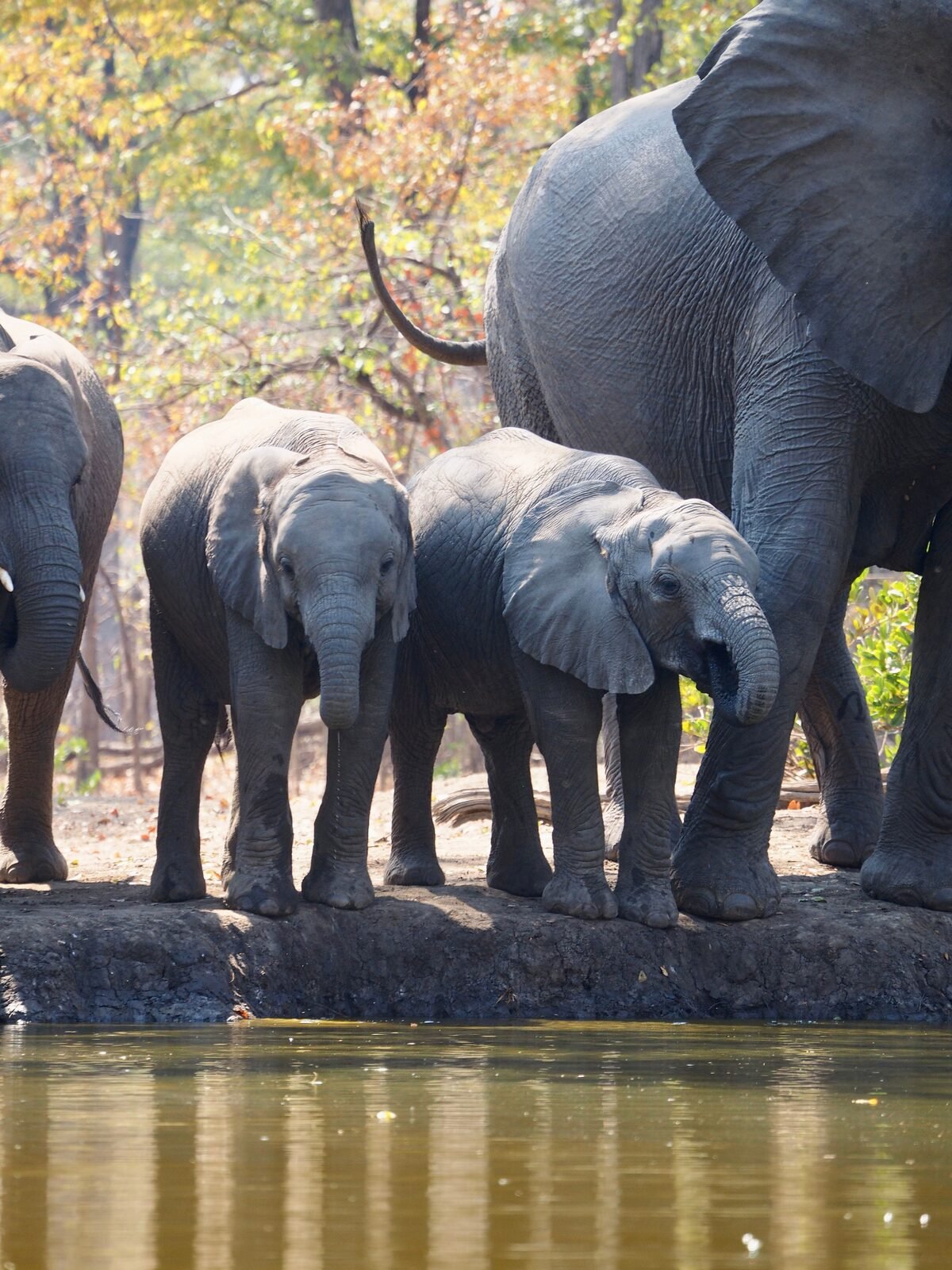
Peak safari season. Hwange’s artificial waterholes draw hundreds of elephants simultaneously, sometimes in groups exceeding 300 animals. Predator activity increases as prey species congregate around water. Mana Pools is open and delivers its signature walking safaris and canoe experiences. The Victoria Falls flow has reduced from its April peak, which actually improves visibility of the full rock face. International visitor numbers are highest this month.
September
Almost identical conditions to August, with temperatures warming noticeably. The Zambezi valley becomes very hot, particularly in Mana Pools where midday temperatures regularly exceed 38 Celsius. Morning and evening game drives and walks remain comfortable. Victoria Falls flow continues to reduce. Devil’s Pool on the Zambian side begins to become accessible as river levels drop.
October
The most dramatic safari month in Zimbabwe. Mana Pools is at peak concentration: impala, buffalo, elephant, and lion crowd the floodplains as the dry season reaches its extreme. Walking safaris with operators such as Wilderness Safaris and Natureways cost from approximately USD 200 per person per day including a guide, and the intimate access to wildlife on foot is rare anywhere in Africa. Temperatures in the Zambezi valley hit 40 Celsius by midday, but most camps structure the day around the cooler hours. First rains arrive in the highlands towards the end of October.
November
The rains return, usually starting in the north and moving south. Mana Pools begins to flood and closes progressively from mid to late November. Victoria Falls receives its first significant new water. Hwange remains excellent for game viewing in the early weeks before vegetation thickens. Green season rates at all camps are lower by 20 to 40 percent compared to peak months.
December
Full wet season. Zimbabwe is lush and dramatic. Victoria Falls grows rapidly as the Zambezi rises. Most safari parks remain open but sightings become harder in thick bush. Great Zimbabwe, Matobo Hills, and Harare are all comfortable to visit and far less crowded than mid-year. The Eastern Highlands around Chimanimani and Nyanga are at their most verdant.
Victoria Falls: Water Levels and Timing
Victoria Falls is one of the few natural wonders that can be too impressive to see properly. At peak flow in April and May, the spray cloud is so thick that you cannot see the water behind it from the main viewing platform. The Rainforest walk becomes a soaking experience rather than a sightseeing one.
For the best balance of impressive flow and clear visibility, June to August is the sweet spot. The falls are still carrying strong flow, the spray is dramatic but not obscuring, and the main rock curtain is fully visible. A Flight of Angels helicopter experience gives the clearest aerial perspective of the full width regardless of season. From September to January, the flow reduces significantly on the Zimbabwean side, though the Zambian side (accessible via the bridge) maintains a stronger column.
Devil’s Pool, the natural infinity pool at the lip of the falls on the Zambian side, is accessible October through February when the water is low enough to swim safely. Tours from Livingstone, Zambia, cost from approximately USD 85 per person.
Hwange: Dry Season is the Only Season for Serious Safari
Hwange National Park covers 14,651 km2 of Kalahari sandveld. Its defining feature is the network of waterholes, many of which are artificially pumped during the dry season because the park has no permanent rivers. Animals must come to the waterholes to survive, and this creates reliable viewing that is among the best in Africa.
From July to October, elephants gather in herds of 50 to 300 at waterholes such as Nyamandlovu Pan, Mandavu Dam, and Dom Pan. Lions, wild dogs, and leopards follow the prey. The Zimbabwe National Parks and Wildlife Management Authority charges USD 50 per person per day entry (as of 2026) for Hwange. Self-drive is possible from the Main Camp area; guided game drives with operators at Camelthorn Kalahari Lodge or Somalisa Camp cost from approximately USD 80 per person. Visitors coming from Victoria Falls can book a full-day guided Hwange game drive that handles transport and a professional guide.
In the wet season, Hwange is still beautiful, and the birding adds over 400 species. But wildlife sightings drop off substantially compared to the dry months.
Mana Pools: A Very Short Window
Mana Pools National Park is UNESCO-listed and arguably Zimbabwe’s most extraordinary safari experience, but the window to visit is tight. The park officially opens in April and closes in late October or November depending on the rains. October and early November represent the absolute peak: the Zambezi floodplain is dry, wildlife is concentrated, and dawn walking safaris with licensed guides produce sightings that are impossible to replicate from a vehicle.
Book Mana Pools accommodation at least six months ahead for October. Key operators include Wilderness Safaris (Ruckomechi and Little Ruckomechi camps, from approximately USD 800 per person per night all-inclusive) and John Stevens Safaris (from approximately USD 200 per person per day for walking-only safaris).
Which Month Suits Your Trip?
| Goal | Best Months |
|---|---|
| Peak elephant sightings, Hwange | July to October |
| Walking safaris, Mana Pools | October to early November |
| Victoria Falls at full power | February to May |
| Victoria Falls with clear views | June to August |
| Devil’s Pool swim (Zambia) | October to February |
| Great Zimbabwe, Matobo Hills | May to September |
| Birding | November to March |
| Budget travel, quiet parks | November to April |
For travellers combining Victoria Falls and Hwange in a single trip, June and July offer the best compromise: the falls are still impressive, the safari conditions are excellent, and temperatures are comfortable without being extreme.
Plan Your Trip
✈️ Book your flights to Zimbabwe 🛡️ Get travel insurance 📱 Stay connected with an eSIM 🚗 Rent a car