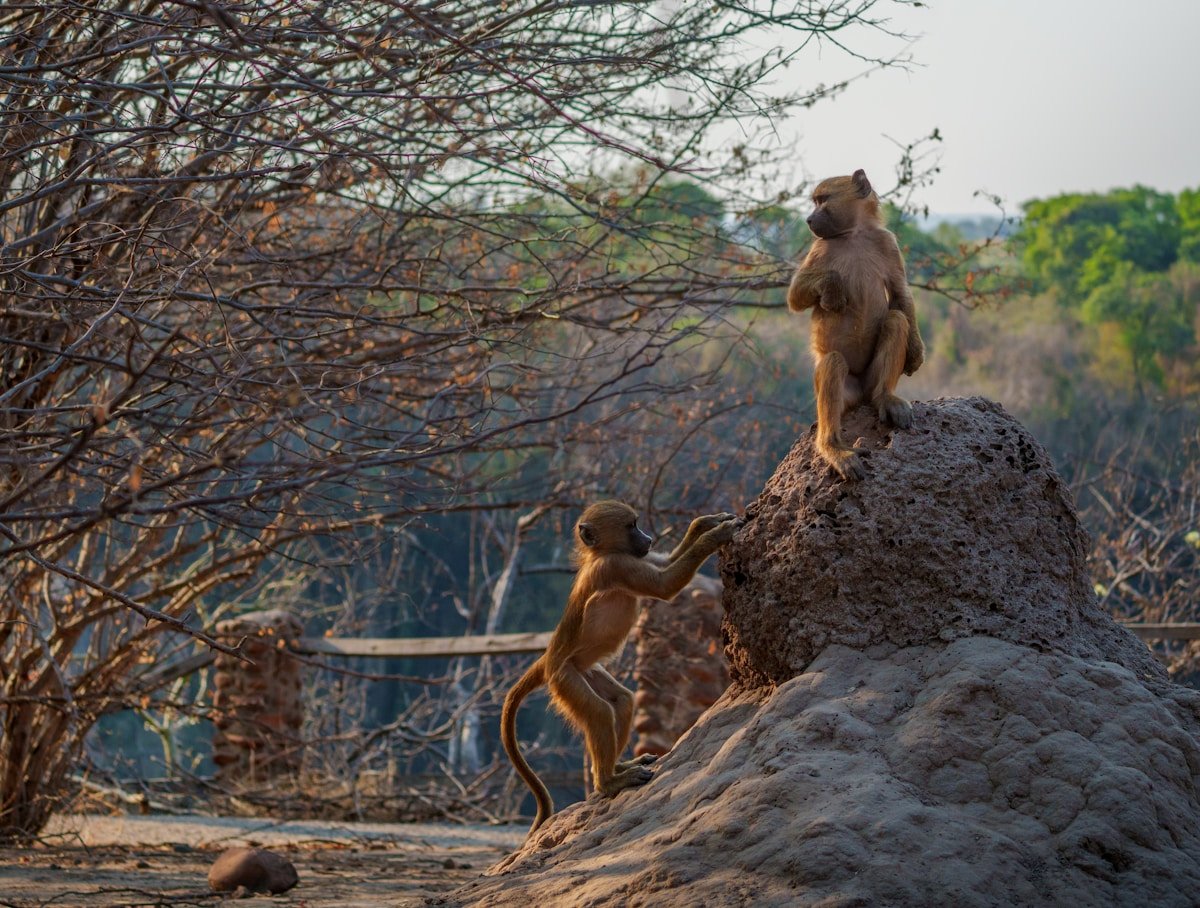
September is a month of transition in Zimbabwe. The bone-dry conditions of mid-winter have passed, temperatures are climbing, and the first signs of spring appear on acacia trees and in the evening light. Safari conditions remain exceptional and in many ways September offers the best balance of the dry season: outstanding game viewing without October’s punishing heat. For travellers prepared to move fast between activities and rest during the hottest midday hours, September is a rewarding time to visit.
Hot Dry Season Arrives: Building Heat and Dramatic Pre-Storm Skies
September marks the transition from Zimbabwe’s cold dry season into the hot dry season. Daytime temperatures climb steadily through the month. By late September, the Zambezi Valley is regularly hitting 35 degrees Celsius and Harare sits comfortably at 26-28 degrees. Mornings are warm rather than cold, and afternoon heat builds across the lowveld and escarpment. Skies are predominantly clear, but towering pre-storm cumulonimbus clouds occasionally build on the horizon in the final week of the month, a sign that the rainy season is still several weeks away.
Humidity is still low, making the heat more bearable than it sounds, but hydration is important on active days.
| City | Avg High °C | Avg Low °C | Rain Days | Conditions |
|---|---|---|---|---|
| Harare | 27 | 12 | 0 | Warm, dry, pleasant |
| Bulawayo | 29 | 12 | 0 | Hot afternoons, clear skies |
| Victoria Falls | 32 | 15 | 0 | Hot, dry, low spray at falls |
| Mana Pools | 37 | 18 | 0 | Hot, game viewing at its peak |
Victoria Falls Laid Bare: Exposed Gorge Structure and Optimal White Water Rafting
September sees Victoria Falls in a state of dramatic revelation. The Zambezi’s annual low-flow period is well advanced, and the eastern sections of the falls are significantly reduced or dry, exposing the full height and geological structure of the basalt cliff. The Devil’s Cataract on the western side continues to carry a strong column of water into the deep gorge pool below. The Rainforest Walk is dry and comfortable, with minimal spray, and photography conditions are excellent from all viewpoints without the need for wet-weather gear.
The visible cliff structure in September is extraordinary: the zigzag series of gorges, the swallow nests in sheer rock faces, and the green of the hanging gardens all become visible without the wet-season curtain of spray obscuring them. Visitors who only know Victoria Falls in full flow are often surprised by how impressive the dry-season structure appears.
White water rafting on the Zambezi gorge is approaching its prime. September water levels allow access to all 23 rapids including Grade 5 sections. Full-day trips cost approximately USD 130 per person as of 2026.
Impala Birthing Season Begins as Hwange Elephants Peak at 500-Strong Herds
September game viewing in Zimbabwe’s national parks is exceptional. The dry season has compressed water sources to a minimum, and every large mammal in the park must visit known permanent water points, making animal behaviour predictable and sightings concentrated.
Key wildlife highlights in September:
- Elephant congregations at Hwange — Hwange National Park reaches peak elephant congregation in September. The artificial pump-fed waterholes at Nyamandhlovu Platform, Ngweshla, and Masuma Dam draw hundreds of elephants from morning to dusk. Buffalo herds of 500 to 1,000 animals are regularly recorded at the same points
- Walking safaris at Mana Pools — Mana Pools National Park allows walking in certain zones without a guide, one of the few parks in Africa with this privilege. September is the best month for this. The albida trees drop their seed pods and elephants stand on hind legs to reach them, a behaviour unique to this area
- Baby animals and new births — September marks the start of the impala birthing season. Small herds of ewes with newborn lambs appear across the Highveld and midveld, drawing predator attention and creating compelling predator-prey interactions on game drives
- Raptors and large birds — September is one of the best months for raptor sightings across Zimbabwe. Bateleur eagles, martial eagles, and African fish eagles are regularly visible along the Zambezi. The Limpopo valley and Gonarezhou area sees large concentrations of vultures at kill sites
Malaria risk is increasing through September as temperatures warm. Take prophylaxis in all Zambezi Valley areas including Mana Pools, Victoria Falls, Hwange, and Kariba. Browse current Zimbabwe tours on GetYourGuide to compare guided safari and activity options for this excellent shoulder-season month.
Zimbabwe Flower Show in Harare and the Great Zimbabwe Historical Festival
- Zimbabwe Flower Show — Held at the Harare Horticultural Club in September, the annual flower show celebrates the beginning of Zimbabwe’s spring flowering season. Exhibitors display cut flowers, potted plants, and garden arrangements from across the country. Entry costs approximately USD 3 per person as of 2026
- Great Zimbabwe Historical Festival — Events at and around the Great Zimbabwe monument complex in September celebrate the country’s pre-colonial heritage through cultural performance, traditional music and guided heritage walks. Check current year programming for confirmed dates
- Victoria Falls Spring Craft Market — Elephant’s Walk Shopping Village in Victoria Falls hosts a seasonal craft and produce market on Saturdays through September and October as tourist numbers build toward peak season
Where to Stay and Eat in September: Linkwasha in Hwange and Vundu at Mana Pools
Hwange: September is the last month before prices drop at most safari camps. Linkwasha Camp in the Linkwasha Concession, positioned adjacent to a productive waterhole in the exclusive southern zone of Hwange, offers six tented chalets with viewing decks and all-inclusive rates from approximately USD 650 per person per night as of 2026. For a more accessible option, Hwange Safari Lodge, the oldest hotel in the park, offers rooms and a waterhole viewpoint from approximately USD 120 per person per night with meals.
Harare: For September visitors using Harare as a transit hub, Bronte Hotel in Avondale offers comfortable rooms in a garden setting from approximately USD 80 per night. The hotel’s restaurant serves a reliable menu of grills and local dishes. For a more upscale dinner, Amanzi Restaurant in Borrowdale is widely regarded as the best restaurant in Harare, serving modern African-inspired cuisine with mains from approximately USD 18 as of 2026.
Mana Pools: Vundu Camp sits in a riverine fig and mahogany canopy directly above the Zambezi floodplain, offering six open-fronted chalets with immersive game proximity. September is the camp’s best month for both walking safaris and game drives. Rates from approximately USD 500 per person per night all-inclusive as of 2026. Browse current September availability across the country using Search hotels in Zimbabwe on Booking.com.
What to Pack for September: Light Cotton for the Heat and Strong DEET for Rising Malaria Risk
September is warmer than the mid-winter months and cooler than October, making it one of the more comfortable months for active safaris:
- Lightweight, loose-fitting shirts and trousers in neutral bush colours (khaki, olive, sand)
- A light cotton layer for mornings and evenings — no fleece required by late September
- Wide-brimmed hat and SPF 50 sunscreen — UV intensity is high on clear days
- Strong DEET insect repellent — malaria risk rises through the month, especially in the Zambezi Valley
- Comfortable walking shoes and closed-toe sandals
- Binoculars and a telephoto lens or camera with zoom capability
- A headtorch for early morning departures and camp walks after dark
- A small dry bag or day pack for boat trips and canoe safaris
September Budgeting: Tail End of Peak Season With Softening Prices
September sits at the tail end of high season pricing at most camps. Prices are typically 5 to 15 percent below August peaks at premier lodges, but availability is still tight at the most sought-after properties in Hwange and Mana Pools. Book high-demand camps at least three to four months in advance. Self-drive camping remains excellent value at Zimbabwe National Parks campsites: expect to pay approximately USD 15 per campsite per night plus park entry fees as of 2026.
Victoria Falls town is a practical and more budget-friendly base for day trips to Hwange and the falls activities. The range of guesthouses, restaurants, and activity operators makes it easy to build a flexible September itinerary without committing to expensive all-inclusive packages.
Arrange travel insurance before departure - medical evacuation cover is essential for any safari itinerary, and September’s remote camps and rising temperatures make comprehensive coverage a priority.
For full destination planning, see our guides to Victoria Falls, Hwange National Park, and Mana Pools.
Plan Your Trip
September is heat and extraordinary concentrations of wildlife. Hwange’s Nyamandhlovu Platform delivers up to 300 elephants at a single waterhole - one of the most dramatic wildlife experiences in Africa. Mana Pools stays open until roughly the 31st; the walking and canoeing are spectacular, but pack electrolytes and a wide-brimmed hat - midday shade in the valley hits 38°C. Victoria Falls’ flow is at its seasonal low; the gorge view from the bridge is the clearest of the year. Structure game drives around 5:30 am departures before the heat peaks. September is fully peak season - book flights well ahead. Confirm travel insurance includes heat-related medical cover. A car hire suits the Bulawayo–Matobo Hills circuit; Hwange and Mana Pools require fly-in or camp package.