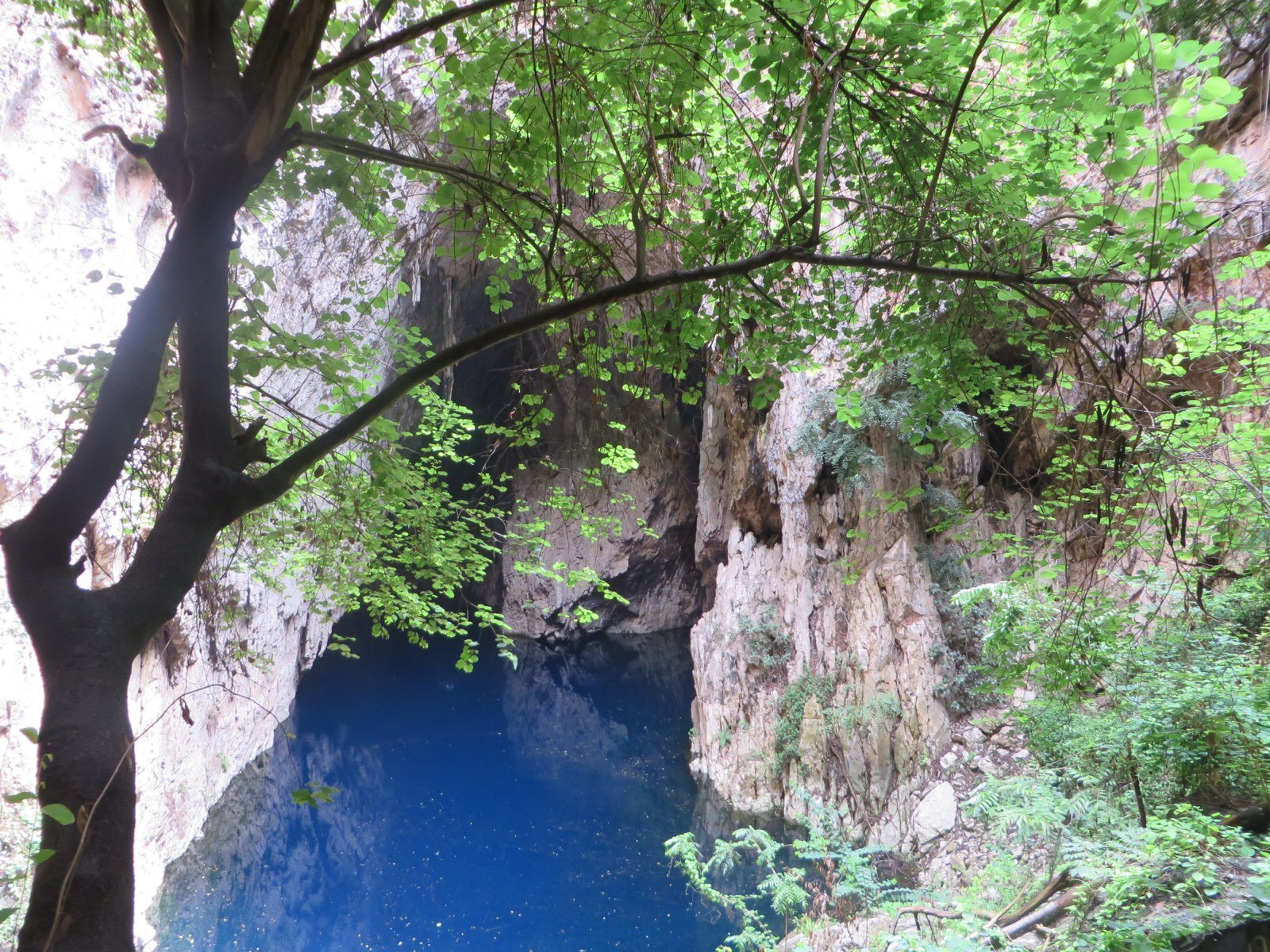
Chinhoyi Caves (also written Chirorodziva, “the pool of the fallen”) is a limestone sinkhole system in Mashonaland West, and its Sleeping Pool is one of the most photographed natural features in Zimbabwe. The water is a deep cobalt blue, sitting at the bottom of a sheer-walled collapse about 46 m below ground level. It is an easy half-day trip from the capital and a natural stop on the road to Lake Kariba and Mana Pools.
Quick facts
- Where: Chinhoyi Caves National Monument, about 9 km beyond Chinhoyi town on the Harare-Chirundu road
- From Harare: about 115 km, roughly 1.5 hours by car
- Hours: 09:00 to 17:00 daily on most listings (some show 08:00 to 17:00, last entry 16:30)
- Entry: approximately USD 10 international, as of 2026 (see fees below)
- Time needed: 45 to 90 minutes on site, longer with a picnic
- Best for: photography, a short walk with a view, scuba divers, budget camping
Getting there from Harare
Take the Harare-Chirundu road (the A1/R3 corridor heading north-west) through Chinhoyi town. The caves are on the left about 9 km after town. The road is tarred and in reasonable condition, but fill up in Harare before you leave. Our Harare day trips guide lists the other excursions within a few hours of the capital, and our Zimbabwe car rental guide covers hiring a vehicle for the drive.
No dependable public transport runs to the gate, so most visitors self-drive or join a tour. If you are travelling on towards Kariba or Mana Pools, the caves make a good 30 to 60 minute break in the journey.
Entry fees: what we found
Published day-visitor conservation fees are approximately USD 10 for international visitors, USD 8 for SADC citizens and USD 3 for Zimbabwean residents, as of 2026. These figures come from 2022 listings and are repeated across several guides, but fees at Zimbabwe parks change often and some travellers report paying more. Treat USD 10 as the floor, check with ZimParks (the listing contact is +263 242 706077) before you go, and carry small USD notes because card machines are unreliable. A per-camera charge of around USD 2 has been reported, so ask at the gate. Picnic sites cost about USD 5 for locals and USD 10 for other visitors.
What you see
The Sleeping Pool. The main event. Steps lead down from the entrance to a viewing point above the water. Depths of 80 to 91 m are quoted for the main section, varying with the season, and most sources put the temperature around 22°C. The colour comes from the clarity of the water and the light dropping through the sinkhole opening, so late morning to early afternoon gives the strongest blue.
The Dark Cave. A passage that leads off the pool area, reached through narrow rock. Its exit is extremely steep and unsuitable for anyone with limited mobility.
The legend. Local tradition says the outlaw Nyamakwere threw his victims into the pool until a headman named Chinhoyi defeated him, became chief, and gave his name to the town. Pottery and human remains point to habitation from around 650 AD, and Chinhoyi’s people later used the caves as a refuge. The site is a national monument, so keep to the paths.
Walking the site: steps and safety
The route to the pool is a series of steep paved steps with rest spots. There are few barriers around the steps and water, so keep children close. Wear closed shoes with grip, because sandy patches and damp rock make the descent slippery. Baboons, monkeys, bushpigs and rock hares live around the site, so keep food out of sight. Allow around 45 to 60 minutes for the main circuit and more for photography.
Scuba diving
Chinhoyi is a recognised cave-diving site, with visibility described as good and tunnels leading off both the Sleeping Pool and the Dark Cave. Divers must go through a Zimbabwe-registered dive club and arrange permission in advance, so you cannot simply turn up with gear. US Navy divers have reached around 135 m, so the system is far deeper than recreational limits. Published diving fees differ greatly from the visitor entry fee, so request a current quote from the dive club when you book.
Camping and picnics
The park has camp and caravan sites, shaded picnic areas and three ablution blocks with hot and cold water. Camping is approximately USD 5 per person for locals and USD 8 for internationals, as of 2026. That makes it a budget overnight stop for people driving between Harare and Kariba, or in from Bulawayo or Mutare. If you want a bed in town, search hotels in Harare on Booking.com and drive up in the morning.
Tours from Harare
Self-driving is easy, but a tour helps if you do not have a car or want the context of a guide. We recommend two verified options:
- Chinhoyi Caves Day Trip with Refreshments is a return transfer from Harare with park entry and refreshments, the simplest way to do it without a car.
- Chinhoyi Caves Tour with Lion Viewing and Lunch adds a lion-viewing stop and a meal, making it a fuller day.
Browse all Harare tours on GetYourGuide, or compare them against the other options in our Harare day tours guide. Our Harare city guide covers what to do before or after the trip.
When to go
The caves are open year round and rarely busy. The dry season (May to October) makes for easier driving and clearer paths, while the rains (November to April) can leave steps slick but the vegetation around the sinkhole is at its greenest. Go early to beat tour groups and the afternoon heat.
Sources and image credit
For general planning see the Zimbabwe Tourism Authority and the Chinhoyi Caves listing at Show Caves. Hero photo: Sleeping Pool, Chinhoyi Caves, by Suesen via Wikimedia Commons, licensed CC BY-SA 3.0.