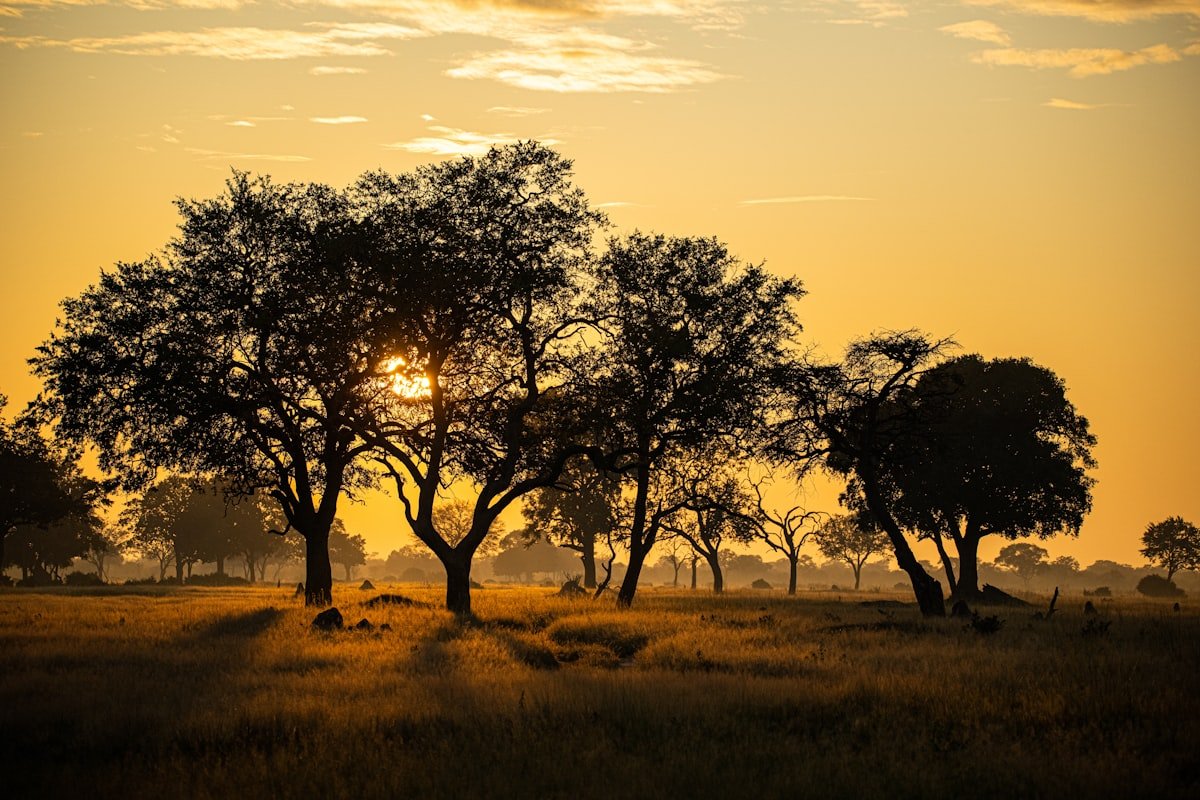
Hwange is a year-round destination but not a uniform one. The difference between a July visit and a February visit - in terms of wildlife viewing, weather, price, and crowd levels - is stark. Understanding what each season delivers helps you match the experience to your priorities rather than defaulting to peak season assumptions.
The Dry Season: June to October
This is the season most travellers think of when they imagine an African safari. In Hwange specifically, the dry season dynamic has an added intensity: the park relies on approximately 60 artificial waterholes pumped by diesel engines, and as surface water disappears across the wider landscape, these pumped pans become the only reliable drinking source for an enormous concentration of wildlife.
June
The rains have ended and the grass has dried. Temperatures are warm during the day (22–27°C) but cold at night (6–12°C). Bring warm layers for early-morning game drives. June is the first peak month and lodges begin filling from the second week. Elephant sightings at major waterholes are already exceptional; lion activity is increasing as prey species concentrate near water.
July
The most popular month in Hwange. Temperatures remain cool and comfortable (max 23–26°C, min 8–14°C), and the combination of ideal weather and peak wildlife viewing makes July the month all the major concession camps target. Linkwasha, Davison’s, and Little Makalolo are typically fully booked by February–March for July dates. Book 6 months ahead. Wildlife sightings of buffalo herds (1,000+ animals), elephant mega-herds, and regular lion encounters make this the benchmark against which other months are measured. Browse available Hwange full-day safari tours if you want a guided day trip rather than a lodge-based stay.
August
Essentially the same profile as July, with slightly warmer afternoon temperatures (28–30°C). The landscape is drier and more skeletal - which means visibility through the mopane woodland is at its best. Buffalo herds consolidate further. Predator activity around waterholes intensifies as prey have fewer escape routes through the sparse vegetation. One of the two best months in the park.
September
The heat begins to climb (35–40°C in the afternoon) and conditions become extreme for wildlife and visitors alike. What September delivers in return is the most intense waterhole spectacle of the year. Elephant families that have been ranging across a 50 km radius in the wet season are now forced to the same half-dozen waterholes daily. Gatherings of 300–600 elephants around a single pan during the mid-morning hours are documented every week. Lion, leopard, and wild dog follow the prey concentration. For pure wildlife spectacle, September is the peak.
Note: Heat during September game drives is genuine - afternoon temperatures in the mid-thirties inside a game vehicle are taxing. Schedule dawn drives (05:30 departure) and afternoon drives (15:30 departure) rather than a single midday drive.
October
The hottest month (36–42°C at the peak) before the first storms arrive in late October or early November. Wildlife viewing remains exceptional through mid-October. Some concession camps close for staff rotation from late October. The first seasonal storms, when they arrive, produce dramatic skies and signal the end of the dry season concentration.
The Wet Season: November to April
Often called the “green season,” this period transforms Hwange from a desiccated savanna into a productive, verdant landscape. The trade-off is clear: wildlife is harder to spot in dense vegetation, and the mega-herds dispersed away from the waterholes into a 14,000 km² park are not visible in the same way. What the wet season offers instead is a different kind of wildlife experience.
November
The transitional month. Early storms arrive but rainfall is unpredictable. Temperatures drop slightly from October’s peak (33–38°C). Migratory birds begin arriving in significant numbers - European rollers, carmine bee-eaters, and yellow-billed kites appear in flocks. Resident wildlife is still relatively visible before the bush fully closes.
December
Full rainy season in progress. Rainfall averages 60–80 mm for the month. The park’s floodplains fill and the mopane woodland turns vivid green. Elephant calves born from November onward are frequently visible with breeding herds. Fewer than 15% of the park’s annual visitors are present, meaning a visitor in December has a private-feeling park experience. Rates at lodges are lowest of the year.
January and February
The wettest months. Average rainfall 80–100 mm per month. Afternoon electrical storms are common and sometimes spectacular. Some interior tracks are impassable. Many private camps are closed or operating on a skeleton basis. The Zimparks camps (Main Camp, Sinamatella) remain open year-round. Birdwatching in this period is exceptional - the park’s 400+ recorded species are augmented by migrants, and breeding plumage across the resident species is at its most vivid.
March and April
Rainfall tails off through March; by April conditions are drying out. This is the transition back toward the dry season but is not equivalent to it - vegetation is still dense and water is still widespread. April is when private camps reopen and begin accepting bookings again. The wildlife is recovering condition after the breeding season and is increasingly active. A few operators offer April as a “shoulder season” rate that provides better value than the June–October peak.
May
Technically post-rains. The vegetation is still green in May but visibly beginning to dry. Nights cool noticeably (10–15°C). May is an underrated Hwange month: wildlife is more concentrated than in April, prices have not yet climbed to peak levels, and the park is quiet. Game drives in May can produce excellent sightings without any of the July–September crowds.
Month-by-Month Summary
| Month | Conditions | Wildlife Viewing | Rates | Best For |
|---|---|---|---|---|
| January | Hot, very wet | Moderate | Low | Birdlife, budget travel |
| February | Hot, very wet | Moderate | Low | Birdlife, budget travel |
| March | Warm, drying | Good | Low–Medium | Newborn wildlife, quiet park |
| April | Warm, dry | Good | Medium | Balance of value and viewing |
| May | Warm, dry | Very good | Medium | Quiet, excellent value |
| June | Cool, dry | Excellent | High | First peak month, cooler nights |
| July | Cool, dry | Excellent | Peak | Best all-round, busiest month |
| August | Warm, dry | Excellent | Peak | Clear visibility, strong sightings |
| September | Hot, dry | Outstanding | Peak | Waterhole spectacles, intense heat |
| October | Very hot, dry | Excellent (early) | High | Dramatic skies, last of dry season |
| November | Hot, rains start | Very good | Medium | Transitional, migratory birds arrive |
| December | Warm, wet | Good | Low | Lush landscape, few visitors |
Practical Booking Windows
For June–September travel: Book 4–6 months in advance for private concession camps. National Parks chalets at Main Camp and Sinamatella are first-come/first-served at the gate but can also be booked online; 2–3 months ahead is advisable for July and August. See all Hwange tours and safaris for day trips and multi-day options into the park.
For October–May travel: Booking flexibility is much greater. Many camps accept reservations 4–6 weeks out for the green season and shoulder months.
Children and families: The green season is actually well-suited to families with young children - lower rates, fewer visitors, and the reduced intensity of heat make it more manageable. Newborn wildlife in December–February is a genuine highlight.
Travel insurance: Medical evacuation from Hwange to Bulawayo or Harare is expensive. Take out travel insurance that includes emergency evacuation before you travel - this applies year-round but is especially relevant during the hot months when heat-related illness and vehicle breakdowns in remote areas are more common.