Planning a safari in Zimbabwe involves three decisions: which parks to visit, what level of accommodation to book, and when to go. This guide covers all three, structured around the Big Five species as anchors - since the parks you choose depend directly on which animals you most want to see.
Budget Tiers: What to Expect at Each Level
Self-drive budget (USD 50–100/person/day): National parks camps - Main Camp at Hwange, Nyamepi at Mana Pools - give access to the parks without a guide or full-service lodge. You drive the game circuits in your own vehicle. Facilities are basic; sightings in peak season are still good.
Mid-range (USD 200–400/person/day fully inclusive): Private lodges outside the national park boundary, or smaller owner-run camps inside concession areas. Guided game drives and bush walks included. Most operators in this tier have dedicated vehicles and experienced naturalist guides.
Premium fly-in (USD 600–1,200+/person/day all-inclusive): Concession camps with exclusive traversing rights, small guest numbers, and senior professional guides. Higher sighting rates, more personalised wildlife encounters, and remote locations unreachable by road.
Which Park for Each Species
Lion: Hwange and Mana Pools
Best parks: Hwange National Park, Mana Pools National Park
Zimbabwe’s lion population is concentrated in Hwange, which holds an estimated 500–600 individuals - one of the country’s largest prides. Lions here are frequently seen on game drives during the dry season (June–October), often resting near waterholes during the heat of the day and active at dawn and dusk.
Mana Pools on the Zambezi escarpment offers a different lion experience: the park’s famous walking safaris mean encounters happen on foot rather than from a vehicle. Mana Pools lions have a reputation for being unusually relaxed around guides and guests on foot - a function of years of walking safari pressure conditioning them to pedestrian presence. This makes for an intimate encounter that vehicle-based camps cannot replicate.
Gonarezhou, in the southeast, also has a recovering lion population, though sightings are less reliable than in Hwange due to the terrain and lower vehicle density.
Viewing tip: Waterholes in the interior of Hwange - particularly around the Linkwasha Vlei, Kennedy Dams, and Ngweshla Pan - are the most productive lion watching positions from July to October. Guides at concession camps position vehicles beside known pride territories from 05:30 to catch the pre-sunrise return from night hunts.
Leopard: Matobo Hills and Gonarezhou
Best parks: Matobo Hills, Gonarezhou, Hwange
Leopard are present across Zimbabwe but reliably sighted only in specific terrain. Matobo Hills is the country’s best leopard destination: the kopje-and-acacia landscape is classic leopard country, the cats are relatively habituated to vehicles, and the Rocky Outcrop Guide Camp runs dedicated leopard-tracking drives. Sighting rates during 3-night stays at Matobo reach 70–80% in optimal conditions.
Gonarezhou’s riverine woodland along the Lundi and Runde rivers holds a healthy leopard population; the remote nature of the park means these cats see fewer vehicles than anywhere else in Zimbabwe. Remote camps like Chilo Gorge Safari Lodge organise dawn drives specifically targeting the riverine zone.
Hwange’s leopard are present but less visible than lion or elephant - the flat, sandy woodland is harder to search than Matobo’s rocky terrain.
Viewing tip: Leopard are crepuscular - most active in the 45 minutes after sunrise and the 30 minutes before sunset. Afternoon game drives that end at the lodge at nightfall are less productive than drives that push to last light. Confirm with your camp guide that they extend the afternoon drive to the legal time limit.
Elephant: Hwange Above All
Best park: Hwange National Park (by a significant margin)
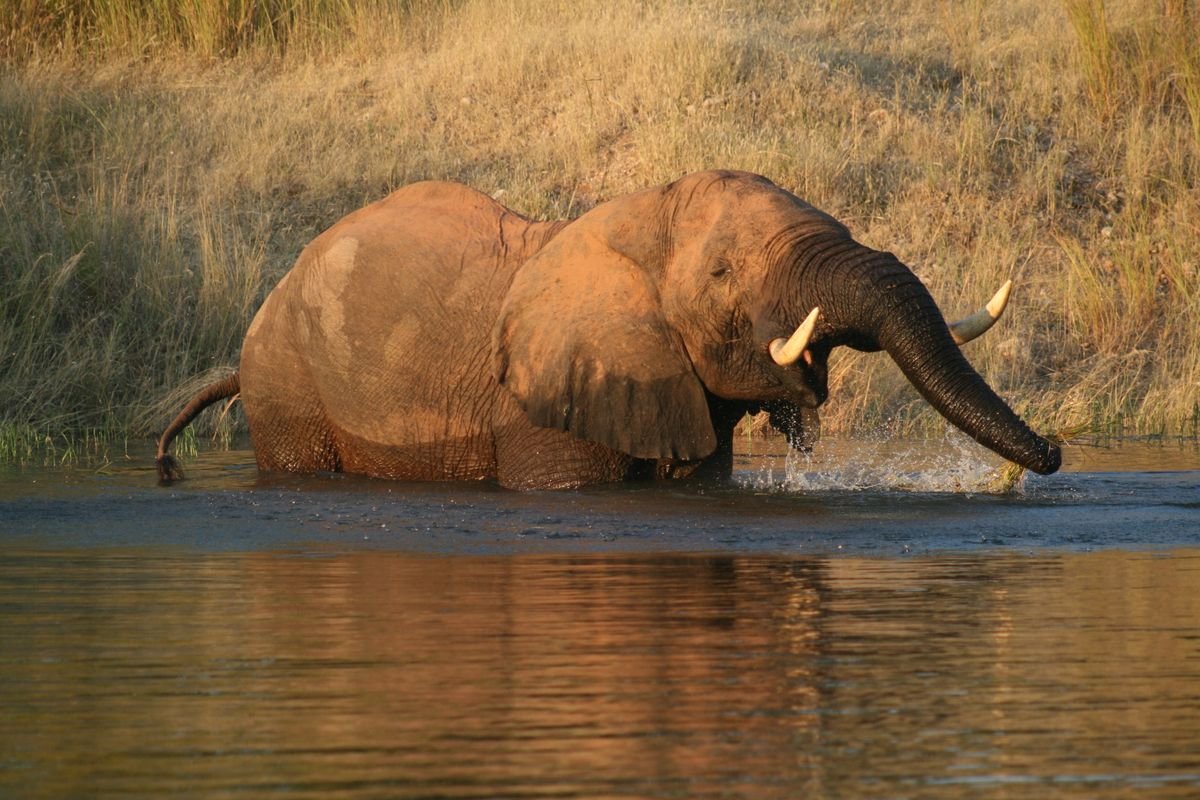
Zimbabwe has approximately 100,000 elephants, and Hwange alone holds an estimated 45,000–50,000 - one of the largest concentrations anywhere on Earth. This is simultaneously a conservation success story and a management challenge. In the dry season, herds of 200–500 individuals converge on the park’s artificial waterholes, which are maintained by diesel-powered pumps. Witnessing a herd of this scale at a waterhole is one of the defining wildlife spectacles in Africa.
Mana Pools also offers exceptional elephant encounters. The park is famous for its bulls that rear up on their hind legs to reach acacia pods in the canopy - a behaviour rarely documented anywhere else. Mana’s elephants are generally calmer around vehicles and walking parties than those in Hwange, partly due to the park’s lower visitor density.
Viewing tip: The waterholes at Hwange are most productive between 09:00 and 12:00 and again from 15:00 to 18:00. Parks-operated day visitors can watch from hides at Main Camp waterhole without entering the game drive circuit. Sunrise visits see the overnight herds returning to drink before dispersing into the woodland. Guided game drives from Victoria Falls into Hwange - including full-day and 2-day options - give access to the park without a self-drive vehicle.
White Rhinoceros: Matobo Hills Only
Best location: Matobo Hills (Whovi Wild Area)
White rhino are Zimbabwe’s most difficult Big Five species to see, and the opportunity is concentrated in one place: the Whovi Wild Area within Matobo Hills National Park. Imire Rhino and Wildlife Conservancy near Harare offers a more controlled rhino encounter - guests can walk with white rhino on foot - but for genuinely wild animals in their natural environment, Matobo is the location.
Matobo holds approximately 50–60 white rhino, making it the largest single population in Zimbabwe outside of private conservancies. The Whovi sector is accessed from the park headquarters on a self-drive circuit; guides stationed at the park can assist with rhino tracking on foot. A typical tracking session on foot with a ranger costs approximately USD 35–50 per person on top of park fees. For visitors coming from Bulawayo, a Matobo Hills day trip with rhino tracking includes transport and a ranger escort with no self-drive required.
Black rhino exist in small numbers in Gonarezhou and Matusadona, but reliable sightings require specialist tracking efforts rather than standard game drives.
Viewing tip: Rhino at Matobo are most often found grazing on open grassland patches in the early morning (06:30–09:00) before retreating into shade. The Whovi circuit can be covered in a self-drive vehicle (4WD recommended), and rangers based at the Matobo Hills lodge clusters can advise on recent sightings daily.
Cape Buffalo: Hwange, Mana Pools and Gonarezhou
Best parks: Hwange, Mana Pools, Gonarezhou
Cape buffalo are the most numerous of the Big Five in Zimbabwe and the least difficult to locate. Hwange’s buffalo herds run to several thousand individuals during the dry season; the large herds are visible from the main road network without needing to penetrate deep into the concession areas. Mana Pools has some of the most photographically compelling buffalo encounters, as the bulls are regularly seen swimming the Zambezi or feeding in the open floodplain at dawn.
Buffalo are the species most commonly encountered on walking safaris at Mana Pools - encounters at close range on foot require calm, experienced guiding. The CAMPFIRE community areas around Mana Pools also see large buffalo movements during the October heat.
Sample Itineraries by Duration
A 10-day itinerary covering all five species typically looks like this:
- 3 nights Hwange (fly-in concession camp) - lion, elephant, buffalo, leopard opportunities
- 2 nights Matobo Hills (lodge or Matobo Hills Hotel) - white rhino tracking, leopard
- 3 nights Mana Pools (walking safari camp) - lion, elephant, buffalo on foot
The remaining days allow for transfers and Victoria Falls, which sits adjacent to Hwange and makes a logical fly-in entry point. All three parks can be reached from Victoria Falls International Airport. Browse Victoria Falls tours and activities to fill your arrival day before heading into the parks.
Best season overall: July–September delivers the highest sighting rates for all five species combined. Lion and elephant peak in September when water pressure is most extreme. Rhino tracking at Matobo is productive year-round but easier in the dry months when vegetation is shorter.
For a complete overview covering all national parks, budget ranges from camping to luxury lodges, and how to choose an operator, see our Zimbabwe safari guide.