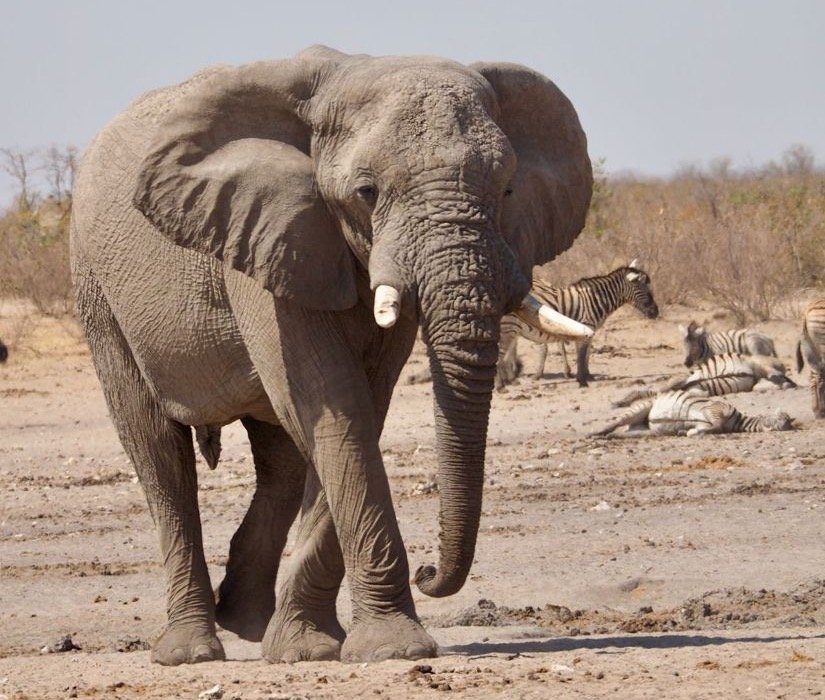
Zambezi National Park is the wildlife reserve on Victoria Falls’ doorstep: about 56,000 hectares of riverine forest, mopane woodland and open vleis on the Zimbabwean bank of the Zambezi, with roughly 40 km of river frontage. It begins about 6 km upstream of the falls and is a mix of river drives, a seasonal inland circuit, boat and canoe water and a handful of private lodges. Most visitors treat it as a half-day add-on to the falls, and that is a fair use. Done at dawn, it is one of the cheapest and quickest ways in Zimbabwe to see elephant, hippo and sable without a long transfer to Hwange.
The park was created in 1979, when the conservation area on the Zimbabwean side was split into this park and the much smaller Victoria Falls National Park, which protects the rainforest and the falls themselves. The UNESCO World Heritage listing covers the riverine strip and islands closest to the falls; the wider park is managed by ZimParks.
Getting There and the Entrance
The main gate is reached by driving through Victoria Falls town and out along Park Way Drive, a short run of roughly 10 to 20 minutes from the hotels. There is no public transport inside, so you need a hotel or operator transfer, a guided drive, or your own vehicle. Taxis will take you to the gate but will not wait unless you arrange it.
A separate southern section reaches the Chamabondo area. One older listing says there is no payment office at the Chamabondo gate, so buy your permit at the ZimParks office in town or at the main gate. Treat that as dated and confirm on the day.
Fees (as of 2026)
A fee table last updated in March 2026 lists daily entry, including VAT, at:
- International visitors: USD 17
- SADC residents: USD 14
- Zimbabwe residents: USD 5
- Accommodated guests (overnight in the park): USD 10 international, USD 7 SADC, USD 3 local
Activities carry their own park charge on top: guided game drives and walking safaris USD 17 per person, canoeing and sunset cruises USD 12, fishing safaris USD 23. Children under 12 pay half the activity fee. Older guides and some of our own earlier notes quote USD 15, which was the rate in 2023. Operators usually fold the fees into their price, so a guided half-day drive from town typically comes out at around USD 60 to 90 per person. Take cash in US dollars as a backup when paying at the gate.
Game Drives
There are two main game-viewing areas.
The Zambezi River Drive. A network of roads follows the river upstream from the main gate, stopping at viewpoints and picnic spots. It is the easier option for self-drivers and where you are most likely to see elephant, hippo, crocodile, waterbuck, buffalo and fish eagles. Allow four to five hours for the full loop.
The Chamabondo circuit. A roughly 25 km drive in the south of the park through woodland and seasonal vleis. This is where sable and roan antelope are the signature sightings, along with zebra, giraffe and the occasional lion. It needs a 4x4 or a guide and is best in the dry months.
Morning drives typically run from about 06:00 to 10:00 and evening drives from about 15:30 to 18:30. Dawn is better for predators, late afternoon for light and for elephants coming down to drink. Do not expect Hwange-style density: lion and leopard are present but less reliably seen, so judge the park as a quick, good-value river safari rather than a full big-game trip. For the full picture of what lives in the area, see Victoria Falls wildlife.
Browse Victoria Falls game drives and tours to compare half-day departures and prices.
Canoeing and Boats on the Upper Zambezi
The park’s river frontage is where the calm Upper Zambezi water sits. Guided half-day and multi-day canoe trips run here, with hippo, crocodile and elephant on the banks, and a park activity fee of about USD 12 per person is charged for paddling. We could not confirm a single public put-in point, and operators handle the launch and the vehicle transfer, so book a guided trip rather than turning up with a boat. Our Upper Zambezi canoe safari guide covers prices, group sizes and what a typical day looks like, and the Zambezi sunset cruise guide covers the boat alternative.
Birdwatching
Birding is strongest in the green season, roughly November to April, when migrants arrive and the vleis fill. Species to watch for include African skimmer, Schalow’s turaco, carmine bee-eaters nesting in the river banks and Pel’s fishing owl in season, plus African fish eagle year-round. A morning river drive or canoe trip with a guide gives the best chance. Our birdwatching in Zimbabwe guide places the park in a wider checklist.
Where to Stay
Most visitors sleep in town and drive in. Inside the park, accommodation is made up of private lodges and bush camps along the river, priced from the upper mid-range upwards. Guests pay the lower accommodated park rate. Older sources describe ZimParks self-catering chalets, but one 2023 listing says they are now rented privately rather than to tourists, so we would not plan around them without a written confirmation from ZimParks. Our Victoria Falls where to stay guide compares town and river options, and the Victoria Falls stay guide has current rates.
Rainy Season and Road Closures
Between roughly November and April, heavy rain turns the sandy and clay interior tracks to mud and some sections close. Low-clearance cars get stuck, and the Chamabondo circuit is the first to suffer. The river drive usually stays open but can be slow. In the dry season (May to October) everything is open and game concentrates along the river. If you travel in the green season, book a guided drive, because operators know which roads are open that week. Read our best time to visit Victoria Falls guide for how the park’s seasons line up with water levels at the falls.
Safety Notes
Walking alone is not permitted because of elephant, buffalo and lion. Walking safaris are led by armed, licensed guides. Keep at least 50 m from elephants, stay in the vehicle on game drives and never swim in the river. Crocodile and hippo are present throughout.
Is It Worth Your Time?
Yes, if you have a half-day spare at the falls. It is not a replacement for Hwange or Mana Pools, but it is the quickest and cheapest wildlife outing from town, and combines well with a sunset cruise or canoe trip. Pair it with the rainforest and the bridge for a full Victoria Falls stay, and if wildlife is your priority add a night or two at Hwange.