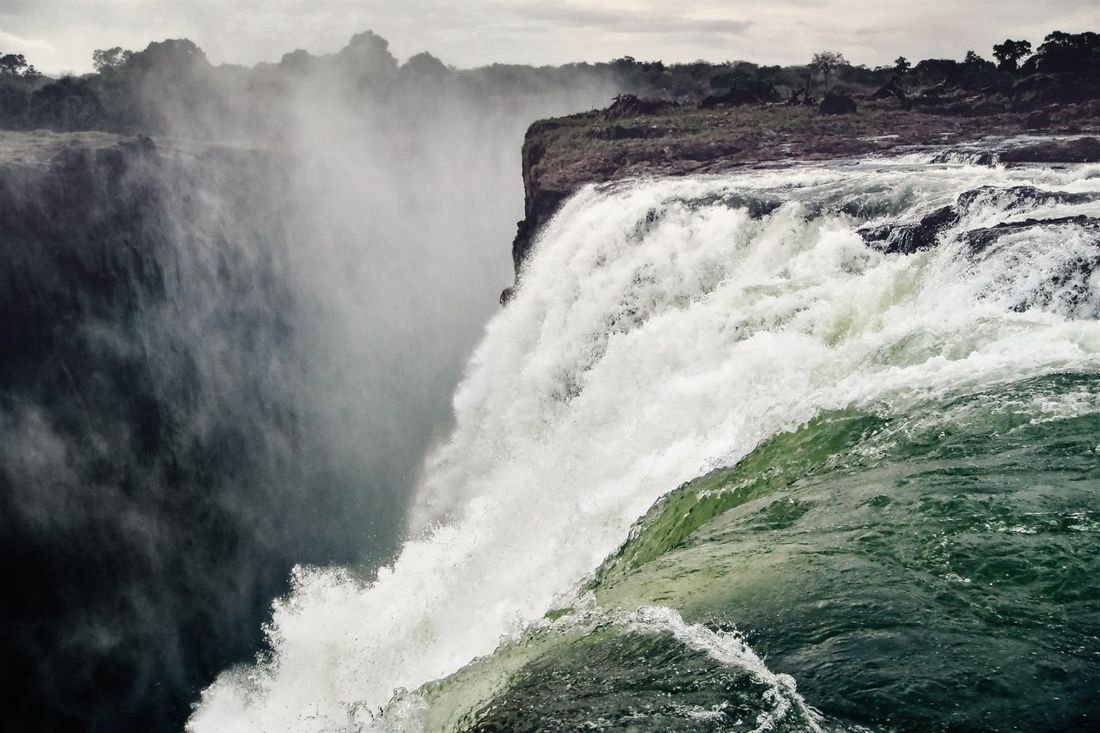
Victoria Falls is a different place in April than in November. The Zambezi carries several times more water in the wet months, and that changes what you see, what you can do and what you pay. This guide breaks the year down by water level, then by activity, so you can pick a month that suits your trip rather than following the crowd.
The falls are about 1.7 km wide and 108 metres high, and UNESCO lists them as a World Heritage Site. If you are still deciding on dates for the whole country, start with our best time to visit Zimbabwe overview, then come back here for the Victoria Falls detail.
The key timing facts at a glance:
| Item | Detail |
|---|---|
| Biggest, loudest flow | March to May, peaking around April |
| Best balance of flow and visibility | June to July |
| Clearest cliff face, Devil’s Pool and rafting | September to December |
| Cheapest months | November and December |
| Moonbow | Full-moon nights, strongest February to July |
The Short Answer
- Biggest, wettest, loudest: March to May, peaking around April.
- Best balance of flow and visibility: June to July.
- Clearest view of the cliff face, Devil’s Pool and rafting: September to December.
- Cheapest: November and December.
- Moonbow: full-moon nights, strongest from February to July.
Victoria Falls Water Levels by Month
The Zambezi flood arrives late. Rain falls on the catchment between November and March, but the peak reaches the falls in March to May, and the river is lowest from October to December. The table is a guide to typical conditions, not a forecast; every year varies.
| Month | Water level | What you see | Best for |
|---|---|---|---|
| January (2027) | Rising | Strong spray, green gorge, daily storms | Low prices, birding |
| February | High | Heavy spray, views start to be hidden | Moonbow, dramatic photography |
| March | Very high | Near peak, thick mist over the Zimbabwe side | Power and noise |
| April | Peak | Maximum flow, rainbows constant, poncho weather | The raw scale of the falls |
| May | High | Still very full, mist begins to clear | Helicopter flights, strong flow with better views |
| June | High to moderate | Wide curtain, good visibility | Balanced first visit |
| July | Moderate | Full curtain visible, cool dry weather | Best all-round month, rafting opens |
| August | Moderate to low | Gorge clearly visible, rock appearing | Rafting, combining with Hwange |
| September | Low | Bare rock face, Zimbabwe side thinning | Rafting, Devil’s Pool opens mid-month |
| October | Lowest | Least water on the Zimbabwe side, very hot | Devil’s Pool, rafting, bungee |
| November | Very low | Rock face exposed, first rains arrive | Devil’s Pool to early December, cheap rates |
| December | Rising | Water returns, humid, green season starts | Lowest prices, quieter viewpoints |
The pattern is simple. In the high months you trade visibility for power: the spray can hide the falls from the main viewing points, and the Rainforest path is a soaking walk. In the low months you see the full geology of the gorge, but the Zimbabwe side can look thin in October and November, while the Zambian side keeps more flow.
Month-by-Month Detail
January 2027 update: the Zimbabwe-side entry fee was raised to approximately USD 58 per international adult in 2026, so budget for it, and New Year crowds clear out in the first days of January, when green-season rates return. The Vic Falls Carnival has not been announced for 2026-27 and is due back on 31 December 2027. We could not verify a 2027 fee schedule.
For weather, wildlife and prices in each month, use our monthly guides: January, February, March, April, May, June, July, August, September, October, November and December. Each one covers the whole country; the notes below keep to the falls.
High Water: February to May
Expect to get wet. At peak flow the spray column rises high enough to be seen from kilometres away, and on the Zimbabwe side the Rainforest path can feel like walking through a storm. Bring a waterproof for your camera and a poncho for yourself. Views of the Main Falls are often partial, which is why many visitors in April and May choose to see the falls from the air. A helicopter flight over the falls gives the full width in one view, and you can book a Flight of Angels helicopter experience in advance. Devil’s Pool is closed, and white-water rafting runs on a reduced route or not at all.
The Sweet Spot: June and July
By June the mist has thinned, but the river still has real power. You get a continuous curtain, rainbows on sunny mornings and comfortable temperatures, typically mid-20s Celsius during the day. This is the window most first-time visitors should aim for. It also fits a combined trip with Hwange, where the dry-season game viewing is building. July is also when the main rafting season starts. Book accommodation early, since this is high season: see where to stay in Victoria Falls for options.
Low Water: August to December
August is a good compromise, with a still-impressive flow and the best weather. From September the Zimbabwe side thins out, and by October and November large sections of the cliff are bare. Do not take this as a reason to skip it. The low season is when the signature activities open: swimming at the lip of the falls, full rafting runs through the lower rapids, and walking close to the edge with no spray. It is also very hot, with October temperatures often above 35 Celsius in town, so plan outdoor time for the early morning.
Devil’s Pool Window: Mid-September to Early December
Devil’s Pool is a rock pool on Livingstone Island, at the very edge of the falls. It is only safe when the river is low enough for guides to hold a position behind the natural rock barrier. In a normal year that means roughly mid-September to early December. The start and end move with the flood: a wet year delays the opening, a dry year stretches it. Operators open and close on the day, so treat the dates as a window rather than a promise.
Practical points:
- Trips run from Livingstone Island on the Zambian side, so Zimbabwe-based visitors cross the border first. The Devil’s Pool guide explains the booking process and cost.
- Book at least a few days ahead in October, the busiest month. A Devil’s Pool tour with free cancellation is useful if the water level changes.
- In the shoulder weeks (September and early December), choose a flexible booking, because operators can cancel the same morning.
- When Devil’s Pool is closed, Angel’s Pool or a Livingstone Island breakfast are the usual substitutes.
White-Water Rafting: July to December
The Zambezi below the falls is among the best rafting rivers in the world, but the water level decides which rapids you run. High water from March to May floods or closes many of the Grade 5 rapids. As the river drops, the full set opens, with the main season running from about July to December. Peak conditions are usually August to November.
Full-day trips cover the main rapids, while half-day runs take in the upper section. Read the rafting guide for operators, prices and what to expect, and see the Victoria Falls adventure guide if you want to combine it with the bridge activities.
Moonbow: Full-Moon Nights
On clear nights around the full moon, the spray at Victoria Falls can form a white or faintly coloured lunar rainbow, known as a moonbow. You need a bright moon, a clear sky and thick spray, which means it works best when the falls are high: from roughly February to July. In the low months there is often too little spray to form one.
Night access to the falls is controlled and tied to the full moon, so book a guided night visit or check with Zimbabwe Parks and Wildlife Management Authority for the current schedule and fees. Plan for the night of the full moon plus the night either side.
Full moon dates in the best moonbow months of 2027 (UTC, calculated):
| Month | Full moon |
|---|---|
| February 2027 | 20 February |
| March 2027 | 22 March |
| April 2027 | 20 April |
| May 2027 | 20 May |
| June 2027 | 19 June |
| July 2027 | 18 July |
Zimbabwe is two hours ahead of UTC, so the 20 April full moon falls just after midnight local time on the 21st; the 19 June moon peaks in the early hours of the 19th. Treat the date as the centre of a three-night window. If cloud is forecast, move to the adjacent night. The late 2026 full moons (24 November and 24 December) fall in low-water months, so a moonbow is unlikely.
Cheapest Months: November and December
Accommodation, tours and flights are at their lowest in the green season, particularly from mid-November through December. Lodge and hotel rates can fall by 20 to 40 percent against peak months, as of 2026. The rains are patchy rather than constant, so most days are workable. You still get Devil’s Pool in early November, rafting through December and quiet viewpoints, but also heat, humidity and a lower flow on the Zimbabwe side. If you want value without losing the activities, early November is the best compromise.
So When Should You Go?
- First visit, general sightseeing: June or July.
- Photography and drama: April or May, with a helicopter flight.
- Adrenaline (Devil’s Pool, rafting, bungee): September to November.
- Budget: November and December.
- Combining with safari: July to October, when Hwange is at its best.
- Couples and moonbow: a full-moon night between March and June.
Whichever month you choose, book activities in advance through Victoria Falls tours and read the full Victoria Falls guide for hotels, restaurants and getting around. For official visitor information, see the Zimbabwe Tourism Authority.