Zimbabwe and Botswana share a border at the Zambezi, host the largest elephant populations on Earth, and together form one of Africa’s great safari corridors. So how do you choose? The short answer: Zimbabwe delivers world-class wildlife at significantly lower cost, with an authenticity that comes from fewer tourists and more remote-access parks. Botswana trades on exclusivity, protected by a high-spend, low-volume policy that keeps camp numbers small and wild spaces genuinely pristine. Below we compare both countries across every factor that matters.
Victoria Falls: Whose Side Is Better?
The falls themselves straddle the border, so this is really a question of where to base yourself.
The Zimbabwe side puts you directly in front of the main curtain. The viewing path at Rainforest Walk runs the full width of the falls, giving you close-range perspectives that the Zambia side struggles to match. Victoria Falls Town is a functioning safari hub with hotels at every price point, a variety of operators, and easy day trips to Botswana’s Chobe National Park — just 70 km away.
The Botswana angle is Kasane, the gateway to Chobe. Kasane is quieter and less developed than Victoria Falls Town, which suits travellers who prefer calm over convenience. Most visitors to Chobe from the Zimbabwe side do it as a day trip rather than a multi-night stay. We have a dedicated page on Victoria Falls if you want the full breakdown of the Zimbabwe base.
Winner: Zimbabwe side, for viewing access, accommodation variety, and activity range.
Hwange vs Chobe: The Elephant Question
Both Hwange National Park (Zimbabwe) and Chobe National Park (Botswana) claim Africa’s densest elephant populations, and both are right — the herds move fluidly between the two countries across the Kazungula corridor. Estimates place both populations above 40,000 animals.
The experience differs sharply. Chobe has road networks, boat safaris on the Chobe River, and infrastructure geared toward high turnover. The boat trips in particular deliver reliable close-range elephant sightings as herds come down to drink. But vehicle concentrations at prime spots can be heavy, especially during peak season.
Hwange is larger, wilder, and quieter. Game drives rarely encounter more than a handful of other vehicles. The park’s waterhole system, artificially maintained during the dry season, concentrates game in a way that rivals anywhere in Africa. Lions, wild dogs, giraffe, buffalo, and sable are all reliably seen here alongside the elephants. We cover the park in detail in our Hwange National Park guide.
Winner: Hwange for all-round wildlife and solitude; Chobe for concentrated elephant sightings and river safaris.
Mana Pools vs Okavango Delta: Remote Wilderness
This is the comparison that really separates the two countries.
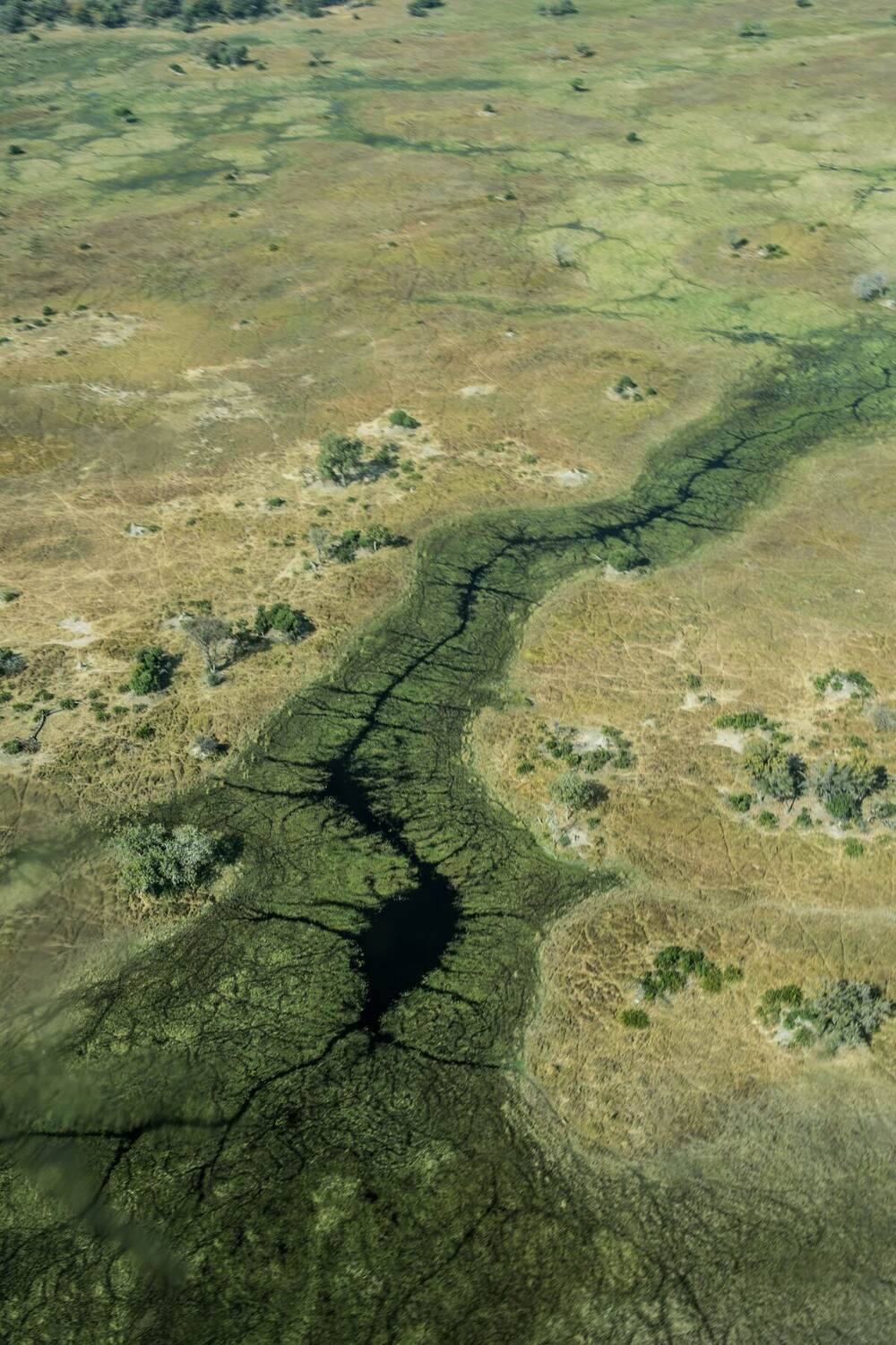
The Okavango Delta is Botswana’s crown jewel: a UNESCO World Heritage site where the Okavango River fans out into a vast inland waterway in the middle of the Kalahari. The result is a mosaic of papyrus channels, floodplains, and islands teeming with lion, leopard, wild dog, and hippo. Private concession camps are small, expensive, and utterly beautiful. Access is typically by light aircraft.
Mana Pools, Zimbabwe’s answer, sits on the Zambezi floodplain at the northern edge of a massive national park ecosystem. It is one of the few parks in Africa where guests can walk unguided among the big five — a freedom that delivers an intensity of experience almost nowhere else matches. Canoe safaris on the Zambezi put you at water level with hippos and crocodiles. The wilderness is raw and the infrastructure is intentionally minimal.
Mana Pools costs a fraction of the Okavango Delta. A quality fly-camp or tented camp in Mana Pools runs approximately $250 to $450 per person per night; equivalent camps in the Okavango run $600 to $1,500 per person per night. More of our coverage on Mana Pools walking safaris.
Winner: Okavango for sheer ecological spectacle; Mana Pools for raw access, affordability, and the unguided walking safari experience.
Budget Comparison: How Much Does Each Cost?
Zimbabwe is significantly cheaper across all tiers.
Budget (camping and lodge dorms): Zimbabwe parks offer National Parks campsites from $15 to $40 per person per night. Botswana’s public campsites are similarly priced, but private camp access in Botswana is far more limited and expensive.
Mid-range: A solid safari camp in Zimbabwe — think comfortable en-suite tents with game drives — costs $150 to $350 per person per night. Comparable Botswana options rarely drop below $350.
Luxury: Top-tier lodges in Hwange and Mana Pools charge $400 to $800 per person per night. The Okavango’s best concessions run $1,000 to $3,000.
Park fees: Zimbabwe charges $30 to $50 per person per day for most national parks. Botswana parks run $15 to $30 per day, but because camps are pricier, total trip cost is higher.
A 7-day Zimbabwe self-drive safari with lodges at the mid-range level typically costs $1,200 to $2,000 all-in. A comparable Botswana itinerary typically costs $3,500 to $6,000. See our Zimbabwe budget guide for a full cost breakdown.
Best Time to Visit
Both countries share a similar seasonal pattern, driven by rainfall and the movements of game.
Dry season (May to October): The optimal safari window for both countries. Vegetation thins, game concentrates at water sources, and roads are passable. Peak months are July to September. Hwange, Chobe, and Mana Pools all deliver their best wildlife viewing during this window.
Green season (November to April): Rains make some roads impassable but dramatically improve birdwatching, and prices drop by 30 to 50 percent at most camps. The Okavango floods seasonally, with peak water levels arriving between June and August — a counterintuitive timing that makes the Delta most spectacular slightly after the rains.
Victoria Falls: The falls peak between February and May when water volumes are highest. Visit June to September for photography — spray levels drop enough to see the full curtain.
For a month-by-month breakdown of Zimbabwe conditions, see our best time to visit Zimbabwe guide.
Visa Requirements
Zimbabwe: Most nationalities can buy a Kaza Univisa at Victoria Falls border, covering both Zimbabwe and Zambia for 30 days ($50). Visa on arrival is available for most passports. UK, US, EU, and Australian citizens all qualify.
Botswana: Visa-free for most Western nationalities for up to 90 days. No visa fee, no application required on arrival. Botswana is one of Africa’s most straightforward entry points.
If you plan a combined trip — Victoria Falls on the Zimbabwe side, then a drive or flight to Chobe — the Kaza Univisa is the practical choice and avoids separate border formalities.
Getting There
Zimbabwe: Victoria Falls Airport (VFA) handles direct flights from Johannesburg (approximately 2 hours). Harare’s Robert Gabriel Mugabe International Airport connects to London, Johannesburg, Addis Ababa, and Nairobi. Most regional connections route through Johannesburg.
Botswana: Maun Airport is the main gateway to the Okavango Delta, with connections from Johannesburg. Kasane Airport serves Chobe, also via Johannesburg. Botswana is accessible by road from Zimbabwe across the Kazungula Bridge — a 4x4 or organised transfer takes around 90 minutes from Victoria Falls Town.
A popular combined itinerary is to fly into Victoria Falls, spend 3 to 4 nights in Zimbabwe (Hwange or Mana Pools), transfer to Kasane for 2 nights in Chobe, and fly home from Kasane. This structure gives you both countries without backtracking.
Booking Your Safari
For Zimbabwe tours and safaris from Victoria Falls:
- Chobe Day Trip from Victoria Falls — cross the border for a river game drive and boat safari
- 2-Day Hwange Safari from Victoria Falls — overnight in the park with game drives
- Hwange Private Wildlife Safari — full-day private game drive in Hwange
- All Zimbabwe Safari Tours — browse the full range of operators and itineraries
The Verdict
Zimbabwe wins for first-time safari travellers who want outstanding wildlife at an accessible price, with the freedom to walk unguided and explore at their own pace. The combination of Victoria Falls, Hwange, and Mana Pools covers every major safari experience for a fraction of Botswana’s equivalent cost.
Botswana wins for repeat visitors or travellers with a larger budget who specifically want the Okavango Delta, the smallest possible camps, and a destination where the low-volume policy is built into every experience. If the Okavango is on your bucket list, no Zimbabwe park replaces it.
For most travellers, the right choice is Zimbabwe first. If the budget allows, add two nights in Chobe before flying home. You get the best of both countries without paying Okavango prices for the whole trip.
🏨 Where to stay in Zimbabwe: Victoria Falls hotels - Hwange lodges and camps - Mana Pools camps