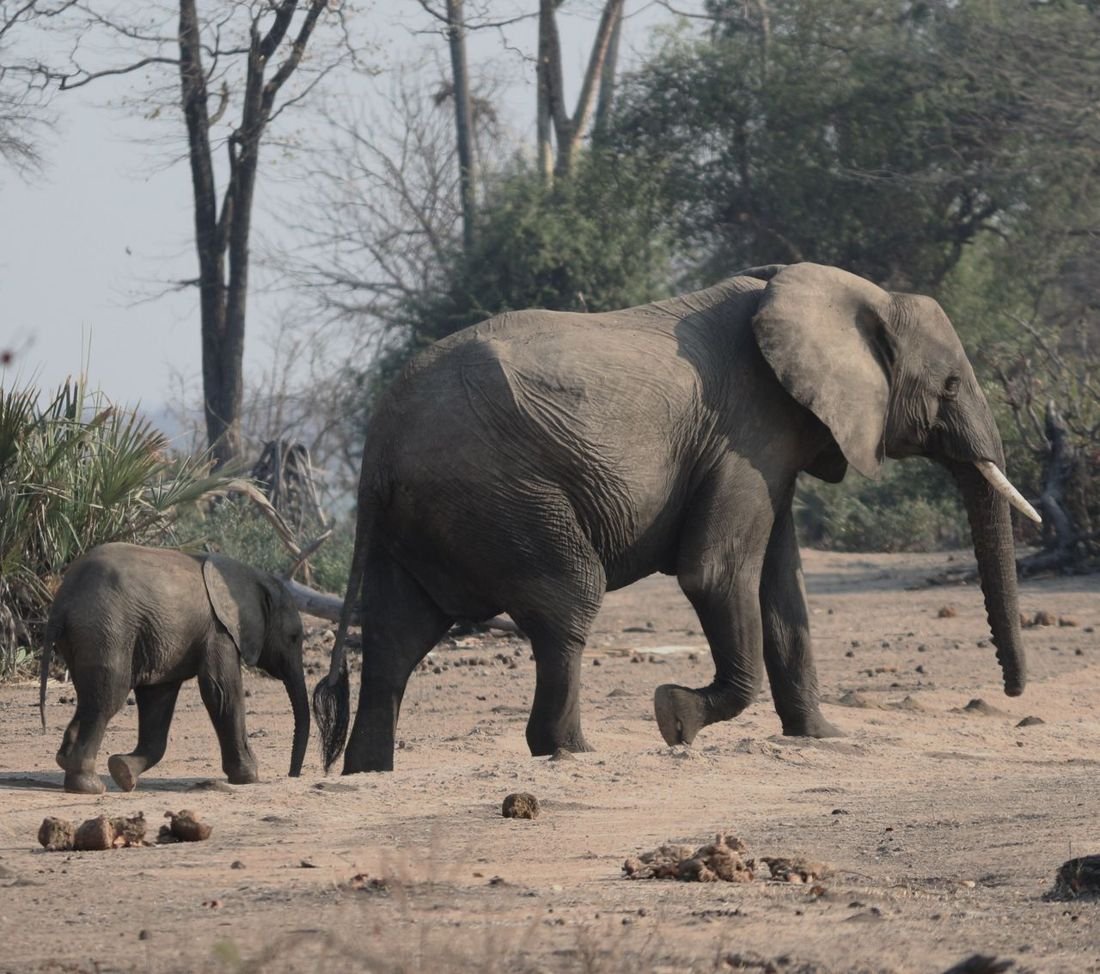
Victoria Falls with kids works better than most parents expect. The falls themselves are free of danger on a marked path, the town is small and walkable, and a first elephant sighting in Hwange tends to be the moment children remember for years. What takes planning is the detail: which activities have age limits, which hotels genuinely welcome families, how malaria affects the plan, and how to reach Hwange without a long day in the car.
This is a 7-day family route built around two bases: four nights at Victoria Falls and two nights at Hwange, with a buffer day. It suits children from about 6 and up; notes below cover younger ones. For a wider adult route, see our 7-day Zimbabwe itinerary.
Planning notes for families
When to go. June to September is dry, cooler and best for game viewing, and it is also lower malaria season. The falls are at their fullest around March to May, when spray soaks everything and views from the Zimbabwe side can be hidden. Our best time to visit Zimbabwe guide has the month-by-month detail. October is hot, often above 35°C, which is hard on small children in the afternoon.
Malaria and children. Victoria Falls and Hwange are both malaria areas. Risk is highest in the wet season, roughly November to June. Whether your child should take prophylaxis depends on age, weight and your home country’s guidance, and the options differ for young children, so talk to a GP or travel clinic 6 to 8 weeks before you fly. The CDC malaria drug guide explains the drug options in general terms, but it is no substitute for your own doctor. On the ground, use repellent, cover arms and legs at dusk and sleep under nets where provided.
Insurance and safety. Medical care in the Falls is basic and Hwange is remote, so cover with medical evacuation is worth having. See our travel insurance guide and VisitorsCoverage for options, and our is Zimbabwe safe page for the wider picture. Parents travelling with a child who is not both parents’ child need extra paperwork; check the entry rules in our visa requirements guide.
Minimum ages for Victoria Falls activities
Ages vary by operator and sources do not agree, so treat this as a planning guide and confirm when you book.
| Activity | Typical minimum age | Notes |
|---|---|---|
| Falls rainforest walk and sunset cruise | None | Life jackets provided on boats; keep small children close near the edge |
| Elephant encounter | About 6 | Operator-led, so check each one |
| Helicopter flight | Open to young children at some operators; we suggest 8+ | Children under 2 usually do not get their own seat |
| Microlight flight | About 8 to 10 | Child must fit the harness |
| Bungee jump | 14 | Minimum weight about 40 kg |
| White-water rafting | 15 | Grade 5 rapids; teenagers only |
If you have a teenager who wants rafting and a younger child who does not, split the day. One adult rafts while the other takes the younger child on a cruise, then you swap the next day.
Day 1: Arrive in Victoria Falls
Fly into Victoria Falls Airport and arrange a pre-booked airport transfer; the town is about 20 minutes from the airport. Check in, swim, and keep the afternoon free. The first evening is best spent on a walk to the falls entrance if your hotel is close, or a simple dinner in town.
Where to stay. We suggest a family-oriented hotel close to the falls rather than a remote lodge on this leg. The Kingdom at Victoria Falls sits a short walk from the falls entrance and, according to listings we checked, has family rooms with bunk beds, a children’s pool, and two children aged 2 to 11 sharing a parent’s room at no bed charge. Elephant Hills Resort overlooks the Zambezi with a pool, playground and a policy of children aged 12 and under staying free in a parent’s room on existing bedding, though it is several kilometres out of town, so you will need transfers. For a quieter option with a more traditional feel, Ilala Lodge is a walkable mid-range base. Child policies change, so confirm them before booking. All three can be compared on Victoria Falls hotels.
Day 2: The falls
Start early, before the heat, with the rainforest walk along the cliff opposite the falls. Entry is charged per person and is cheaper for children; check the current fee at the gate. Bring ponchos or waterproof bags for electronics, and wear shoes with grip, as the paths are wet and some viewpoints have few barriers. Allow two to three hours.
After lunch, rest at the hotel pool. In the late afternoon, book a Zambezi sunset cruise, a gentle two-hour outing with hippos and elephants on the banks. It is the easiest “adventure” for a family of any age.
Day 3: Choose your adventure
This day depends on your children’s ages.
- Ages 8 to 12: A helicopter flight over the falls takes about 12 to 15 minutes and is the standout for families who want an aerial view without an age-limit headache. Follow it with a Zimbabwe traditional village tour in the afternoon.
- Teenagers (14+): The bridge bungee or swing is an option for the brave, and from 15 the rafting day gives them a proper challenge. See our guides to rafting and bungee jumping before booking.
- Younger children: Spend the morning at an elephant encounter, then keep the afternoon quiet.
Browse more options on Victoria Falls tours or see our full list in things to do in Victoria Falls.
Day 4: Rest day or a Chobe day trip
Treat this as a buffer. Children get tired by day 4 on a trip with early starts. If energy is high, a Chobe day trip into Botswana adds a river safari with a very high chance of elephants, and it involves a border crossing, so bring passports and any extra child documents. If not, spend the day at the pool.
Day 5: Travel to Hwange
Hwange is the second half of the trip and the part children talk about most. You have two options for the transfer:
- By road: Roughly 2 to 3 hours from Victoria Falls on a mostly sealed road, with a private driver. This is the simplest and cheapest option, and suits lodges near Main Camp such as Ivory Lodge or The Elephant Camp.
- Fly-in: Remote concession camps in the park are generally reached by a short light-aircraft flight to a private airstrip, followed by a game-drive transfer to camp of around 30 minutes. It costs more, but saves a long drive and starts the safari on arrival. Fly-in camps are usually arranged through an operator.
Many lodges set minimum ages for shared game drives, commonly between 6 and 12. If you are travelling with younger children, request a private vehicle so you can set the pace. See where to stay in Hwange or search Hwange stays for family-friendly options, and ask about child rates up front, since a lodge may charge 50% of the adult rate for children in a parent’s room.
Day 6: Hwange game drives
Do a morning and an afternoon drive with a rest at midday. Hwange has one of Africa’s largest elephant populations, and the dry-season waterholes at Main Camp are reliably busy. Sit children at the front of the vehicle and bring binoculars, a simple animal checklist and snacks. Our Hwange game drives guide covers the best waterholes and times. If you are staying near Victoria Falls rather than overnight in the park, a full-day Hwange safari or 2-day Hwange safari covers the essentials. Our Hwange safari guide has more detail on wildlife and seasons.
Day 7: Return and depart
Drive or fly back to Victoria Falls for your onward flight. Allow a generous buffer, especially if you are on a flight to Harare or Johannesburg, and keep a snack bag for the road.
Budget and booking tips
As of 2026, a mid-range family of four should budget roughly USD 250 to 400 per day on the Victoria Falls leg including a hotel, meals and one paid activity, and noticeably more for private-vehicle safaris in Hwange. Our Zimbabwe budget guide breaks down the costs in more detail.
- Book Hwange lodges and any fly-in before Victoria Falls activities, as lodge availability tightens first.
- Carry cash in small US dollar notes for tips and park fees; cards are not accepted everywhere.
- Pack hats, sun cream, a light rain jacket for the spray, and a refillable bottle. Our what to pack list covers the rest.
- Get an eSIM for Zimbabwe so you can reach lodges and drivers.
A family trip here is easiest when you pick two bases rather than three and leave a rest day in the middle. For a bigger loop with Bulawayo and Matobo for older children, see our 10-day Zimbabwe itinerary.